Recovery College Tasmania is one of the state’s best-kept resources for anyone looking to learn about mental health, build coping strategies, and connect with others on a similar path. The college offers free courses across Tasmania, designed for people with lived experience of mental health challenges, carers, family members, and workers. This guide walks through how to find and enrol in a course, what to expect in the classroom, and how to sort out practical barriers like transport and assistive equipment through TasEquip, authorised prescribers, and the NDIS.
Key Takeaways
- Recovery College Tasmania provides free mental health education across the state. Courses are co-designed and co-delivered by people with lived experience, making learning practical, hopeful, and stigma-free.
- Enrolment is straightforward: browse the course calendar, register online or by phone, and discuss any accessibility needs. No medical referral or formal diagnosis is required.
- Tasmania has a specific assistive equipment pathway through TasEquip, where authorised prescribers (occupational therapists, physiotherapists, speech pathologists, and some nurses) can order loan equipment to help people participate in community education.
- NDIS participants can use their plans for transport, support workers, or communication aids linked to attending Recovery College Tasmania, but cannot access TasEquip for items already funded or expected to be funded through their NDIS plan.
- Re.Connect Support Services can help clients navigate the overlap between Recovery College enrolment, TasEquip eligibility, and NDIS planning so that paperwork does not become a barrier to learning.
What Is Recovery College Tasmania?
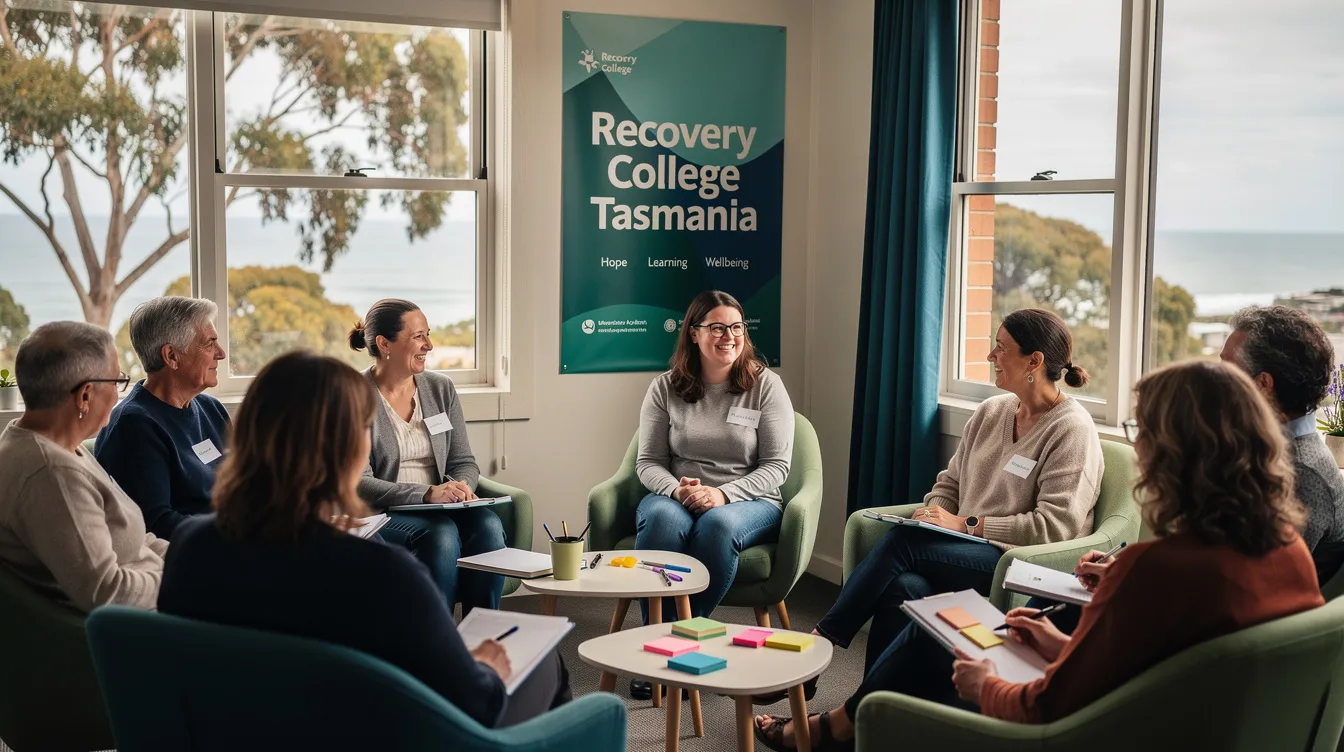
Recovery College Tasmania is a statewide, free adult learning space focused on mental health, wellbeing, and recovery, sitting alongside a wide range of mental health support services that can transform overall wellness. It opened in November 2022, initially in southern Tasmania, and has since expanded through an online portal and sessions in the north and north-west regions. Recovery College Tasmania launched in Hobart to support mental health education and has grown to include venues and online options across the state.
The college follows the international recovery college model. Courses are co-produced by educators and people with lived experience. Anyone aged 18 and over in Tasmania can usually attend. Recovery College Tasmania operates on an educational model rather than a clinical treatment model; sessions are designed to teach, connect, and build confidence rather than to diagnose or treat.
Sessions run in accessible venues including the Peacock Centre in North Hobart, with planned expansion to Launceston General Hospital precinct, Devonport Mental Health Hub, and locations in Burnie. Online sessions are available for people who cannot travel. Topics range from understanding anxiety and depression to self-advocacy in mental health services.
Recovery colleges complement existing mental health services without replacing them. The college sits alongside primary care, community mental health, and crisis services. It is a place to learn, not a substitute for therapy. For a broader overview of how mental health education fits within Australia’s health system, the Australian Department of Health’s mental health page is a useful reference.
Re.Connect Support Services often helps participants discover and access Recovery College courses as part of a broader recovery and community-connection plan. This can include helping people set goals, find the right course, and sort out transport or equipment needs.
Who Can Attend and What Does It Cost?
Courses are free and open to adults aged 18 and over. This includes people experiencing mental health challenges, carers, family members, and workers. Participants can attend courses without needing a medical referral or formal diagnosis.
There are no academic prerequisites. People can attend whether they are new to mental health topics or have decades of lived experience. The college uses plain language, and sessions are structured so that everyone can participate at their own pace.
Some participants use NDIS funding for transport or a support worker to attend with them, but the core education itself is not billed to NDIS or Medicare. Places are limited for each course, and waitlists are common for popular topics like understanding anxiety or building everyday routines. Early registration is a good idea.
Types of Courses and Learning Style
The college currently offers 27 learning session topics. Courses cover topics including anxiety, depression, bipolar disorder, and trauma. Workshops include topics like mindfulness, stress management, and self-care. Other sessions focus on rights, self-advocacy, and understanding addiction.
| Course Theme | Example Topics |
|---|---|
| Understanding diagnoses | Depression, anxiety, bipolar disorder, PTSD |
| Coping and self-care | Mindfulness, sleep hygiene, stress management |
| Personal development | Self-advocacy, healthy bodies and minds |
| Connection and participation | Shared stories, understanding addiction |
| Classes are interactive and conversational. Expect small-group discussions, reflection exercises, and optional take-home resources. There are no exams or assessments. Group sessions at Recovery College are confidential and not recorded, which helps people feel safe enough to share openly. |
Each session is usually co-facilitated by a peer educator with lived experience working alongside a clinician or educator. This co-facilitation model balances storytelling with evidence-based practice, so participants get both real-world perspective and practical strategies grounded in research.
Educational resources focus on practical life skills and recovery-oriented knowledge. The college promotes self-management skills and personal agency; students can create personalized learning plans tailored to their recovery goals. Students can also participate anonymously in some sessions if that feels more comfortable. Recovery College Tasmania helps build community connections and reduces social isolation by bringing people together in a learning environment. Recovery College Tasmania aims to reduce stigma by sharing lived experiences.
Mental Health Month promotes recovery education initiatives, and the college regularly runs special events during October, including sessions like “Understanding Addiction” and “Healthy Bodies & Minds.”
Language is kept practical and plain, avoiding heavy jargon, which makes the content accessible for people at different stages of their mental health journey.
How to Access Free Mental Health Education in Tasmania
Getting into a Recovery College course is meant to feel welcoming and low-pressure. The process breaks down into three steps: find a course, enrol, and sort out any practical barriers like transport or equipment. Recovery College is part of a wider learning journey that can include online resources, support groups, and services like Re.Connect Support Services.
For people exploring mental health education beyond the college, Beyond Blue offers a range of self-guided resources, and the Black Dog Institute provides evidence-based information on mood disorders. SchoolTV provides diverse mental health support materials online for families and schools. Families can also access family support resources and educational programs that focus on mental health, financial guidance, and navigating support systems. The Resilience Education program extends to families through TRP@Home, and St Mary’s College focuses on gratitude, empathy, and emotional literacy as part of its student wellbeing approach.

Step 1: Find the Right Course for You
Visit the Recovery College Tasmania page on the Health Tasmania website to view the current course calendar and locations. Listings show who each session is for (e.g., “for carers,” “for anyone”), whether it is online or in-person, and estimated duration (most sessions run 1 to 2 hours).
Before choosing a course, consider your current mental health needs and goals. If you want to learn about managing panic attacks, look for anxiety-related sessions. If meeting supportive people is the priority, shared-story workshops are a strong option. If you are unsure, the college team responds to general enquiries by email or phone.
Support coordinators or peer workers from Re.Connect can help interpret options and suggest courses that link to your recovery goals.
Step 2: Enrol and Let Them Know What You Need
Enrolment typically involves creating an account on the Recovery College portal and registering for your chosen sessions. You can also enrol by email or phone. Basic details are required: name, contact information, any support needs, and whether a support person will attend.
Mention access needs early. This includes:
- Mobility support or seating requirements
- Sensory sensitivities (lighting, sound)
- Communication aids or Auslan interpreters
- Needing breaks due to fatigue or anxiety
If you feel nervous about joining a group setting, that is normal. The college team is experienced in welcoming people who are new to group learning. Re.Connect Support Services can, with permission, assist clients to complete enrolment forms, explain course content in plain language, and coordinate supports around class times.
Step 3: Sorting Out Transport, Assistive Technology and Support
Getting to and from the venue can be a barrier, especially in regional Tasmania. Plan transport early. Options include public transport routes, community transport services, taxi vouchers, or asking your NDIS planner about transport funding.
Some people need assistive technology or equipment to participate comfortably: a mobility aid to get from the car park to the classroom, a communication device for group discussions, or a hearing loop to follow along. This is where Tasmania’s dedicated equipment pathway, including TasEquip and the authorised-prescriber system, becomes relevant.
Talk with your GP, allied health professional, or Re.Connect worker about any equipment or accessibility barriers. The tools needed for confident attendance might already be available through state or federal funding.
TasEquip, Authorised Prescribers and NDIS: Equipment Pathways for Learning
This section covers the practical side: how Tasmanians can get assistive equipment and supports that help them physically access and participate in free mental health education. This is about the specific Tasmanian pathway through TasEquip and authorised prescribers, not a generic national guide to assistive technology.
These pathways connect to real-life barriers. Difficulty walking to venues, sitting comfortably in class, hearing the discussion, or reading printed materials can all prevent someone from attending. The right tools and supports can remove those barriers.
What Is TasEquip and How Does It Help?
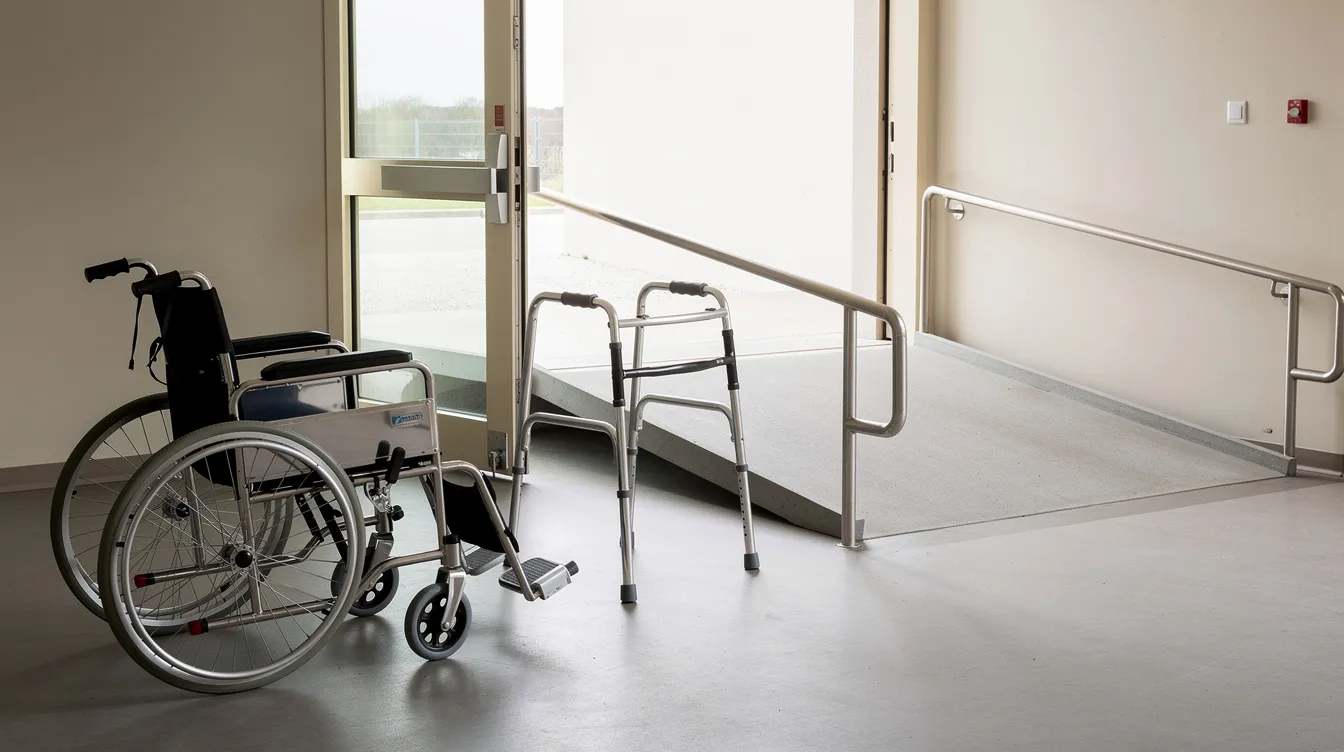
TasEquip is Tasmania’s state-funded equipment scheme that provides long-term loan of basic equipment to eligible residents. Items include wheelchairs, walking frames, shower chairs, hoists, height-adjustable seating, and basic communication aids. Equipment is maintained and cleaned by the service; not all items are new.
TasEquip is administered through the Tasmanian Department of Health and supports people to live, study, and participate in the community as independently and safely as possible.
Concrete examples of how TasEquip equipment can support attendance at Recovery College Tasmania:
- A lightweight wheelchair for getting from the car park to the classroom
- A height-adjustable chair for someone managing chronic back pain during a 2-hour session
- A basic communication device for participating in group discussions
The Authorised-Prescriber Pathway in Tasmania
Only certain clinicians can order TasEquip items. These authorised prescribers include occupational therapists, physiotherapists, speech pathologists, and some nurses who have completed additional training.
The usual steps look like this:
- Assessment: The prescriber evaluates your functional needs in your home and community settings.
- Equipment selection: Based on clinical reasoning, the prescriber identifies the right equipment, often including a trial period.
- Paperwork: The prescriber completes TasEquip request forms, documenting eligibility, functional need, and suitability.
- Collection or delivery: Equipment is available from regional warehouses in Hobart, Launceston, and Latrobe (North-West).
The prescriber considers safety, suitability for education settings, and cost-effectiveness before recommending any item. If you are interested in using TasEquip to support Recovery College attendance, start by talking with your existing allied health provider or asking your GP for a referral to an authorised prescriber.
Checking Eligibility for TasEquip
Eligibility criteria for TasEquip include:
| Requirement | Detail |
|---|---|
| Residency | Permanent Tasmanian resident (minimum 3 months) |
| Concession status | Hold a Health Care Card or Pensioner Concession Card |
| Living situation | Live in the community (not in residential aged care) |
| Other schemes | Not receiving equipment through NDIS, DVA, Workers Compensation, MAIB, or Home Care Package Levels 3 or 4 |
| Both children and adults may be eligible, but priority is assessed individually based on safety and clinical need. Exceptions exist for urgent hospital discharge, palliative care with less than 6 months prognosis, or non-disability-related equipment needs. |
Before your assessment, gather relevant information: diagnoses, functional difficulties, current aids used, and goals such as attending Recovery College Tasmania. This helps prescribers and patients understand the full picture and improves the potential for a smooth application.
Applicants or their support people can check eligibility through official Tasmanian health information channels or by speaking directly with a TasEquip service provider. For people supporting an older family member, understanding broader dementia support services and community resources can also be important when planning for equipment and education access.
When Can NDIS Participants Use the Scheme?
The NDIS is generally responsible for funding assistive technology for its participants. TasEquip explicitly excludes NDIS participants under standard eligibility rules, because double-funding is not allowed. Equipment cannot be approved through TasEquip if it is already funded or expected to be funded by the NDIS.
There are limited circumstances where TasEquip may still be involved:
- Short-term hospital discharge before NDIS plan review
- Items outside NDIS scope
- Transitional arrangements during NDIS access requests
NDIS participants usually use their plan funding for supports that help them attend Recovery College Tasmania. Recurring transport supports can cover travel to education sessions. Support workers may be funded under Core Supports or Capacity Building. Communication devices fall under assistive technology, requiring allied health assessment.
NDIS participants should speak with their support coordinator or local area coordinator about how attending Recovery College fits their goals. Framing attendance around goals like “building social connections” or “improving self-management” helps justify relevant supports in a plan and connects well with Improved Life Choices funding that supports independent decision-making and participation. Coordination between prescribers, planners, and local health services is critical to avoid gaps or duplication.
How Re.Connect Support Services Can Help You Navigate These Pathways
Re.Connect Support Services acts as a bridge between Recovery College Tasmania, TasEquip, prescribers, and NDIS planning. Workers provide personalised care and community support for people with mental health challenges and disabilities and help people avoid getting lost in paperwork and jargon.
A Re.Connect worker can help you:
- Articulate clear goals (e.g., “I want to attend a 6-week mental health course in Launceston”) and align transport, equipment, and support worker arrangements
- Identify whether TasEquip, NDIS, or another pathway is the right fit for the tools you need
- Coordinate with clinicians and prescribers so that your equipment application reflects your education and community participation goals
- Register for courses and communicate access needs to the college team
Re.Connect uses a person-centred, recovery-focused approach. Your voice and choice are central, with practical problem-solving around barriers like mobility, communication, or anxiety about new environments. If the process of linking mental health education, equipment pathways, and NDIS supports feels overwhelming, Re.Connect Support Services can help you take the first step.

Frequently Asked Questions
These FAQs cover common questions not fully answered above, focusing on practical details for new learners in Tasmania.
Do I need a referral from my GP or psychiatrist to attend Recovery College Tasmania?
No formal medical referral is required. People can self-enrol directly with the college. Some people choose to discuss attendance with their GP or mental health clinician so that Recovery College learning can be integrated into their broader care plan, but this is optional, not a prerequisite.
Can I bring a support person, family member or carer with me to classes?
Many courses welcome support people, especially for participants who feel anxious in groups or need assistance with communication or mobility. Mention this during enrolment so the college can confirm numbers, seating, and any additional access needs. Support people must also register.
What if I start a course and realise it is too overwhelming for me?
It is okay to step out of a session, take a break, or decide a course is not right for you at this time. Talk with facilitators or a support worker from Re.Connect about what felt difficult. They can suggest gentler alternatives or different topics that might improve your experience.
Can I study online if I cannot travel to a Recovery College venue?
Some Recovery College Tasmania courses are offered online, which helps people in rural areas or those who find travel challenging. You will need access to a device and internet connection. If basic digital literacy support is needed, NDIS or local community services may be able to help, and carers supporting someone with cognitive changes may benefit from practical guides to dementia support and communication strategies.
Will completing Recovery College courses give me a formal qualification?
Recovery College Tasmania focuses on personal learning and recovery, not accredited vocational qualifications. Participants may receive certificates of participation, which can be useful for demonstrating engagement, building confidence, and supporting future study or volunteer opportunities. The emphasis is on recovery-oriented knowledge and practical life skills rather than formal credentials.