If you or someone you care about is living with disability in Tasmania, knowing where to find independent help can change everything. Independent organisations provide free, confidential advocacy for people with disabilities across the state – and you do not need to be in crisis to reach out. This guide introduces verified Tasmanian advocacy organisations, explains when to approach them, how to prepare for an enquiry, and how independent advocacy differs from support coordination.

1. Fast answers: where to get free disability advocacy in Tasmania
Tasmania has independent, not-for-profit disability advocacy organisations that support individuals and families at no cost. Whether you are an adult with disability, a parent of a child with disability, a carer, or an older Tasmanian dealing with service issues, there is an organisation ready to help you. Every service listed below is free and separate from government and service providers.
- Advocacy Tasmania – Statewide, independent, free advocacy for adults, older people, people with disability, mental health issues, and alcohol and other drugs concerns. Advocacy Tasmania provides free advocacy services in Tasmania, covering everything from NDIS problems to hospital and aged care complaints. Phone: 1800 005 131. Web: advocacytasmania.org.au.
- Speak Out Association of Tasmania – The Speak Out Association supports individuals with intellectual disabilities and other cognitive disabilities. They offer individual advocacy, self-advocacy groups, and representation at hearings, with offices in Hobart, Launceston, and Burnie across the north west and beyond. Hobart phone: (03) 6231 2344. Web: speakoutadvocacy.org.
- The Association for Children with Disability (Tas) Inc – ACD Tas is the main peer-led association for children and young people with disability and their families across Tasmania. The Association for Children with Disability offers advocacy for families, including training, advocacy, case coordination, consultation, and peer support for parents. Freecall: 1800 244 742. Web: acdtas.com.au.
- Citizen Advocacy Launceston Region – One-to-one citizen advocacy for people with intellectual disability in the Launceston area. Citizen Advocacy Launceston Region supports people with intellectual disabilities through long-term volunteer partnerships that promote inclusion and participation in community life. Phone: (03) 6331 2177. Web: citizenadvocacylton.org.au.
- Disability Voices Tasmania – Systemic and representative advocacy led by people with disability. Disability Voices Tasmania promotes disability rights and systemic advocacy, giving voices to people living with disability across the state. Phone: (03) 6215 6800. Web: disabilityvoicestas.org.au.
- Re.Connect Support Services is not an advocacy provider. Re.Connect delivers support services and NDIS support coordination, working alongside independent advocates so participants can access quality everyday support and truly independent advice – without any conflict of interest. Phone: 03 6118 2796. Web: reconnectsupportservices.com.
If you are unsure which organisation is the best fit, you can contact more than one – they are used to helping people find the right path.
2. What disability advocacy in Tasmania actually does (and how it differs from support coordination)
Independent disability advocacy in Tasmania is rights-based help that is free, confidential, and completely separate from government and service providers. Independent advocates represent individuals’ interests rather than those of service providers. The goal is simple: making sure people with disability are heard and their rights are protected.
What advocates help people with disability with
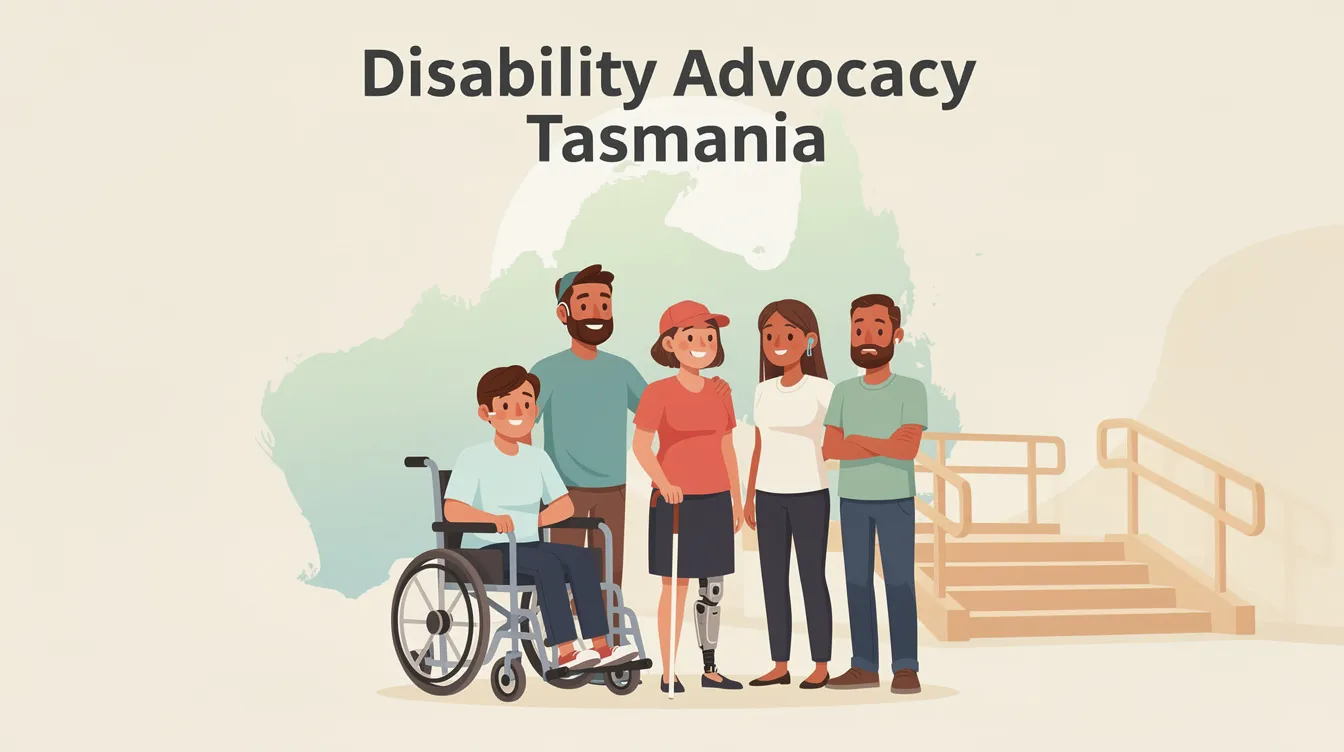
Advocacy services assist with issues like NDIS problems and disability discrimination complaints, but that is only the beginning. Common situations include:
- NDIS access, planning problems, or plan reviews that cut funding without clear reasoning
- Complaints about services – hospitals, aged care, community supports, or other services that are not meeting your needs
- Housing disputes, eviction threats, or accessibility barriers
- Disability discrimination at work, in education, or in the community
- Education issues for children with disability, such as a school refusing reasonable adjustments
- Safety concerns, including abuse, neglect, or feeling unsafe with a support worker
- Guardianship, administration, or feeling pressured to sign legal documents
- Family violence affecting a person with disability
Advocacy services help individuals navigate legal and health systems. That support can be one-off – for example, an advocate reading a letter and explaining what it means – or ongoing, such as attending case conferences, Tribunal hearings, or helping you draft a formal complaint. It depends on your needs and the organisation’s capacity. For ongoing guidance, many people also draw on disability and NDIS support resources that explain rights, options, and common processes in more detail.

How advocacy differs from support coordination
This is where many people get confused, so here is the difference in plain language:
- Support coordinators (like those at Re.Connect Support Services) help you implement your NDIS plan. They connect you with support services, organise providers, manage service agreements, and make sure your funded supports are working toward your goals.
- Independent advocates step in when there is a rights issue, a conflict, a complaint, or a big decision being made about your life. They do not manage rosters, invoices, or day-to-day supports. A support coordinator does not investigate abuse or represent you at a hearing – that is the advocate’s role.
- Funding works differently too. Support coordination is usually funded through your NDIS plan budget. Most independent advocacy in Tasmania is funded by the National Disability Advocacy Program and state government grants, which keeps it free, impartial, and available whether or not you have an NDIS plan.
Both roles are important, and they work best when they complement each other.
The Tasmanian Government has committed to disability rights through its disability inclusion strategies. The Tasmanian Disability Inclusion Plan sets the context for advocacy and inclusion, requiring government departments to take action on accessibility and remove barriers for people with disability across Australia’s smallest state.
Independent advocacy is also recognised as a key safeguard under the Disability Rights, Inclusion and Safeguarding Act 2024, which promotes the rights, safety, and participation of people with disability in Tasmania. This legislation established the first Disability Commissioner Tasmania, adding a new layer of accountability, alongside community-based organisations focused on empowering people to reclaim their lives and independence.
3. When to contact a Tasmanian disability advocate (and how to prepare)
You do not have to wait for a crisis to contact an advocate. It is perfectly okay to reach out early, when something does not feel right – with your supports, your child’s school, your housing situation, the NDIS, or your safety. In fact, early contact often leads to better life outcomes because problems can be addressed before they escalate into harm.
When to pick up the phone
Here are concrete situations where people with disability, families of children with disability, or carers should consider calling an advocate in Tasmania:
- Your NDIS plan has been cut and you do not understand why, or you have been waiting months for a review
- A support worker makes you feel unsafe, or you have concerns about neglect or abuse and need specialist mental health and recovery support
- Your child’s school is refusing reasonable adjustments or excluding them from activities
- A hospital or health service is not listening to you or your family
- You are being pressured to sign documents you do not understand – such as guardianship or restrictive practice consent forms
- You are affected by family violence and need someone on your behalf to talk to services
- You are an older person experiencing problems in aged care or community support services
- You have mental health issues and feel your rights are not being respected during treatment
Families and carers can seek help even if the person with disability finds phone calls hard. Advocates are used to working with communication support, interpreters, and representatives. Adults and young people who have autism, cognitive disability, or complex needs are welcome – advocates will adapt.

How to prepare before you make contact
Being prepared helps advocacy organisations triage your enquiry and prioritise urgent safety issues (such as abuse, neglect, or homelessness) first. Here is what to do:
- Write a timeline. Note what happened and when – dates, names of people involved, and which services or organisations were part of the situation.
- Gather key documents. Pull together copies of your NDIS plan, letters or emails from providers, school correspondence, medical reports, and any warnings or notices, including anything related to community participation and access supports.
- Think about your outcome. What do you want? Reinstatement of a service? An apology? A review of a decision? Supported independent living that feels safe and stable? A safe place to live? Knowing this helps your advocate act quickly.
- Note deadlines. Review periods, appeal windows, and Tribunal hearing dates can be time-sensitive. Share these early.
- Keep an “advocacy folder.” Whether digital or paper, store copies of NDIS plans, service agreements, school letters, and medical reports in one place. This allows an advocate to quickly understand your situation at the first consultation.
Wait times can vary in Tasmania, especially during periods of high demand. The more organised you are, the faster an advocate can assess your case and start working with you.
Many Tasmanian advocacy organisations can meet by phone, video call, email, or in person at a regional office or even a local café – making access easier for people in regional and remote areas. You are also welcome to bring a support person (a friend, family member, or support worker who is not the subject of the complaint) to advocacy meetings if it helps you feel safe and more confident.
4. Key Tasmanian advocacy organisations, oversight bodies and support services
Tasmania has both advocacy organisations and formal oversight bodies – like the Disability Commissioner Tasmania – that work together to protect the rights of people with disability. Below is a practical directory of who does what, so you can find the right contact quickly. These organisations are established, verified, and free to access.
Advocacy organisations
- Advocacy Tasmania – Statewide reach. Advocacy Tasmania is a not-for-profit advocacy organisation that offers independent advocacy for individuals with disabilities and mental health issues, as well as older people and those affected by alcohol and drugs. They help with problems involving hospitals, aged care, the NDIS, housing, and other services. Advocacy supports people to protect their rights and navigate complex systems. Web: advocacytasmania.org.au.
- Speak Out Association of Tasmania – Focused on adults with intellectual and other disabilities. Speak Out provides individual advocacy, group advocacy, self-advocacy training, and representation at hearings. Their offices in Hobart, Launceston, and Burnie mean they can reach people across the state. Web: speakoutadvocacy.org.
- The Association for Children with Disability (Tas) Inc – The main association for children and young people with disability in Tasmania. The Association for Children with Disability was established in 1998 and has been a go-to resource for families ever since. ACD Tas provides support for families of children with disabilities through peer support for parents, workshops, information, training advocacy case coordination, and individual advocacy. ACD Tas operates regional offices in Devonport, Launceston, and Hobart, with services available statewide. ACD Tas aims to improve life outcomes for children with disabilities and promotes inclusion in education and community. Web: acdtas.com.au.
- Disability Voices Tasmania – A systemic advocacy and representative organisation for people with disability, run by people with disability. They focus on influencing policy, raising awareness, and giving people a say in decisions that shape their lives in society. Note: Disability Voices Tasmania has faced significant funding challenges, including losing federal ILC funding, which has affected their capacity – a reminder of why stable advocacy funding matters across Australia. Web: disabilityvoicestas.org.au.
- Citizen Advocacy Launceston Region – Long-term, one-to-one citizen advocacy pairing a volunteer community member with a person with intellectual disability. This model creates lasting relationships that combine friendship with rights protection. Coverage is limited to the Launceston area.
Oversight bodies, including the Disability Commissioner Tasmania, and complaint channels
- Disability Commissioner Tasmania – Created under the Disability Rights, Inclusion and Safeguarding Act 2024, the Disability Commissioner is an independent officer who can accept reports about harm, abuse, and neglect in certain disability services. The Commissioner investigates complaints regarding safety and inclusion and can refer individuals to other relevant services. The Disability Commissioner promotes rights for people with disabilities and works to create safer, more inclusive communities across the state. You can be referred to the Commissioner by an advocate or contact them directly. Visit: ombudsman.tas.gov.au.
- NDIS Quality and Safeguards Commission – The national regulator for NDIS-funded supports. If you have complaints or reporting concerns about a provider’s quality, safety, or worker conduct, you can raise them here. Disability advocacy services help people protect their rights and navigate the NDIS, and advocates often help people draft complaints to this body. Free phone: 1800 035 544. Visit: ndiscommission.gov.au.
- Australian Human Rights Commission – For formal disability discrimination complaints at a federal level. If you have experienced discrimination because of your disability, free legal advice and free legal help may be available through this commission or through referral to community legal services. Visit: humanrights.gov.au.
- FindHelp Tas – A free, government-backed directory of Tasmanian community support services. If you are unsure where to start, search for “advocacy” or “disability” to find relevant organisations in your area. It is a confidential service that simply connects you with the right people. Visit: findhelptas.org.au.
How these organisations work together
In practice, these bodies coordinate rather than compete. An advocate might help you draft a complaint to the NDIS Commission, support you to speak with the Disability Commissioner Tasmania about a serious safety concern, or attend a TasCAT hearing on your behalf. Advocacy organisations also do systemic work – spotting trends across individual cases and pushing for policy change so fewer people face the same problems.
If you are in immediate crisis – experiencing suicide risk, harm, or family violence – contact Lifeline on 13 11 14 or call 000. Advocacy organisations can follow up once you are safe.

Combine advocacy with quality support
Independent advocacy handles your rights and complaints. High-quality support services and support coordination – like those from Re.Connect Support Services – turn decisions into real-world, everyday support through personalised in-home and daily living assistance. You deserve both: someone who fights for your rights and someone who helps you live the life you choose.
You do not have to figure this out alone. Save this page, pick up the phone, and talk to the organisation that fits your situation. Whether you need to speak up about a concern, visit an advocate in person, or simply get advice on your next step – these services exist so your voice gets heard, and you can combine them with NDIS mental health and community participation programs that support day-to-day recovery and inclusion.