
Key Takeaways
- Transport assistance covers NDIS transport funding, community transport, school transport assistance schemes, and conveyance allowance programs that help people with disability, older Australians, and students access daily life.
- Eligibility usually depends on disability, distance to school or services, age, safety needs, and whether eligible students can access public transport or dedicated school buses.
- Re.Connect Support Services helps families and NDIS participants find local providers, complete applications, gather evidence, and coordinate shared care arrangements for children moving between households.
- Programs assist people with disabilities, older Australians, and students to reach medical appointments, work, education, and community activities when they cannot drive or use standard transport.
- This article provides practical steps, scheme references, and a FAQ to answer common questions.
What Is Transport Assistance?
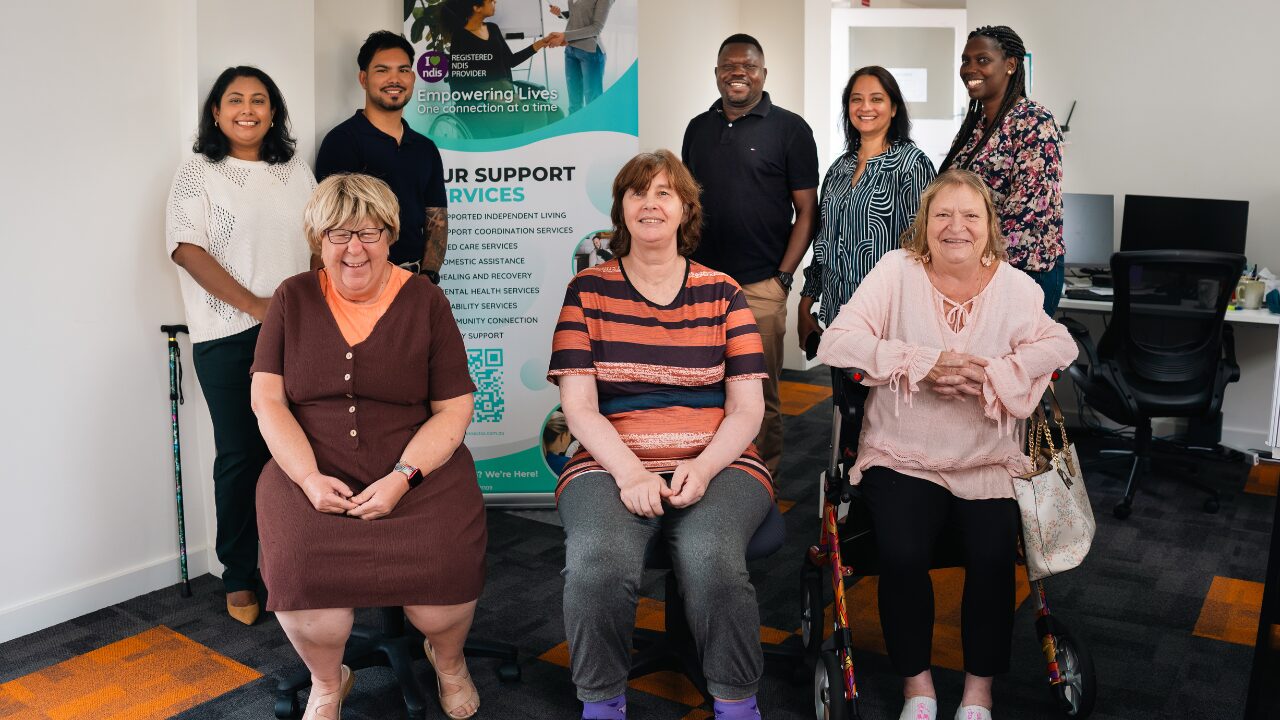
Transport assistance refers to financial assistance, practical help, or organised travel that enables people with disability, older people, and students to get to school, therapy, medical appointments, community programs, and work. In Australia in 2026, subsidized transport options are available for eligible individuals through government schemes including NDIS transport funding, state-based community transport programs, school transport assistance schemes, and conveyance allowances for private travel.
Re.Connect Support Services works alongside these programs as a disability support provider, helping participants understand their options, stay within funding rules, and coordinate day-to-day travel. For example, a child with autism might use a school transport assistance scheme on school days, then rely on NDIS-funded transport assistance to attend occupational therapy after school. Re.Connect helps map those different journeys so claims are not duplicated and evidence is gathered correctly.

School Transport Assistance Schemes Across Australia
Each Australian state and territory runs its own school transport assistance scheme with different names, rules, and application processes. Schemes usually cover travel between home and the nearest approved school, whether state or non state schools, with a focus on primary and secondary students living beyond a minimum distance or facing significant barriers to using public transport.
Concrete examples include Queensland’s School Transport Assistance Scheme (STAS), which students in Queensland attend under; the NSW Assisted School Travel Program (ASTP) for students with disability; and Victoria’s conveyance allowance and Students with Disabilities Transport Program. Re.Connect Support Services can help families interpret these rules, especially when students living in rural or regional areas have limited bus or train options.
Eligibility Factors for School Transport Assistance
Eligibility is always scheme-specific, but similar themes appear across programs. Common eligibility requirements include:
- Age and school year level, with the student enrolled full-time at a recognised state or non state school
- Minimum distance from school-for example, 3.2 km for primary and 4.8 km for secondary in Queensland
- Whether a suitable government contracted bus or ferry service provider already operates on the route
- Eligibility for transport assistance programs often depends on medical need, financial status, or disability
Students under a child protection order may also qualify for assistance. Eligibility requires students to not receive other STAS assistance simultaneously. Direct assistance is only for students at least 6 years old. Distance based assistance applies for students without a local state school, while safety net assistance covers students near their school who face other barriers.
Shared care arrangements can complicate eligibility. Some schemes only fund travel from the primary residence, meaning a second address may not be accepted for conveyance allowance claims. Support for shared care students requiring transportation from different addresses is available in certain programs. Re.Connect Support Services helps families gather required documents-proof of address, school enrolment, bank account details, and medical or allied health evidence-to support eligibility claims.
Types of School Travel Assistance Available
School transport services typically offer either direct travel assistance or a financial contribution. Direct options include a dedicated bus, ferry services, or passes for public bus, train, or tram networks. Accessible public transport features low-floor boarding, allocated wheelchair spaces, and ramps. Community transport services are often operated by non-profits or local councils to help people attend events and appointments, and can form part of broader community connection and engagement supports that help people with disability participate in everyday life. Paratransit services provide door-to-door transit for individuals unable to navigate standard public transport.
Conveyance allowance functions as a regular payment helping families cover the cost of private transport when no suitable service operates. Some schemes include escorts, harnesses, or door-to-door pick-up for students with disability, requiring a higher level of supporting evidence. For example, a rural family in Victoria living 30 km from the nearest school might receive approximately $1,083 per year under private car conveyance, while a metro student might simply use a free Youth myki pass introduced 1 January 2026.
Conveyance Allowance and Private Travel Support
A conveyance allowance is a government payment that helps families cover fuel or other cost when they transport a student themselves because no eligible school bus or public transport option is available. Additional conveyance allowance may apply in some jurisdictions for students with disability requiring specialised private arrangements.
Rules differ between states, but typically students living beyond a specific distance from the nearest state or non state schools without access to a dedicated school bus route may qualify. Families cannot claim a conveyance allowance if they choose private travel despite having access to a school bus, and payments usually do not apply from a second address in shared care arrangements. Re.Connect Support Services can help families compare whether direct school transport or a conveyance allowance is more practical and how it fits alongside any NDIS funding.
NDIS-Funded Transport Assistance and Support Coordination
The national disability insurance scheme in 2026 funds transport assistance so participants can get to work, study, day programs, therapy, and community activities as part of broader disability services that promote independence and inclusion. NDIS transport funding provides three levels: $1,784/year (Level 1), $2,676/year (Level 2), and $3,456/year (Level 3), depending on how often a participant travels and their inability to use public transport.
Each Australian state also operates its own taxi subsidy schemes based on disability or mobility needs. The Passenger Transport Subsidy Scheme offers a subsidy on taxi fares for eligible participants, with modern PTSS cards now including Braille and tactile features for improved accessibility. Digital PTSS cards replace older paper voucher systems for taxi fare discounts.
NDIS transport assistance is different from state-based school transport assistance. Families may lawfully use both but must avoid claiming for the same journey twice. Re.Connect Support Services helps participants plan their weekly travel, match support worker shifts with transport needs, and keep simple records that align with their NDIS plan goals during 12-month or longer planning cycles.
How Re.Connect Support Services Supports Everyday Transport
Beyond government schemes, Re.Connect provides practical, day-to-day help:
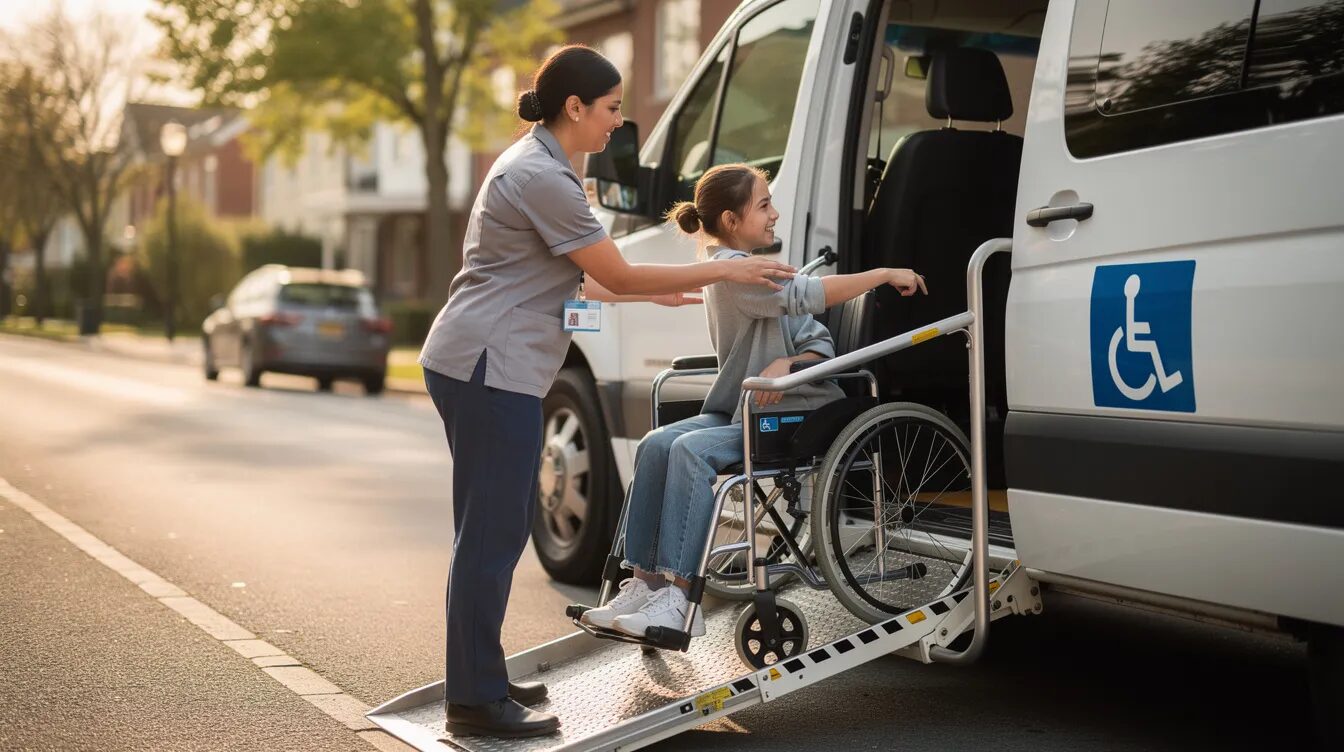
- Arranging support workers to drive or accompany participants to appointments-supported transport services may include a support worker accompanying individuals during their travel
- Helping participants learn safe public transport use, including identifying accessible features on buses and trains
- Coordinating with schools, therapy providers, and community groups to align pickup and drop-off times
- Preparing documentation for school transport assistance or conveyance allowance requests, including letters explaining functional impact and child safety needs
Where shared care arrangements apply, Re.Connect works with all carers involved to design consistent travel routines. If multiple providers or schools are identified, Re.Connect creates a communication plan so every driver, service provider, and household is notified of the schedule.
Transport Assistance for Students Living with Disability
Students living with disability often require more than just a seat on a bus. They may need adjusted routes, additional supervision, specialised equipment, or coordination across school, home, and department contacts, alongside personalised NDIS support services that focus on everyday living and long-term goals. Travel assistance is available for students with disabilities through dedicated special school buses, integrated services for disability units, and financial travel assistance where direct services are not possible. Direct assistance is available for students with disabilities who meet the program’s criteria.
Some programs only offer direct assistance to children at least 6 years old who can travel with limited supervision. Younger children or those with complex behaviour may be better supported through financial assistance to carers via private arrangements. Regular reviews-often annually-check whether students still meet criteria, whether they can travel more independently, or whether safety issues mean more support is needed. Re.Connect Support Services helps families prepare for these reviews, coordinate feedback from teachers and therapists, and plan for transitions such as moving from primary to secondary school.
Parent and Carer Responsibilities in Transport Assistance
Even when direct transport assistance is provided, parents and carers have clear responsibilities: having the child ready at the agreed pickup time, informing the service provider of absences, ensuring safe handover points, and sharing up-to-date emergency contact and medical details. Where behaviour support is needed during travel, carers may need to work with schools, transport providers, and Re.Connect to create and regularly review a safety plan. In shared care arrangements, both households should understand the transport plan, responsibilities at each address, and any limits on permitted pickup or drop-off locations. Re.Connect aims to share the load rather than place extra pressure on families.
How to Apply for Transport Assistance and Get Help
Application steps vary by scheme, but families can follow a similar preparation process. Start by confirming which program applies-school transport assistance, conveyance allowance, NDIS travel assistance, or community transport. Check official eligibility pages and gather the following information: proof of address, enrolment confirmation at an approved school, and medical or functional reports dated within the last 12–24 months. Applications for transport assistance are often managed through state-specific government websites, and families may also benefit from practical NDIS and support coordination resources when learning about their options.
You can apply online for transport assistance for up to 5 children. Applications can only be submitted for a maximum of 12 months in advance, and in some department portals you can save your application for up to 7 days before submission-though other forms must be completed in one session without saving. You will receive confirmation of your application submission by SMS or email. Processing times range from a few days to several weeks, with longer waits around the January–February school year start. If you have limited internet access, school offices, local libraries, or Re.Connect Support Services staff can help you complete and submit your form.

How Re.Connect Support Services Can Support Your Application
Re.Connect acts as a partner to families, carers, and NDIS participants navigating multiple transport assistance options. Key supports include helping identify the right scheme, clarifying what evidence is needed, assisting to draft clear descriptions of daily support needs, and liaising with schools or health professionals (with consent) to gather letters or reports. A typical process might involve contacting Re.Connect, booking an appointment, and working through a new application together. Re.Connect can also review existing arrangements annually-ahead of school transport reviews or NDIS plan reviews-to ensure transport assistance still matches the person’s goals, enrolled school, and living situation. Reach out to Re.Connect Support Services for tailored guidance rather than trying to interpret every scheme alone.
Frequently Asked Questions (FAQ)
This FAQ answers common questions not fully covered above, especially around practical issues, veterans’ entitlements, and edge cases, and sits alongside other mental health and community participation supports that Re.Connect offers under the NDIS.
Can My Child Receive Both NDIS Transport Funding and a School Transport Assistance Scheme?
In many cases a child can use a state school transport assistance scheme for attending school and NDIS transport funding for other activities like therapy or community access, as they serve different purposes. Double-funding the same journey is not permitted and may breach funding rules. Re.Connect Support Services can help set up an easy tracking system so families know which trips are covered by which program.
What If We Live Between Two Homes Under a Shared Care Arrangement?
Many school transport assistance and conveyance allowance schemes recognise only one primary residential address, which can be challenging. Some schemes allow limited flexibility, but families may need to choose a main address for payment purposes while privately organising transport from the second address. Re.Connect Support Services can help carers in both homes understand the present rules and plan consistent routines.
Does Transport Assistance Change When My Child Turns 18?
When a student turns 18 and continues at school, some school transport schemes still apply, but others have age limits that affect eligibility. At 18, NDIS funding can play a larger role for getting to work, further education, or day programs, and some young people may also begin exploring Supported Independent Living (SIL) home options as their support needs or living goals change. Families should start planning at least 6–12 months before the 18th birthday, and Re.Connect Support Services can support this future transition process.
Can Transport Assistance Cover Travel to Non State Schools and Special Schools?
Many schemes include both government and non state schools, provided the school is approved and meets the program’s rules. Special schools and disability units may have their own transport arrangements, and eligibility focuses on the student’s assessed needs and school placement, which may later connect with Supported Independent Living services for adults with disability when more intensive home and community support is required. Contact Re.Connect Support Services or the school directly if you are unable to determine how your child’s placement affects transport assistance, and remember that Re.Connect also employs qualified disability support workers who can assist with daily living, transport, and school routines.
What Happens If My Application for Transport Assistance Is Refused?
Families will normally receive written reasons for refusal and information about review or appeal options, along with deadlines. Re-check eligibility requirements, update evidence such as recent medical reports, and clarify any misunderstandings before you submit a reviewed application. Re.Connect Support Services can help families understand the decision, explore other transport options including veterans’ entitlements where relevant, and prepare additional information if they decide to request a review, which can be especially important for families already managing complex dementia care and support needs.