
The NDIS planning changes are some of the most important updates happening across the national disability insurance scheme. They affect how ndis participants, families, carers, providers, and support coordinators understand future planning, budgets, assessments, and reviews.
In 2024, the Australian Parliament changed the NDIS Act through the National Disability Insurance Scheme Amendment, also known as the Getting the NDIS Back on Track No. 1 Act 2024. This introduced the legal foundation for new framework planning, new framework plans, flexible budgets, funding periods, and changes to how participant plans are built. The Australian Government has since confirmed that the first participants are expected to start using the new planning approach from mid-2026, with a phased rollout designed to reduce immediate disruption. (Australian Parliament House)
Overview Of Changes To The NDIS Planning Framework
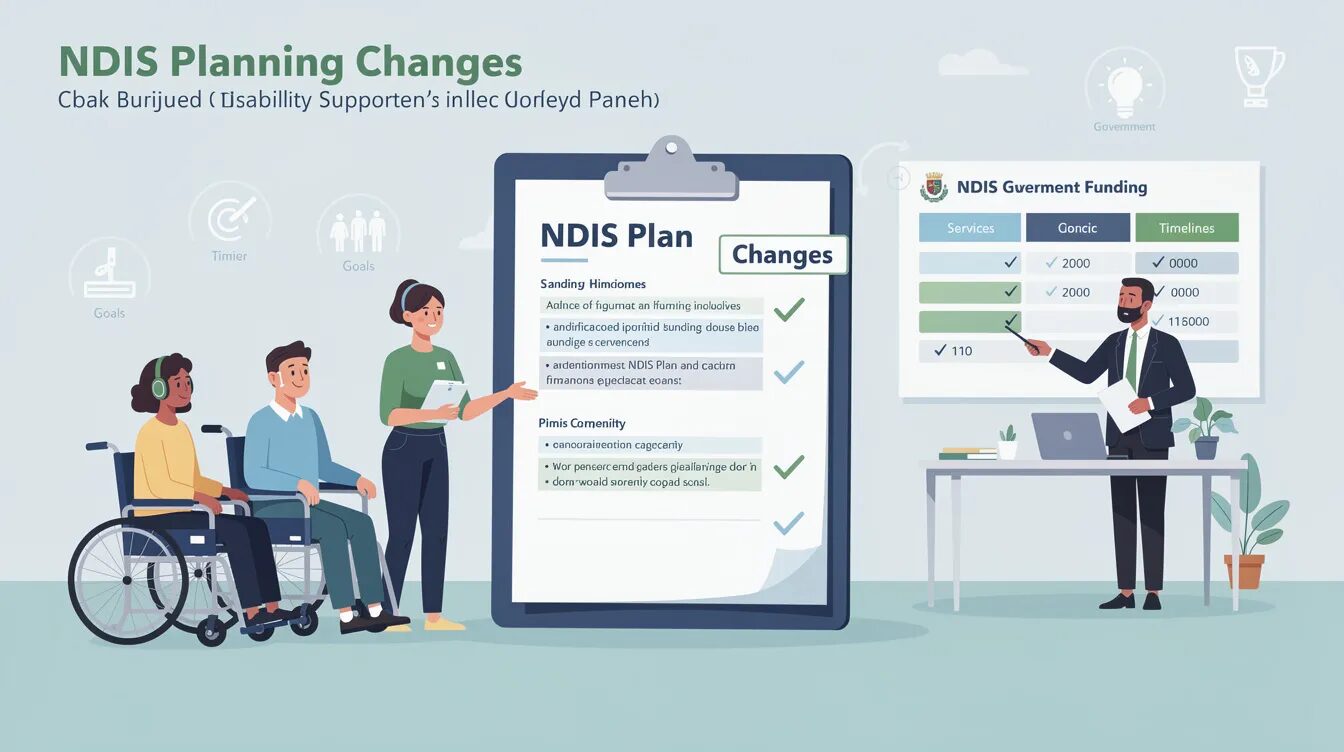
The main goal of the NDIS planning changes is to create a clearer, fairer, and more consistent planning framework. Instead of relying mostly on individual reports, diagnosis labels, and different planning conversations, the new planning needed an approach will use a structured support needs assessment.
The new way of planning focuses on a person’s disability support needs, daily life, functional abilities, goals, support people, and environmental factors, and it is closely linked to how NDIS providers deliver mental health recovery and community participation supports. In simple terms, this means the assessment process should look at how disability affects someone’s life, not just what diagnosis they have.
The NDIA has said new framework planning is expected to begin from mid-2026 with a small number of participants, then roll out gradually over several years. Current plans and supports will stay the same until participants move to the new process. (NDIS)
The Australian Government plans to begin transitioning NDIS participants to new framework plans starting in September 2025, with all participants expected to have transitioned within five years.
NDIS Act And The New NDIS Rules Review Context
The NDIS Act now allows for new rules around framework plans, budgets, funding periods, reassessments, and how participants can use their funding. The 2024 amendment also clarified that participants must spend NDIS money only on NDIS supports and in line with their plan. (Australian Parliament House)
Budgets are shifting from diagnosis-based assessments to functional capacity metrics in NDIS support needs assessments. Funding allocations in NDIS plans are typically capped within regular 3-month or 12-month periods to control spending.
These other improvements and legislative changes connect strongly with the NDIS Review. The review recommended a more consistent, person centred planning process that uses needs assessments to help determine a participant’s reasonable and necessary budget. The idea is to reduce unfair differences between plans and make the system easier to understand.
Funding in certain areas, such as social and community participation, has been standardized or capped to ensure NDIS sustainability, which makes it even more important to work with providers who specialise in community access and participation supports. New framework plans will cover longer periods, providing participants with more certainty and reducing the frequency of scheduled plan reviews.
The Australian Government, NDIA, state and territory governments, territory governments, providers, and the disability community are also involved in developing the framework planning rules and new framework planning rules. Public consultation on the new planning rules was open until 6 March 2026, allowing participants, providers, families, carers, and organisations to provide feedback before the final version of the rules is settled. (NDIS)
What Is New Framework Planning?
New framework planning is the new approach that will gradually change how some future NDIS plans are created.
A new framework plan is expected to include a participant’s goals, support needs, total funding, funding periods, flexible budget, stated supports, and plan management type. This is different from old framework plans, where funding is often built around individual supports and plan categories.
The new NDIS budgeting approach is designed to create more flexible budgets compared with current plans. Funding in new framework plans may be provided either as a stated item for a specific purpose or as part of a flexible budget that can be used across a range of eligible NDIS supports. (Australian Parliament House)
What Is A Support Needs Assessment?
A support needs assessment involves a trained assessor collaborating with a participant to gain a comprehensive understanding of their life circumstances and disability-related support requirements.
The NDIA says the support needs assessment will focus on a person’s support needs rather than functional impairment alone, including how they make life choices, independence and participation decisions. This is important because it aims to make the process more person-based, strengths-based, and connected to real life.
The assessment may look at:
- daily life
- functional abilities
- support people
- living arrangements
- disability-related needs
- communication needs
- environmental factors
- goals and preferences
- changing circumstances
Participants should be able to bring family, carers, advocates, or other support people to help explain their needs, including in-home care providers who understand personalised in‑home daily living support. (Health Dept Australia)
How The Support Needs Assessment Works

The assessment process is expected to follow a clearer pathway. First, the NDIA contacts the participant and provides information to help them prepare. Then the participant meets with an NDIA assessor to discuss their daily life, support needs, and preferences.
After the conversation, the assessor prepares an assessment report. The NDIA then uses the assessment report to structure the participant’s NDIS plan and create a total funding amount, also known as the plan budget. (Health Dept Australia)
In some circumstances, treating health professionals or other health professionals may be asked to provide reports, especially where the participant’s needs are complex or where more evidence is needed. This may reduce pressure on participants to keep paying for repeated expensive reports, but participants should still keep useful therapy notes, progress reports, support logs, and examples of day-to-day support needs.
Assessment Tools Including I-CAN V6 And Workforce
The Instrument for the Classification and Assessment of Support Needs, known as I-CAN v6, will be used as a base for developing the new support needs assessment. It is described as a person-based and strengths-based tool that looks at the support a person needs to live their daily life.
The NDIA has said it is working with the University of Melbourne and the Centre for Disability Studies to develop the support needs assessment. The final details around training, workforce, accreditation, and technical guidance should be checked through official NDIA updates as the rollout gets closer. (NDIS)
Some advocacy groups have raised concerns about how I-CAN v6 will work across different disability types, including autism, acquired brain injury, psychosocial disability, First Nations communities, and culturally and linguistically diverse communities, especially where people rely on comprehensive mental health and psychosocial disability supports. These concerns are why consultation, testing, and lived experience remain important. (The Guardian)
Budgets, Budget Method And New Framework Plan Funding
One major part of the NDIS planning changes is the budget method. Under the new approach, the needs assessment feeds into how the participant’s funding is calculated.
New framework plans will include funding as either:
- stated supports, which must be used for a specific support or purpose
- flexible funding, which can be used across a range of eligible NDIS supports
A flexible budget may give participants more practical choice in how they use funding for everyday disability-related supports. However, the definition of legally claimable NDIS expenses has also been tightened. NDIS funding must be used for supports that are reasonable, necessary, linked to disability support needs, and allowed under the NDIS rules. (Australian Parliament House)
Funding allocations may also be managed through regular funding periods, such as 3-month or 12-month periods, to help control spending and make budgets last across the full plan period, including when purchasing assistive technology through NDIS funding. New framework plans may cover longer periods, which could give participants more certainty and reduce the frequency of scheduled plan reviews, but many people will still rely on specialist NDIS support coordination services to navigate changes.
Access, Funding And Functional Capacity
A major reform direction is the shift away from diagnosis-led decisions and toward functional capacity and disability support needs, including how people use assistive technology to increase independence. Public reporting says the Australian Government plans to reduce NDIS participant numbers from around 760,000 to about 600,000 by the end of the decade, partly by shifting people with lower support needs toward mainstream, foundational, or community supports and broader capacity building in the community. (ABC News)
This does not mean every participant will lose support. But it does show why participants should understand their disability-related support needs clearly, particularly around mental health recovery coaching and supports. Mandatory functional or needs-based assessments are expected to play a bigger role in future access and funding decisions, rather than relying only on diagnosis, especially where participants are seeking capacity building supports to improve independence.
Funding in certain areas, such as social and community participation, is also expected to be standardised or capped to help improve NDIS sustainability, so understanding how your NDIS Core Supports budget works will become even more important. This is one of the reasons participants should keep records of how supports help with independence, safety, community access, and daily living. (The Guardian)
Rights, Reviews And NDIA Decision-Making For Participants

Participants still have rights. If a participant disagrees with certain NDIA (National Disability Insurance Agency)decisions, they can usually ask for an internal review. If they disagree with the outcome of that internal review, they may be able to apply to the Administrative Review Tribunal.
However, some reports have raised concerns about how appeals may work under the future new framework planning system, especially if assessment tools are used to calculate plan budgets. This is an important area for participants, providers, and advocates to monitor as the final rules are developed. (The Guardian)
The NDIA also has stronger powers around funding management. Under new management-of-funding rules, the NDIA may restrict self-management or plan management where there is risk that funds are not being used properly. In practical terms, participants should make sure claims match their plan, invoices are clear, and funding is not repeatedly depleted early without a clear reason. (Team DSC)
Provider Registration, SIL And Digital Platforms
The reforms are not only about participant plans. They also affect providers.
By July 2026, Supported Independent Living providers and digital platform booking providers are expected to face stronger registration requirements with the NDIS Quality and Safeguards Commission, which will be particularly relevant for specialist autism and NDIS supports. This is part of a broader effort to improve safety, reduce fraud, and strengthen provider accountability.
The Australian Government has also introduced the National Disability Insurance Scheme Amendment (Integrity and Safeguarding) Act 2026, which received Royal Assent on 8 April 2026. This Act strengthens compliance, safeguarding, enforcement, whistleblower protections, and oversight across the scheme. (Health Dept Australia)
For participants, this means provider choice remains important, including choosing partners who offer holistic aged care, disability and mental health supports. For providers, it means registration, record keeping, clear service agreements, and ethical claiming will matter even more.
Disability Community Involvement And Framework Planning Rules
The disability community has played an important role in shaping new planning. People with disability, families, carers, providers, culturally and linguistically diverse communities, and organisations with lived experience have been invited to share feedback.
The public consultation on the new way of planning was open until 6 March 2026, with feedback from this process expected to help shape the final version of the rules. (NDIS)
This consultation matters because framework planning will affect real people, not just paperwork. Participant feedback can help government understand where the system may work well and where it may create risks.
Timeline And Rollout For New Framework Planning
There has been some confusion about dates. Earlier commentary referred to September 2025 as a possible target for beginning transition. The current official NDIA position is that the first participants are expected to start using new framework planning from mid-2026, with a gradual phased introduction. (pathwaystocare.com.au)
The Department says all NDIS participants aged 16 years and over will gradually move to new framework plans. The changes will happen in stages, so many participants will not notice any difference at first. (Health Dept Australia)
This phased approach is important because it gives participants, families, providers, and support coordinators time to understand the new planning framework, prepare records, and ask questions before changes apply to them.
Risks, Concerns And Stakeholder Responses
The reforms aim to create fairness, consistency, and sustainability. But there are also concerns.
Advocates have raised questions about mandatory assessments, reduced human involvement, appeal rights, access criteria, early intervention requirements, social and community participation caps, and whether assessment tools will understand complex disability needs. (The Guardian)
These concerns are valid because a person’s disability support needs can be affected by many things, including health, housing, family support, trauma, culture, communication, location, and environmental factors.
A good planning process should remain person centred. It should understand the participant’s reasonable and necessary support needs, not just convert a conversation into a number.
What NDIS Providers And Businesses Should Do
Providers should prepare now. Participants will search for plain-English answers about NDIS planning changes, support needs assessments, flexible budgets, reviews, and funding periods, and many will look for accessible resources like Re.Connect Support Services’ NDIS and mental health blog.
Providers should:
- update service pages to explain new framework planning
- audit website content for old planning terminology
- create easy explainer blogs about support needs assessments
- train intake teams and support workers
- prepare FAQs for participants and families
- explain how plan reassessment may work
- optimise local SEO for “NDIS planning changes”
- create webinars or Q&A sessions for the community
Support coordinators and providers should also help participants document daily life impacts, support needs, goals, changes in circumstances, and how NDIS supports improve independence, in partnership with person‑centred support providers focused on independence.
How Participants And Organisations Can Have Their Say
Participants and organisations should continue to provide feedback through official engagement opportunities when they open.
They can join NDIA workshops, follow NDIS Engage, monitor Department consultation updates, and document examples from lived experience. Providers and organisations should keep copies of submissions and feedback because these may be useful for future advocacy, staff training, and service planning.
Final Thoughts On NDIS Planning Changes
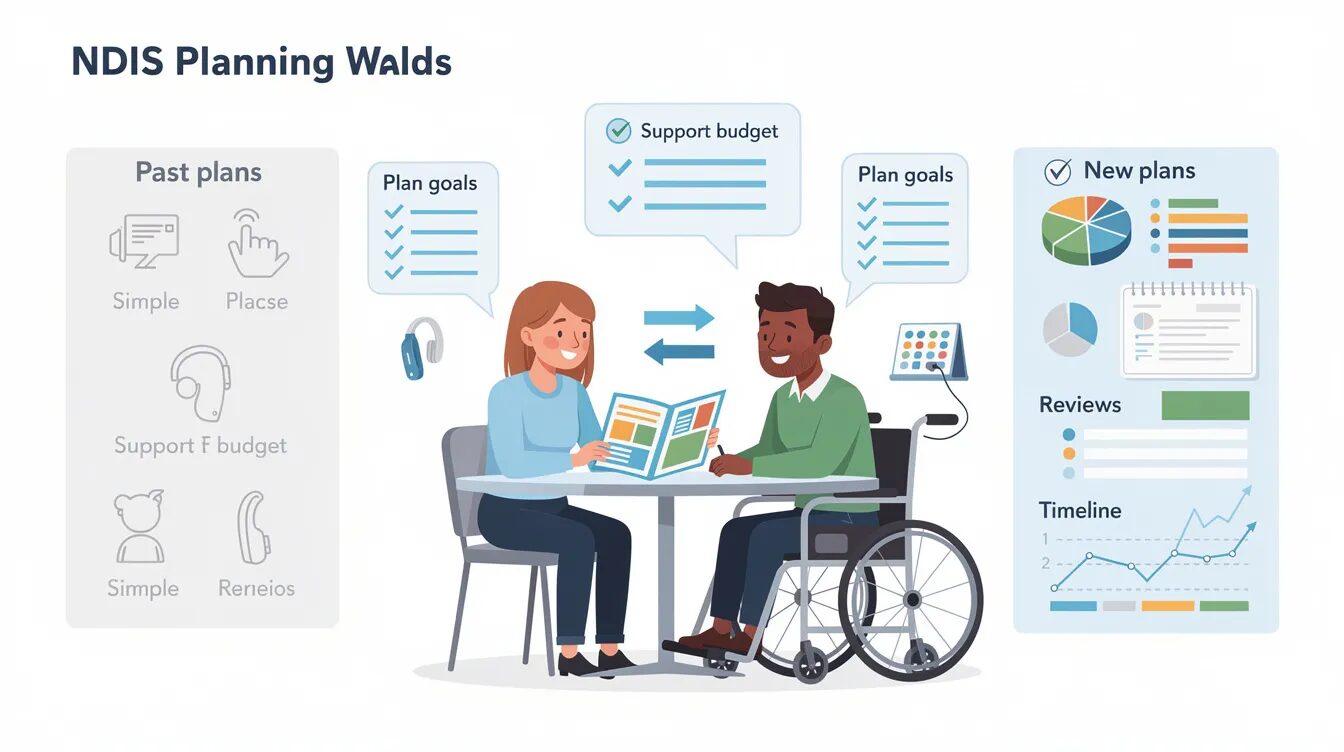
The NDIS planning changes are significant, but participants do not need to panic. The first participants are expected to begin using the new planning approach from mid-2026, and the rollout will happen gradually.
The best preparation is to understand your current NDIS plan, keep records, know your support needs, and ask for help early. Participants should focus on how disability affects daily life, what supports improve independence, and what evidence may help explain their needs.
For providers, the priority is clear communication, updated resources, ethical claiming, and practical guidance.
Re.Connect Support Services can help participants, families, and organisations understand the planning framework, prepare for future changes, and feel more confident about the next stage of the NDIS.
FAQs About NDIS Planning Changes
What are the NDIS planning changes?
The NDIS planning changes are reforms to how participant plans may be created in the future. They include new framework planning, support needs assessments, flexible budgets, stated supports, funding periods, and new planning rules.
When will new framework planning start?
The current official NDIA position is that new framework planning is expected to begin from mid-2026 with a small number of participants, then roll out gradually over several years. (NDIS)
What is a support needs assessment?
A support needs assessment is a guided process where a trained assessor works with a participant to understand daily life, disability support needs, functional abilities, environmental factors, goals, and preferences.
Will my current NDIS plan change immediately?
No. Current plans and supports stay the same until a participant moves to the new process. The rollout will be phased, so many participants will not see changes for some time.
What is a flexible budget?
A flexible budget is funding that can be used across a range of eligible NDIS supports. Some funding may still be listed as stated supports, which must be used for a specific purpose.
Can the NDIA restrict self-management?
Yes, under funding management rules, the NDIA can restrict self-management or plan management in some circumstances where there is risk that funding is not being used properly. (Team DSC)
Can participants review an NDIA decision?
Yes. Participants may be able to request an internal review. If they disagree with the internal review outcome, they may be able to apply to the Administrative Review Tribunal.