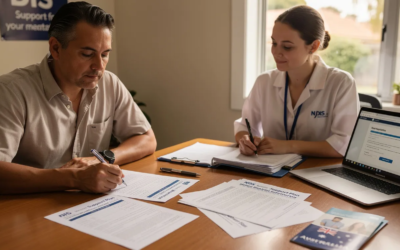
An NDIS CALD participant is a recipient from a Culturally and Linguistically Diverse background. In practical terms, this may mean the person was born overseas, comes from non english speaking backgrounds, or may not speak English at home. This guide explains what CALD means in the national disability insurance scheme, the barriers CALD people face, and the supports available to improve access, understanding, and outcomes.
Key Takeaways
- CALD means ‘culturally and linguistically diverse’, and 9.2% of NDIS participants identify as CALD, compared with about 30% of Australians who identify as culturally and linguistically diverse.
- CALD participants often face complex barriers when interacting with disability services, including low awareness, language barriers, cultural stigma, transport issues, and unfamiliar government processes.
- Free language support is available: TIS National provides interpreting services in over 160 languages, and callers can phone 131 450 and ask for the NDIS on 1800 800 110.
- The NDIS CALD Strategy was co-designed with over 800 participants, families, carers, community leaders, and organisations, and the Action Plan includes 28 actions linked to the Strategy’s priorities.
- Efforts are ongoing to improve engagement and access for CALD participants in the NDIS, including community connectors, accessible communications, annual reporting, and culturally safe services.

What Does CALD Mean in the NDIS?
CALD stands for culturally and linguistically diverse. In the NDIS, CALD participants are ndis participants from cald backgrounds, often including people whose main language at home is not English, people born in countries outside the main English-speaking countries, or families from multicultural communities with different cultural understandings of disability.
The national disability insurance agency uses information such as country of birth, main language spoken at home, and interpreter needs to understand cultural and linguistic diversity in the Scheme. Official data generally excludes First Nations participants from the CALD count, because First Nations identity is reported separately in NDIS and Australian Institute of Health and Welfare datasets.
Useful facts:
- 9.2% of NDIS participants identify as culturally and linguistically diverse.
- 9.2% of NDIS participants are from CALD backgrounds.
- 30% of Australians identify as culturally and linguistically diverse, and 30% of Australians identify as CALD individuals.
- ABS Census data shows about 29.3% of Australians were born overseas and about 22.8% spoke a language other than English at home, according to the ABS cultural diversity summary.
- Public NDIA quarterly reporting has previously shown CALD participants as a smaller share of the Scheme than the broader population share, which is why targeted access work matters. See the NDIS quarterly reports.
This definition matters in the disability sector because it guides data, planning, outreach, accessible communications, and funding analysis. It also helps government and providers understand the needs of cald participants, including whether ndis plans reflect language, cultural, health, family, and disability support needs.
Key Challenges for CALD Participants in the NDIS
CALD participants face additional barriers on top of the already complex NDIS rules and policy changes in 2024. The disability insurance scheme ndis can be difficult for any participant, but cultural and linguistic diversity can make every step harder, from first contact to plan reviews.
Common barriers include:
- Lack of awareness: Many CALD communities lack awareness of the NDIS. New migrants, refugees, and families from many communities may never have used a national disability insurance or social insurance model before. They may be unsure about eligibility, evidence, planning meetings, and what ndis services can fund.
- Language barriers: Language barriers hinder understanding of application processes and communication with support workers. Language barriers complicate NDIS applications for CALD participants because terms like “reasonable and necessary supports” are hard even for fluent English speakers. For linguistically diverse families, provider agreements, reports, and ndis plans can be overwhelming.
- Cultural stigma: Some cultures attach social stigma to disability which affects help-seeking behavior. Cultural stigma can prevent CALD individuals from seeking disability support, especially where disability is treated as private, shameful, caused by fate, or managed only through faith or traditional medicine.
- Practical system barriers: Transport limits, digital exclusion, low literacy, unfamiliar Australian government systems, and past trauma can reduce access. This is especially relevant for people living in outer suburbs, regional areas, or communities affected by violence, displacement, or refugee experiences.
- Funding and outcomes: CALD participants historically receive lower levels of funded support compared to non-CALD participants, which has increased the focus on equity, better data, and culturally responsive development across the disability community.
Navigating the NDIS in Your Own Language
CALD people do not need to speak English to access ndis services. The NDIS provides multilingual information and resources to enhance accessibility for CALD participants, and free interpreters can be used for NDIS-related calls, planning meetings, reviews, and provider communication.
To use TIS National:
- Call 131 450.
- Say the language you need.
- Ask the interpreter to call the NDIS on 1800 800 110.
- Explain that the call is about the NDIS, an access request, a plan, a review, or another Scheme matter.
TIS National provides interpreting services in over 160 languages. Interpreters arranged for NDIS-related conversations are free and do not come out of a participant’s funding.
For meetings, ask early. Planners, local area coordinators, support coordinators, providers, or advocates can help book interpreters for planning meetings and reviews. Auslan, video interpreting, and face-to-face interpreting may be available depending on location and language.
A typical ndis cald participant journey may look like this:
- First enquiry: Call the NDIS with TIS National, or ask a trusted worker from community organisations to help.
- Access request: Ask for translated information, interpreter support, and help gathering medical or functional evidence.
- Planning meeting: Tell the planner about preferred language, cultural needs, family roles, transport, and communication preferences.
- Plan implementation: Support coordinators can assist in including language support and assistive technology that supports independence in a participant’s NDIS plan and connecting with bilingual workers where available.
- Reviews and reassessments: Request interpreters again, bring an advocate if needed, and explain what has or has not worked.
Digital tools can also help. Participants and carers can use browser translation in Google Chrome, translated fact sheets on the NDIS website, and the ReadSpeaker tool on the NDIS Quality and Safeguards Commission website. Using an interpreter protects choice and control: interpreters translate information, but they do not make decisions, give legal advice, or choose supports.

Community Connectors, Advocates and Local Support for CALD People
Community-based support is often the difference between knowing the NDIS exists and being able to participate in it. The NDIS committed $20 million to the National Community Connector Program to help people from cald communities, including people living with disability, families, and carers, connect with the Scheme and local services.
Community Connectors may be workers in multicultural, faith-based, disability, or local community organisations. Their role is to educate, build awareness, and support access for culturally and linguistically diverse people through community connection and engagement supports. They commonly help by:
- explaining eligibility and what evidence is needed
- helping families prepare access requests
- linking participants to local area coordinators or Early Childhood partners
- explaining how ndis plans work
- connecting people with culturally safe supports and bilingual support workers
Independent disability advocates are also important. Culturally specific advocacy groups assist CALD participants during planning and appeals, especially when people have limited English, low literacy, complex trauma, or difficulty challenging decisions. These services are usually free and independent of the NDIA, and can be critical when people are exploring options like Supported Independent Living (SIL) under the NDIS.
To find support, try the Disability Gateway, state-based advocacy peak bodies, local multicultural services, settlement organisations, carers peak bodies, or the national ethnic disability alliance. These stakeholders often worked closely with government, providers, and community leaders to identify gaps affecting multicultural communities.
The NDIS CALD Strategy 2024–2028 and Action Plan
The Cultural and Linguistic Diversity CALD Strategy 2024–2028 is the NDIA’s main strategy for improving access, outcomes, and the overall ndis experience for CALD participants and communities. The NDIS aims to improve systems for CALD participants by 2028 through better communication, stronger data, more culturally safe services, and deeper partnership with communities.
The NDIS co-designed the CALD Strategy with over 800 people. The CALD Strategy was co-designed with over 800 participants, including people with lived experience, families, carers, community leaders, disability organisations, sector representatives ndis staff, and other stakeholders. This co design approach was intended to make the strategy practical rather than symbolic.
The Strategy includes 6 key priorities for CALD participants:
- better infrastructure and systems
- stronger staff capability and cultural competency
- more accessible communications
- better market responses and culturally safe services
- improved data on linguistic diversity
- stronger outreach and partnerships with communities
The action plan contains 28 actions linked to the strategy’s priorities. The Action Plan includes 28 actions linked to the Strategy’s priorities, with responsibilities, timeframes, and reporting. The NDIS will publish annual reports on CALD Strategy progress, including accessible formats such as Easy Read and Auslan. The 2025 progress report covers activity from 30 April 2024 to 30 April 2025, according to the NDIS CALD Strategy page.
The ndis cald strategy, cald strategy 2024 2028, strategy and action plan, and linguistic diversity cald strategy documents are useful for providers who want to develop their own action plan. The strategy aims to create positive change so cald participants improve their access to support and have a better ndis experience.
Improving Services for CALD Participants in the Disability Sector
Providers, support coordinators, plan managers, and the broader disability sector have a direct role in making services accessible and culturally safe. A useful starting point is to develop an internal cald strategy or cultural and linguistic diversity action plan aligned with the NDIS CALD Strategy 2024–2028 and local community demographics, and to look at examples of personalised disability and community support services.
Practical ways to ndis improve services include:
- offer translated brochures, plain English information, audio, video, and Easy Read formats
- ask every cald person about preferred language, interpreter needs, country of birth, and communication preferences
- use qualified interpreters instead of relying on children or family members for complex decisions
- provide cultural competency training to staff; cultural competency training is provided to NDIS staff to better understand diverse needs
- recruit bilingual staff and follow the NDIS promotes the use of bilingual support workers to provide culturally responsive services, drawing on diverse and inclusive disability support workers
- partner with community leaders, multicultural organisations, and language groups
- collect and review data to monitor equity, access, complaints, outcomes, and service use
Good practice is not just translation. It means asking, listening, and checking whether supports are culturally appropriate. Providers should focus on accessible communications, staff capability, privacy, trust, and feedback, and on holistic, person-centred disability support that builds independence. Engagement should include CALD people with lived experience through advisory groups, co-design workshops, surveys, and community forums so initiatives are informed by real experiences rather than assumptions, particularly for groups needing specialist NDIS support for people with Autism Spectrum Disorder.

Frequently Asked Questions
Do I need to be an Australian citizen to access the NDIS as a CALD participant?
NDIS eligibility is based on residency status, age, and disability criteria, not cultural background. A person must generally be an Australian citizen, permanent resident, or hold a Protected Special Category visa. Being culturally and linguistically diverse does not advantage or disadvantage eligibility, but it may affect the support needed to understand and navigate the Scheme. For current advice, call 1800 800 110 or use TIS National on 131 450.
Does using an interpreter cost me anything as an NDIS participant?
No. Interpreters arranged through TIS National for NDIS-related conversations are free for participants, families, and carers. You can ask planners, local area coordinators, providers, or advocates to book an interpreter. Interpreter support is for communication and is not deducted from your NDIS funding.
Can CALD participants choose providers who speak their language?
Yes. NDIS participants have choice and control, including the option to choose providers who speak their preferred language or understand their cultural background, where available. You can search the NDIS Provider Finder, ask local multicultural services, contact community networks, or ask a support coordinator. If no linguistically diverse provider is available, interpreters and translated materials can bridge the gap.
How does the NDIS collect information about CALD participants?
The NDIA collects information such as country of birth, main language spoken at home, and interpreter needs, usually during first contact, access, or planning. This information is used in a de-identified way to analyse access, outcomes, gaps, and progress for cald participants. Personal information is protected under Australian privacy laws and NDIA privacy policies.
Where can I read the CALD Strategy 2024–2028 and its progress reports?
You can read the CALD Strategy 2024–2028, its Action Plan, Easy Read versions, translated summaries, and annual progress reports on the official NDIS website under strategies and publications. Participants, families, providers, and organisations can use these documents to understand the government commitment, track progress, and improve local approaches to supporting CALD participants in the disability sector.