
If you or someone you care about is exploring supported independent living through the NDIS, understanding the real costs involved is one of the most important steps you can take. This guide from Re.Connect Support Services breaks down exactly what SIL funding covers, what it does not, and how to budget for the everyday expenses that sit outside your NDIS plan.
Key Takeaways
- Typical NDIS supported independent living (SIL) funding in Australia ranges roughly from $80,000 to over $320,000 per year, depending on whether you need low, medium, or high support and 24/7 care.
- SIL funding pays for support workers and supervision with daily tasks. It does not cover housing, rent, food, utilities, or other ordinary living expenses.
- Individual costs to the participant come from personal income (e.g. Disability Support Pension) to cover rent, groceries, utilities, transport, and other living costs in private rental, SDA, or other disability accommodation.
- The level of support needs significantly influences the annual cost of SIL, with factors like overnight support, high-intensity tasks, and geographic location all playing a role.
- Re.Connect Support Services can help Australian families interpret NDIS pricing, compare SIL providers, and understand their own likely independent living cost.
What Is Supported Independent Living (SIL) and How Costs Work
Supported independent living is an NDIS-funded support designed to help people with permanent and significant disability manage daily tasks inside the home. This includes help with cooking, cleaning, personal care, medication management, and community access, so participants can live independently in the community rather than in institutional settings.
Supported independent living SIL is a specific NDIS home and living support category. It sits alongside other options like Individualised Living Options (ILO) and specialist disability accommodation, but it focuses exclusively on the people who deliver support, not the building you live in.
SIL funding covers the cost of support workers and supervision. Participants still pay rent, food, utilities, and personal expenses from their own income. This distinction is critical for budgeting: the NDIS pays the provider for disability related support through your Core Supports budget, while you cover day to day expenses like any other Australian renter or homeowner.

Key cost concepts to keep in mind:
- SIL funding is for support services, not housing costs.
- SIL can include personal care, cooking, and household tasks.
- Participants may receive SIL support 24 hours a day.
- Housing is funded separately (through SDA funding or paid from personal income).
- Re.Connect Support Services is a specialist SIL provider helping participants understand and manage independent living costs across Australia.
Who Qualifies for SIL and When Is High-Cost Support Approved?
You may be eligible for SIL if you need regular support with daily living tasks and have a permanent and significant disability. The National Disability Insurance Agency (NDIA) does not base SIL eligibility on age; young adults, working-age participants, and older Australians can all receive SIL funding if their functional capacity and safety risks justify it, and many also benefit from Centres for Independent Living in Australia as part of their wider support network.
The NDIS assesses your support needs during the planning meeting, looking at functional assessments, your current living situation, safety risks, and the level of supervision required. SIL applications require a roster of care detailing support needs, and SIL funding applications can take 4 to 8 weeks for approval.
Indicators that typically push SIL costs toward the upper funding ranges include:
- 24/7 supervision or active overnight assistance
- Complex support involving behavioural intervention plans
- High physical support needs requiring specialised lifting or medical tasks
- Very high support needs where a 1:1 or near-solo staffing ratio is necessary
- Unpredictable episodes requiring immediate response from trained staff
Re.Connect Support Services can help families gather the right evidence, including OT reports, behaviour support plans, and nursing reports, so that the NDIA properly recognises higher-cost support required.
Independent Living Costs vs SIL Funding: What NDIS Pays and What You Pay
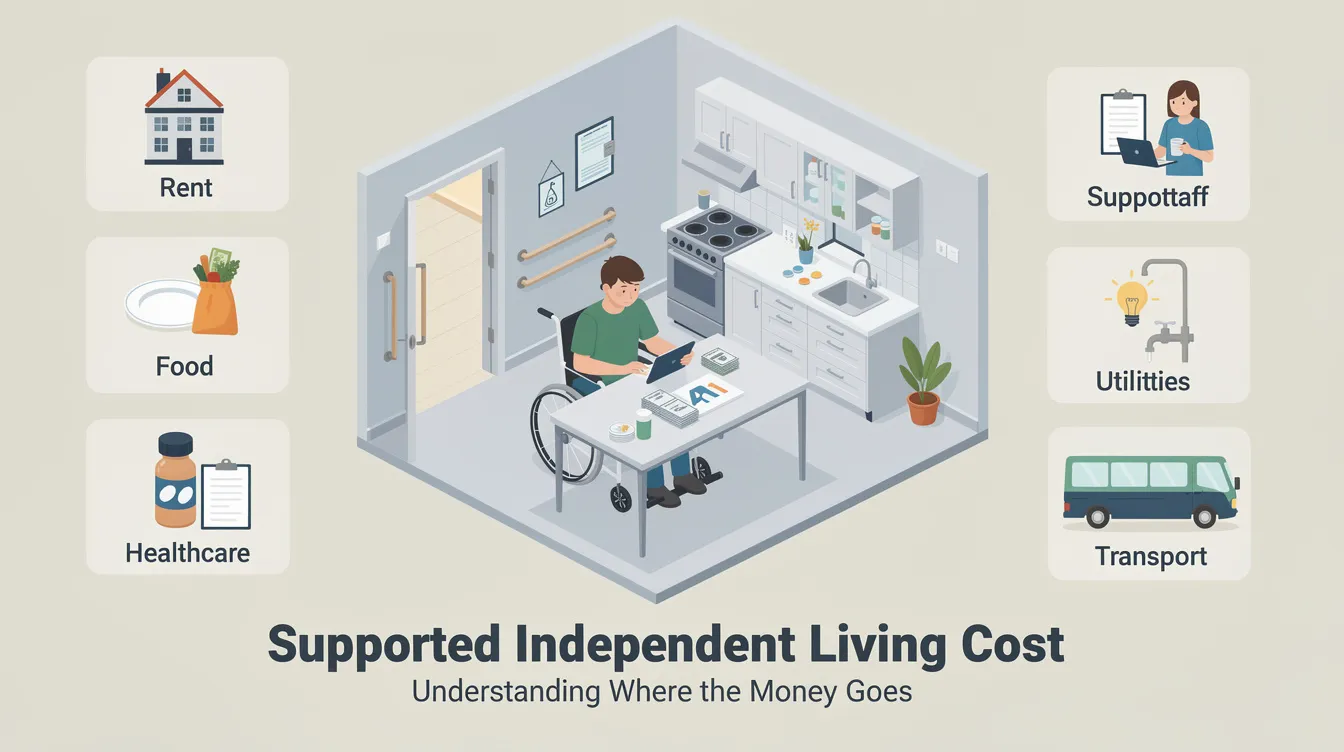
Independent living cost refers to all the ordinary expenses of living in the community: rent or mortgage payments, food, utilities, internet, transport, and personal items. SIL funding covers only disability related support at home. These are two completely separate budgets.
SIL funding does not cover rent, food, or utilities. Participants typically pay for personal expenses such as groceries and utilities out-of-pocket using their personal income, wages, or Disability Support Pension.
What NDIS funding covers through SIL:
- Staff time for daily support, supervision, and prompting
- Behaviour support implementation
- Skill-building toward independent living skills and life skills
- Sleepover support or active overnight assistance
- Administrative overheads of the SIL provider
What you pay from your own income:
- Rent in private rental, community housing, or SDA reasonable rent contribution
- Groceries and household consumables
- Electricity, gas, water, phone, and internet
- Transport (unless separately NDIS-funded)
- Clothing, entertainment, medical appointments gap fees, and personal expenses
- Property maintenance contributions where applicable
Understanding this split is essential: SIL may fund $100,000 or more of support, but participants still need a realistic income-based budget for actual living costs and everyday living expenses.
SIL Price Drivers: Why Supported Independent Living Costs Vary So Much
SIL costs range from $80,000 to over $320,000 annually. That wide band exists because several variables interact to determine what any individual’s SIL package looks like.
NDIS SIL pricing is based on factors including support needs and intensity. The efficiency of a provider’s care roster can optimise labour costs in SIL, meaning that how many hours of support are rostered and how those hours are distributed across the week directly shapes the total.
Major cost drivers include:
- Total weekly support hours: More hours of daytime assistance, evening, and overnight support increase costs proportionally.
- Standard vs high-intensity support: High support tasks (e.g. catheter care, ventilator management, complex behavioural responses) attract higher hourly support rates.
- Active overnight vs sleepover: Active overnight assistance is significantly more expensive than sleepover shifts where the worker is mostly inactive.
- Shared vs solo SIL: Participants in shared SIL arrangements can reduce individual costs by sharing support hours. Solo SIL requires evidence that a shared living arrangement is not suitable.
- Geographic location: Regional location impacts accommodation costs and support pricing. Remote and very remote areas attract higher NDIS price limits, while capital cities may have higher provider overheads.
- Penalty loadings: Costs vary by day and time, with higher rates for evenings, weekends, and public holidays.
Re.Connect Support Services can walk families through example rosters to show how small changes in support hours or shift types can change annual SIL costs by tens of thousands of dollars, and our detailed guide to Supported Independent Living under the NDIS explains the broader process of applying for and using SIL funding.
Typical SIL Support Rates and Funding Ranges (2025–26)
The NDIS updates its Pricing Arrangements and Price Limits (PAPL) annually. From 1 July 2025, many disability support worker rates increased by approximately 3.95% to reflect wage and cost-of-living pressures. The figures below reflect 2025–26 pricing.
Approximate support rates (national, standard geographic area):
- Standard weekday daytime support: around $56–$70 per hour (hourly rates for standard support start at $56 per hour)
- High-intensity weekday daytime support: around $90–$150+ per hour depending on qualification level
- Evening and weekend support: higher than weekday daytime rates due to penalty loading
- Sleepover support (worker mostly inactive overnight): approximately $297.60 per night
- Active overnight shifts: approximately $78.81 per hour; high-intensity support can exceed $350 per shift for overnight assistance
Indicative annual SIL funding bands:
| Support Level | Annual SIL Funding Range |
|---|---|
| Low support (shared home, standard support, no active overnight) | ~$80,000–$120,000 |
| Medium support (more daily tasks, some high-intensity or behaviour support) | ~$120,000–$200,000 |
| High support / 24/7 care (solo or near-solo, complex medical or behaviour needs) | ~$200,000–$320,000+ |
| These figures refer to the NDIS-funded SIL package, not money paid out of pocket by the participant. Actual amounts depend on the NDIA-approved roster of care. Re.Connect Support Services always uses the current NDIS price guide and can provide up-to-date example calculations for families planning SIL support in 2024–2026. |
Shared SIL, Solo SIL and Different Disability Accommodation Options
SIL arrangements are designed to help individuals with disabilities live independently, typically in shared housing. The difference between shared and solo SIL has a major impact on independent living cost.
- Shared SIL (two to four participants in one home) allows support hours and provider overheads to be split across residents, reducing per-person SIL costs. Grattan Institute data puts average per-person cost in a 1:3 group home at approximately $228,000 per year including both support and accommodation elements.
- Solo SIL (one person with their own support team) requires substantially higher annual funding because no support time is shared. NDIA typically approves this only when there is strong evidence that shared accommodation arrangements are not safe or appropriate.
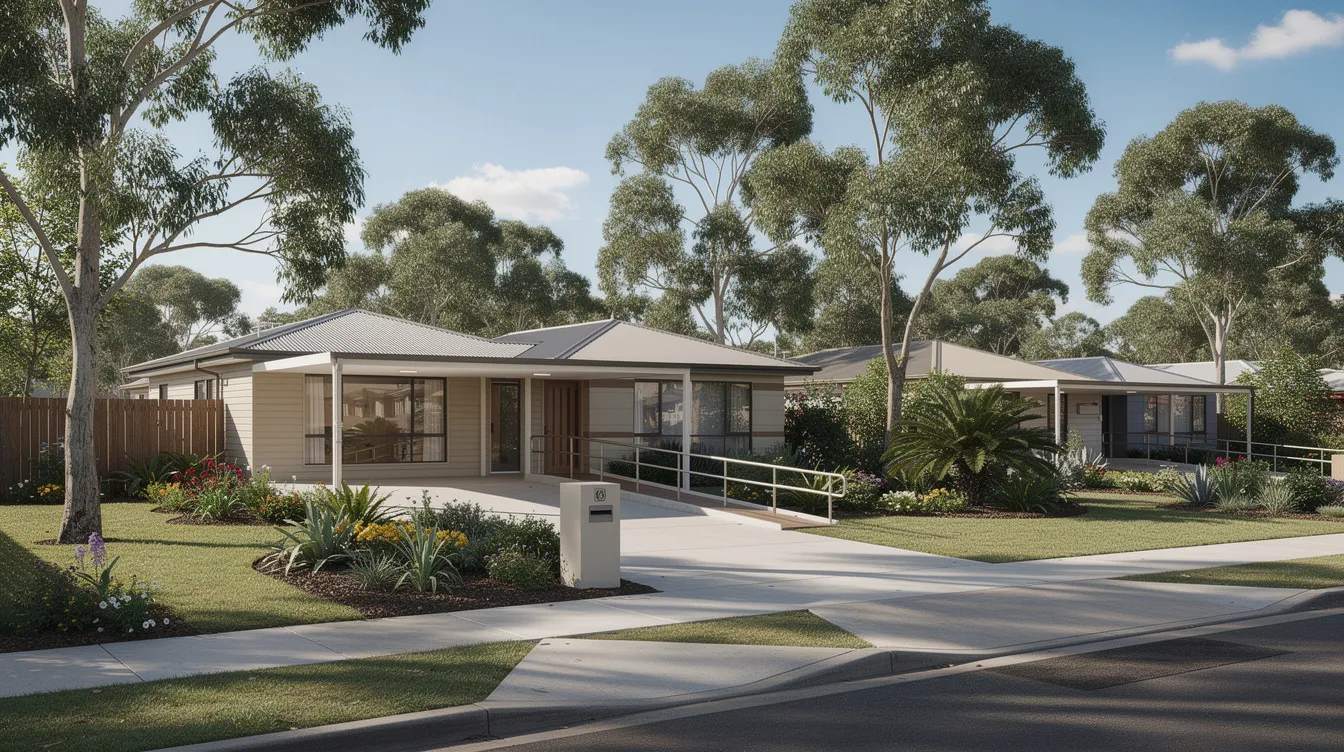
SIL services are often provided in shared accommodation, but SIL can be provided in various housing types, including SDA. Our in-depth Specialist Disability Accommodation guide explains how SDA works alongside SIL funding. The main disability accommodation settings where SIL is delivered include:
- Specialist disability accommodation (SDA) for those with high physical support needs – SDA refers to housing designed for high support needs
- Ordinary private rental with NDIS-funded SIL supports in the home
- Community or social housing
- Family homes (in some cases)
The NDIS enables participants to have both SIL and specialist disability accommodation funding. Participants may receive both SIL and SDA funding separately; SDA funding covers the specialist building, while SIL funding pays for the support team. Re.Connect Support Services helps participants compare independent living costs across these options, including how rent and shared bills differ between private rental, SDA, and community housing, while our broader independence-focused support services ensure housing choices align with long-term goals.
Breaking Down a Typical SIL Cost Scenario (with Living Costs)
Here are two fictional but realistic Australian examples to illustrate how SIL funding and living costs work together. For a broader overview of choosing housing and providers, our guide to finding Supported Independent Living homes in Australia steps through key financial and lifestyle considerations.
Scenario 1: Shared SDA Home in Brisbane
A participant with high physical support living with two housemates in an SDA property:
- Annual SIL funding: approximately $200,000 (shared support, some high-intensity tasks)
- SDA funding: approximately $75,000 (paid separately by NDIS to the SDA provider)
- Weekly rent: capped under reasonable rent contribution rules (typically around 25% of the Disability Support Pension plus Commonwealth Rent Assistance – roughly $180–$220/week)
- Weekly living costs: groceries $80, utilities share $30, transport $25, personal expenses $40
Scenario 2: Private Rental in Regional NSW
A participant needing near-24/7 support, active overnight assistance, and frequent behaviour supports, living alone:
- Annual SIL funding: approximately $280,000–$320,000
- Weekly rent: market rate private rental, approximately $280–$350/week (regional)
- Weekly living costs: groceries $100, utilities $55, transport $30, personal expenses $50

The Disability Support Pension provides baseline income support to help with living costs, and Commonwealth Rent Assistance helps eligible recipients with rental expenses. SIL funding flows separately from the NDIS to the registered provider. Shared accommodation reduces individual costs for rent and utilities compared to living alone. These numbers are illustrations. Re.Connect Support Services can provide personalised cost modelling using the participant’s actual NDIS plan and preferred housing locations, alongside practical tips for managing NDIS funding effectively so your budget stretches as far as possible.
How Re.Connect Support Services Helps You Navigate SIL Funding
Re.Connect Support Services is an Australian SIL provider and NDIS specialist focused on transparent pricing and sustainable independent living arrangements. Our dedicated supported independent living services and broader NDIS supports help participants navigate choices confidently. The team supports participants in several concrete ways:
- Interpreting SIL funding in an NDIS plan and explaining what it means in weekly support hours and real-world support rates
- Working with your support coordinator to design an efficient roster of care that balances high support where it is needed and encourages independence with daily tasks where appropriate
- Assisting with quotes and provider comparisons so families understand which specific costs are SIL, which are SDA, and which are general living costs they must budget for
- Providing stable staffing, skill-building support services, and clear communication about what is and is not included in the SIL agreement
- Helping participants access assistive technology through the NDIS or community access supports funded elsewhere in their NDIS plan to complement SIL
If you want tailored advice on supported independent living cost, Re.Connect can help you understand the numbers behind your plan.
Managing Your Budget: Independent Living Costs, Rent and Everyday Expenses
Even when SIL funding is generous, participants still must manage tight personal budgets to pay rent, food, and ordinary living expenses. The SIL package covers support; everything else comes from your own pocket.
To budget effectively:
- Separate SIL funding (held in the NDIS plan, paid directly to the provider) from personal income (DSP, wages, other payments) when planning your finances
- Map out key categories of living costs: rent or mortgage payments, utilities, groceries, transport, medications, clothing, entertainment, and emergencies
- Consider that housing costs in Australian capital cities are significantly higher than regional areas; choosing your location and whether you live in shared accommodation or your own home can change ongoing support costs and living costs substantially
Practical tools that help include fortnightly budgets matched to DSP payment cycles, Centrepay deductions for rent and utilities, and using support workers to build money management as part of your independent living skills. Re.Connect Support Services encourages participants to link SIL support with broader capacity building, such as practising shopping, cooking to a budget, and bill management, and to use our community connection and engagement supports so that day to day expenses become more manageable over time.
Selecting SIL Providers and Negotiating Support Rates
Participants have the right to choose their SIL provider and to ask detailed questions about how costs are calculated, even when core supports are NDIA-managed, and skilled support coordination services can help you compare options and advocate for value.
When comparing providers:
- Request itemised quotes showing support hours, staff qualification support levels, on-call charges, and administrative overheads separately
- Check whether the provider uses the maximum NDIS support rates in all time periods or offers flexibility within NDIS pricing rules
- Compare multiple SIL providers and ask about staff turnover, ongoing support training, and how rosters are managed to avoid unnecessary high-cost shifts
- Ask about shared utility arrangements in group homes, how rent is calculated in disability accommodation, and what happens to support charges if another resident moves out
Every registered provider must comply with NDIS price limits, but how efficiently they roster staff and manage overheads directly affects the value you receive. Re.Connect Support Services is committed to transparent SIL pricing and can help you understand when and how it is appropriate to negotiate aspects of your living arrangements while staying within NDIS rules, especially as NDIS policy updates in 2024 change provider obligations and participant rights.
Planning for the Future: Reviews, Changes and Long-Term Independent Living Costs
SIL funding and independent living costs change over time as participants gain skills, health conditions shift, or housing situations evolve.
- Use scheduled NDIS plan reviews (typically every 12–24 months) to reassess SIL funding, especially if disability support needs or goals have changed
- Gather up-to-date evidence before reviews: OT reports, behaviour support updates, and nursing reports to justify increased or decreased support hours
- Plan for life events that affect living costs, such as moving from the family home into private rental, transitioning from a shared house to more independent living, or changing disability accommodation types
- Start conversations early with your SIL provider and support coordinator if current SIL support or housing is becoming unaffordable, unsafe, or misaligned with your goals
Re.Connect Support Services can help families map out medium-term housing and support plans so that NDIS funding and independent living costs stay sustainable and aligned with the participant’s goals over time, and our Re.Connect Support Services blog shares ongoing insights about NDIS changes, mental health, and independent living.
Frequently Asked Questions About Supported Independent Living Cost
Below are answers to common cost-related questions that participants and families ask about supported independent living services, including how SIL fits within broader Improved Life Choices supports under the NDIS.
Do I still have to pay rent if I have SIL funding?
Yes. Participants almost always pay rent or housing contributions themselves, whether they live in private rental, community housing, or specialist disability accommodation. SIL funding covers support workers, not accommodation costs.
In SDA, rent is usually capped under reasonable rent contribution rules, often calculated as a set percentage of the Disability Support Pension plus Commonwealth Rent Assistance. In private rental or other disability accommodation, rent follows normal market or social housing rules. Re.Connect Support Services can help you understand exactly which part of your weekly payment goes to rent versus household bills versus personal spending.
Can my SIL funding be used to pay for food, utilities or transport?
No. SIL funding cannot be used for general living costs. It is reserved for disability-related in-home support services at home.
Typical excluded expenses include:
- Groceries and household consumables
- Electricity, gas, water, phone, and internet
- Public transport or vehicle costs
- Clothing, entertainment, and personal items
However, participants can use SIL workers to practise budgeting, shopping, and bill management as part of their skill-building goals, and may also benefit from Re.Connect’s mental health recovery and community participation programs, even though the SIL funding itself does not pay those bills.
What happens to my SIL costs if my support needs increase suddenly?
If support needs increase after hospitalisation, injury, or a change in behaviour, your provider and support coordinator can help request a plan review or change of circumstances assessment from the NDIA.
To support your case, keep:
- Updated medical and allied health reports documenting the change
- A revised roster of care showing additional hours, high-intensity support, or new overnight needs
Re.Connect Support Services can assist with preparing this evidence so any increase in SIL funding is properly considered by the NDIA, drawing on our broader personalised care and disability support services.
Can I combine SIL with other home and living options to reduce overall costs?
Yes. Participants can sometimes use or move to other NDIS options like Individualised Living Options (ILO) or drop-in supports if SIL is not the most cost-effective arrangement for their current needs.
- ILO often provides more flexible, lower-intensity arrangements that may suit people who do not need 24/7 or high support
- Transitioning between SIL and ILO requires NDIA agreement and updated evidence about support needs
Re.Connect Support Services can talk through whether SIL, ILO, or a mix of support services makes more sense for your cost profile and independence goals, and our overview of Supported Independent Living services in Adelaide gives a practical example of how location influences options.
Can my family pay extra on top of SIL funding to increase my support hours?
Families can purchase additional non-NDIS services privately, but these must be clearly separated from NDIS-funded SIL supports and agreements to comply with NDIS rules.
- NDIS-funded SIL must only cover reasonable and necessary supports agreed in the NDIS plan
- Seek guidance from your support coordinator or Re.Connect Support Services before arranging private top-up support to avoid confusion in billing and reporting
The best long-term solution for higher support needs is usually to receive support through appropriate SIL funding from the NDIA rather than relying heavily on private top-ups. If your current plan does not reflect your true needs, a plan review with strong evidence is the most sustainable path forward, and Re.Connect’s personalised NDIS support services can guide you through that process.