If you’re trying to figure out the difference between SIL, SDA, and ILO under the national disability insurance scheme, you’re not alone. These three acronyms cover very different types of funding, and getting them confused can mean months of wasted time in planning meetings. This guide breaks down what each one does, who they suit, and how to get the right supports into your ndis plan.
Key Takeaways
For a broader picture of disability supports beyond housing, many people also look at Australia disability services and accessibility when planning their NDIS journey.
- Supported independent living sil funds daily support (staff and paid support workers), specialist disability accommodation sda funds the physical building (the home itself), and individualised living options ilo funds flexible, person-led living arrangements. They do different jobs.
- Only a small percentage of ndis participants – around 6% – will qualify for sda funding. Most people exploring ndis housing options will be looking at SIL or ILO, or a combination of core supports.
- These options can be combined. For example, SDA + SIL for very high support needs, or a private rental + ILO for someone with lower support needs and strong informal supports.
- Getting approved requires solid evidence: functional assessments, behavioural reports, and a clear explanation of how much support you need day to day.
- Always check the latest NDIA Home and Living resources, as policy and guidelines are updated regularly.
Understanding NDIS Home and Living Supports: SIL, SDA and ILO in Context
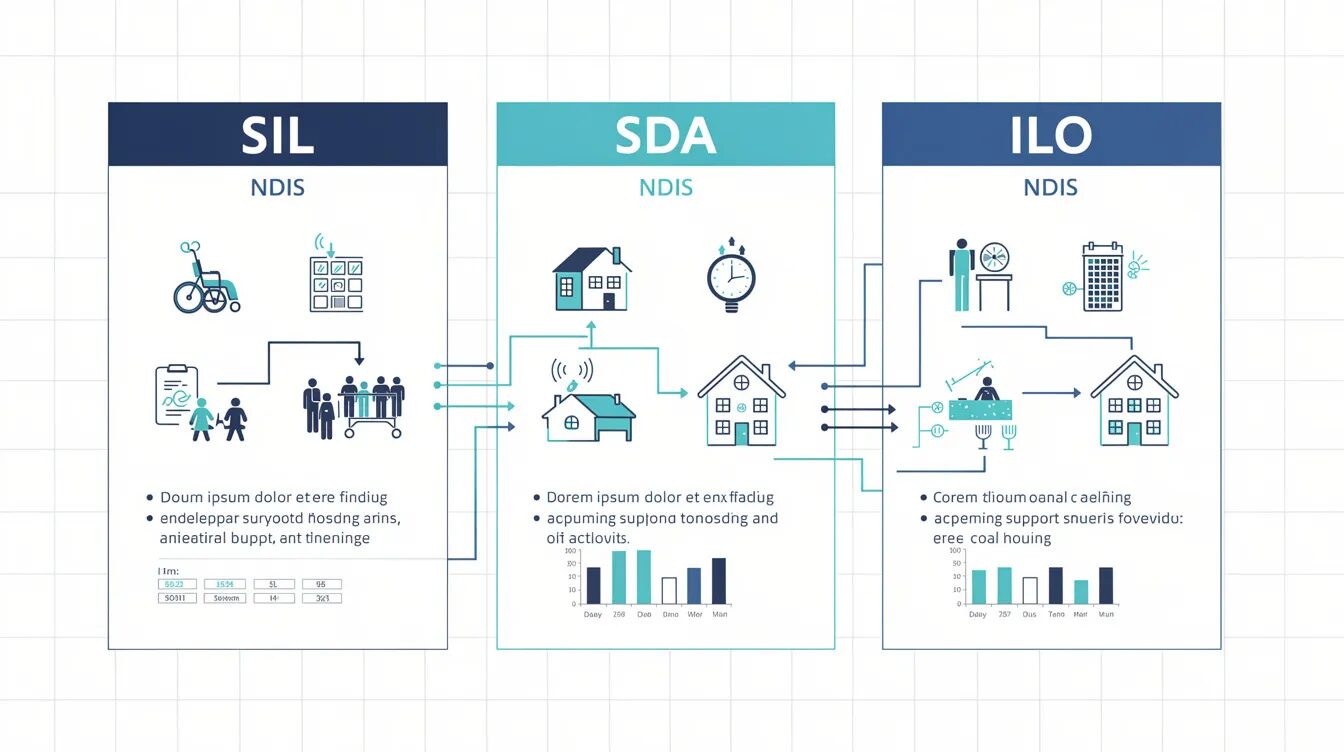
SIL, SDA, and ILO all sit under the umbrella of ndis housing options and independent living options, but they each fund something different. Mixing them up is one of the most common mistakes people make when preparing for a planning meeting.
At a high level:
- Supported independent living (SIL) is about how much support you get – paid daily support from support staff in your home.
- Specialist disability accommodation (SDA) is about where you live – a specially designed home for people with very high support needs or extreme functional impairment.
- Individualised living options (ILO) is about how your living arrangements are structured – flexible, personalised arrangement that blend formal and informal supports.
There are also other supports like Short Term Accommodation (STA) and medium term accommodation, but this article focuses on the sil vs sda vs ilo decision.
To receive funding for any of these, an NDIS participant needs clear Home and Living goals in their ndis plan, backed by supporting evidence – usually a functional capacity assessment from an occupational therapist and reports from other professionals.
| SIL | SDA | ILO | |
|---|---|---|---|
| What it funds | Daily support services (staff) | The physical building (housing) | Flexible living supports |
| Covers housing costs? | No | Yes (specialist housing) | No |
| Typical support level | 24/7 or high support | N/A (pairs with SIL or other supports) | Lower to moderate |
| Who it suits | High or very high needs | Extreme functional impairment | Moderate needs, strong networks |
What does “independent living” mean under the NDIS? It doesn’t mean living alone. It means having the right supports, housing, and choice so that you – not a provider – are in control of your daily life.
What Is Supported Independent Living (SIL)?
SIL is ndis funding for a support worker or team of support staff to provide daily support in your home. This includes personal care, cooking, medication prompts, help with household tasks, and overnight supervision. SIL funding covers daily support services, not housing costs – it does not pay for rent, mortgage, or the home itself.
Supported independent living sil is often intended for individuals with high support needs who cannot live safely without ongoing, round the clock support. SIL is typically for participants needing 24/7 support, and is designed to help individuals build independent living skills over time.
Typical sil arrangements include a shared living arrangement with two or three other participants and a staff ratio of around 1:2 or 1:3. SIL funding is often delivered at a 1:3 staff-to-participant ratio, though this varies based on complexity. SIL can be typically delivered in an SDA home, a private rental, or other ndis housing options.
SIL covers active night shifts or sleepover shifts, community access support, and help with appointments – far beyond occasional “drop-in” support funded from NDIS Core Supports.
Evidence required to receive sil:
- Functional Capacity Assessment / Home and Living Assessment by an OT. SIL applications require a Functional Assessment from an Occupational Therapist.
- Reports from behaviour support practitioners, psychologists, or nursing if relevant.
- Recent examples of risks or incidents showing why high support or 24/7 staffing is reasonable and necessary.
SIL is a good fit if you:
- Need round the clock support or close supervision most of the day
- Have complex medical, behavioural, or personal care needs
- Cannot live safely with only informal supports or occasional visits
- Are comfortable with shared living and rostered support staff
Pros: structure, safety, predictable daily support. Cons: less flexibility, usually shared with housemates, less control over roster and staff. SIL provides daily support for participants with high needs, but a group home or shared living model may not suit everyone.
What Is Specialist Disability Accommodation (SDA)?
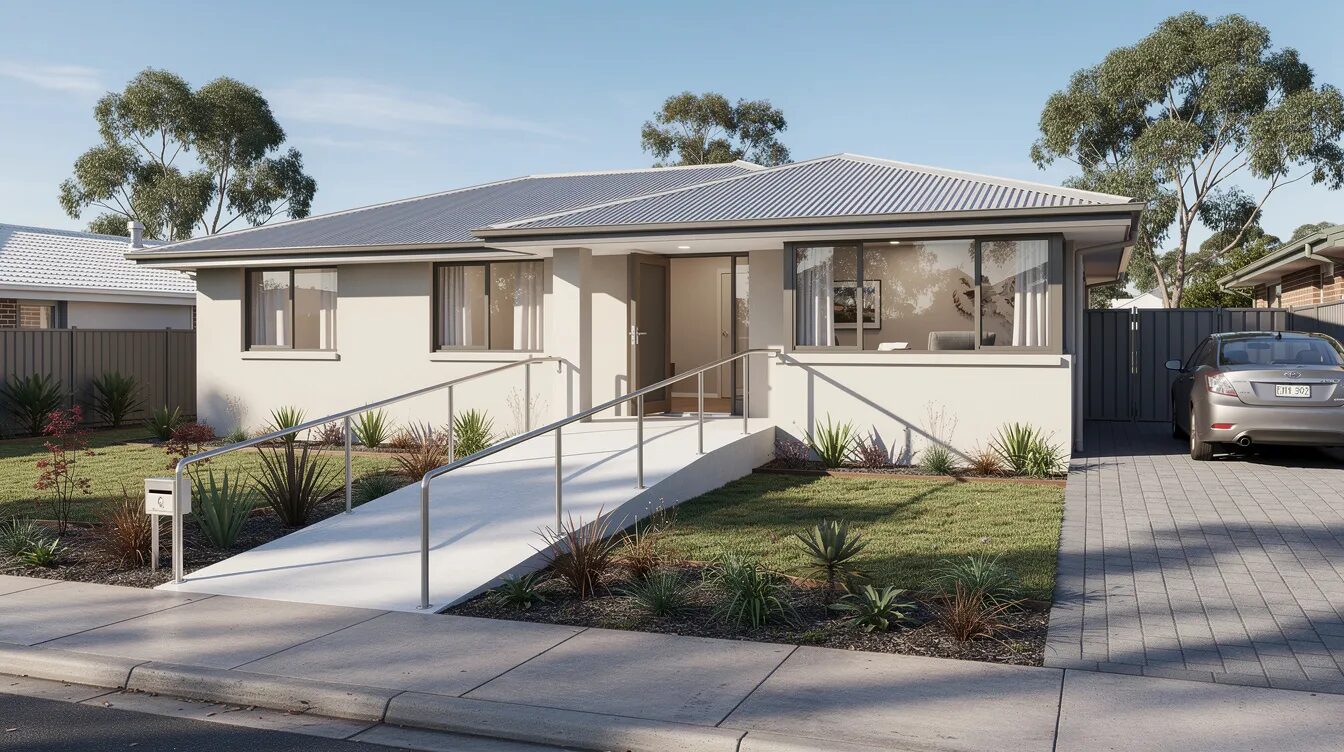
SDA is ndis funding for the physical building – purpose-built sda homes designed for people with extreme functional impairment or very high support needs. SDA funds purpose-built homes for participants with extreme needs, with features like wheelchair accessibility, reinforced walls, ceiling hoists, and smart-home technology. SDA funding is for modifications that make homes accessible.
SDA pays for the specialist housing itself. The sda provider receives housing payments from the NDIS, and the participant pays a reasonable rent contribution. SDA does not cover rent or daily support costs – you still need separate living supports (usually SIL or other supports) for day-to-day help.
SDA design categories include:
- Improved Liveability – suits someone with sensory or cognitive needs (e.g. visual contrast, simple layouts)
- Fully Accessible – for someone using a wheelchair full-time
- Robust – for participants whose behaviour may damage a standard home, featuring reinforced walls and durable fittings
- High Physical Support – for someone needing ceiling hoists, automated doors, high physical assistance features
Only about 6% of ndis participants qualify for sda funding. SDA is designed for individuals with significant functional impairments, and eligibility requires detailed evidence that ordinary housing is not suitable even with support. SDA homes often require modifications for accessibility, and sda housing is not available to everyone.
SDA does / does not pay for:
- ✅ Structural features, specialist building design, wheelchair access, robust construction
- ❌ Support worker wages, food, utilities, daily living expenses
Individuals may combine SIL with SDA for comprehensive support. A sda provider manages the dwelling; a sil provider delivers daily support. Less commonly, SDA pairs with lower-intensity daily support for more independent participants.
What Are Individualised Living Options (ILO)?
ILO is funding for individualised living options that support you to live in your own home – whether that’s your own place, with a host family, or with housemates – through flexible, person-led supports rather than 24/7 rostered staffing.
ILO funding does not pay for rent or the property. It funds ilo supports such as:
- A host arrangement, where you live with a host who provides agreed support
- A co-resident or shared living setup where a housemate gets reduced rent in exchange for support
- A tailored mix of daily support, overnight on-call, and backup ilo arrangements
ILO is ideal for individuals who prefer a flexible living situation. It is designed for participants with lower or moderate support needs who do not need staffed 24/7 supervision, and who have or want to build informal supports from family, friends, or community. ILO allows participants to choose their living arrangements and can be tailored to individual preferences and goals. ILO funding can include informal supports from family or friends.
ILO can complement other ndis supports – Core, Capacity Building, community access (funded through your NDIS Core Supports Budget) – and an ilo package is meant to evolve over time as your skills and confidence grow.
ILO vs a traditional group home: In a group home, staff rosters dictate routines. In ILO, you shape the personalised arrangement around your life, relationships, and goals. The key difference is who drives the decisions.

How ILO Funding Works: Design and Implementation Stages
ILO funding is usually approved in two stages, following the NDIA’s ILO operational guideline:
Stage 1 – Exploration and Design: You receive funding (often 30–100 hours of ilo provider time) to explore different independent living options. Activities include mapping informal supports, testing ilo arrangements (e.g. trial stays with a host family), and completing an ILO service proposal.
Stage 2 – Implementation: Once the NDIA approves the service proposal, ongoing ilo supports are funded. This may include host payments, co-resident stipends, or rostered evening support services.
ILO funding usually sits under Capacity Building – Home and Living in the ndis plan, and works alongside other budget categories.
Questions to ask an ilo provider before Stage 1:
- How do you match participants with hosts or housemates?
- What backup supports are in place if a host arrangement breaks down?
- How is monitoring handled, and how often are arrangements reviewed?
- Are there tax implications for host payments?
Comparing SIL vs SDA vs ILO: Which Independent Living Option Fits You?
SIL, SDA, and ILO do different jobs. SIL determines how much daily support you receive. SDA determines where you live if you need specialist ndis housing. ILO determines how your living arrangement is structured around your life and relationships.
| SIL | SDA | ILO | |
|---|---|---|---|
| Support intensity | 24/7 or high intensity | N/A (needs pairing) | Variable, often lower support |
| Suits | High support needs | Very high / extreme needs | Lower support needs |
| Funds | Paid support (staff) | Physical building | Arrangement + supports |
| Choice over housemates | Limited | Limited by availability | High |
| Funds housing? | No | Yes | No |
| Common combinations: |
- SDA + SIL – for someone with very high support needs and extreme functional impairment living in a specially designed home
- Private rental + SIL – high daily support needs but no need for specialist sda housing; some participants also explore Supported Independent Living homes in Australia when shared arrangements suit their goals
- Private rental + ILO + drop-in support – moderate needs with strong informal supports, wanting to live independently
Scenario 1: A young adult moving out of home with moderate intellectual disability. They want to share with a friend and have evening support. An ilo package with a co-resident and supplementary drop-in support could work well.
Scenario 2: A person transitioning from residential aged care with high physical needs. They may need a high physical support SDA dwelling combined with SIL for personal care and overnight supervision – a future home that truly fits.
Scenario 3: Someone wanting to leave a group home for more flexible independent living options. ILO may offer the autonomy they want, provided they have or can build the right supports around them.
Getting SIL, SDA or ILO Approved: Evidence, Assessments and Planning Meetings
The NDIA must consider all Home and Living supports “reasonable and necessary.” Clear evidence is critical to receive funding.
Before you ask for SIL, SDA, or ILO funding, do this:
- Get a Functional Capacity Assessment and Home and Living report from an occupational therapist. SIL funding requires evidence of support needs during planning meetings.
- Gather behavioural support plans, medical reports, hospital discharge summaries if relevant.
- Document current housing risks – falls, ambulance call-outs, carer burnout.
- Write a diary showing how much support you need on an average day and on a “bad day.”
- Frame your goals clearly: what does independent living look like for you? Where is your future home?
A NDIS support coordinator or Specialist Support Coordination can be funded to help navigate these pathways – request this in your ndis plan if your situation is complex. Your ndis planner should understand why you’re asking for support services at this level.
SDA funding requires evidence of significant functional impairment. For ILO, you need to show that a personalised arrangement with informal supports will meet your needs. Expect complex sda decisions to take several months, and have your support coordinator maximise your NDIS funding by following up regularly.
How These Options Affect Daily Support, Lifestyle and Long-Term Independence
Different ndis housing options shape daily life in different ways. In SIL, routines are typically staff-led – wake-up times, meals, and community outings follow a roster. In SDA, the built environment itself provides safety features that reduce the need for constant hands-on support. In ILO, routines are flexible, relationship-based, and driven by you.
Questions to ask yourself about your current or future home:
- Who decides when I wake up, eat, or have visitors?
- Can I easily get to work, study, or social activities?
- Am I building skills to reduce paid support over time?
- Do I feel safe, and do I have enough choice and control?
Independent living does not always mean living alone. It means having the right mix of support, housing, and choice so you are in control. Improved Life Choices supports under the NDIS are designed to help you build that mix over time. If your current arrangement isn’t working – burnout, conflict, unsafe situations – request a plan reassessment. Advocacy services and complaints processes exist if a provider is not respecting choice and control.
NDIA Home and Living policy has been evolving through reviews and updates (including 2021 operational guideline changes and 2026 SIL practice standards), so always check the most recent publications or seek professional advice.
References and Further Reading
- NDIA, “Home and Living Supports” web pages (accessed 2025) – eligibility, definitions, and pathways for SIL, SDA, ILO.
- NDIA, “Individualised Living Options (ILO) Operational Guideline” – detailed guidance on ilo arrangements, the two stages, and monitoring.
- NDIA, “SDA Operational Guideline” and SDA Quarterly Reports – SDA data, design categories, enrolled dwelling numbers (13,297 as at December 2025).
- NDIS Quality and Safeguards Commission, SIL Practice Standards (effective 1 July 2026) – provider obligations, audit requirements.
- NDIA Participant Datasets – current statistics on SIL and SDA usage among approximately 774,456 active ndis participants.
Frequently Asked Questions
These FAQs address common questions from people comparing sil vs sda vs ilo for the first time, covering situations not fully explored above.
Can I get SIL and ILO funding at the same time?
Generally, no. The NDIA expects participants to use either a SIL model or an ILO arrangement for the same living situation, because they fund fundamentally different approaches. SIL funds a staff-led roster; ILO funds individualised living options built around informal supports and flexible arrangements. In rare cases, transitional funding may overlap briefly, but your plan will typically reflect one pathway.
Can SDA be combined with ILO instead of SIL?
While the NDIS mainly designs SDA to pair with SIL or other daily support, an sda home could theoretically work with ILO-style supports. This is uncommon and depends heavily on the participant’s needs, the sda provider’s setup, and the NDIA’s assessment. If your support needs are low enough for ILO, you may not meet the threshold for sda funding in the first place.
How is drop-in support different from SIL or ILO supports?
Drop-in support is time-limited visits funded under Core Supports (Assistance with Daily Life). It is not a separate Home and Living package. It suits participants who can manage independently for most of the day and only need help with specific daily tasks. SIL and ILO, by contrast, are comprehensive living supports designed around your entire living situation.
What happens to my housing supports if I move or change providers?
Your sil funding, sda funding, or ilo funding sits in your ndis plan, not with the provider. Moving house or interstate may require new service agreements, sometimes a change of provider, and in complex cases a plan reassessment or new Home and Living request. Start the conversation with your support coordinator early.
Can young people in residential aged care use these options to move out?
Yes. The NDIS and Australian Government have specific initiatives to help people under 65 leave aged care. This often involves combinations of SDA, SIL, or ILO, supported by strong evidence and coordination between health, housing, and NDIS support services. A support coordinator with experience in aged care transitions is essential.
Before making any major housing decision, seek independent advice from a support coordinator, disability advocacy organisation, or legal service, and draw on NDIS support and disability resources to stay informed. The right supports and the right information make all the difference.