If you live in Launceston or Northern Tasmania and you’re trying to make sense of the NDIS, you’re not alone. The system can feel complex, the language can be confusing, and knowing where to start is half the battle. This guide from Re.connect Support Services breaks down what NDIS services in Launceston actually look like in practice, who they’re for, and how to make sure your funding is working as hard as you are.
Key Takeaways
- Re.connect Support Services provides personalised NDIS support in Launceston, helping participants turn their NDIS plan into practical, day-to-day assistance that fits real life.
- Services focus on daily living, community participation, allied health connections, and capacity building to promote independence and quality of life.
- Re.connect works alongside Launceston’s local area coordinators and other NDIS providers to simplify the National Disability Insurance Scheme for participants and families.
- Real-world examples, Australian research, and participant stories are woven through this article to make concepts relatable and clear.
- Contact Re.connect Support Services directly to review your current NDIS funding and explore tailored support options across Launceston and surrounding suburbs.

Understanding NDIS Services in Launceston
The National Disability Insurance Scheme is a person-centred funding scheme for Australians with disability, designed to provide the right support at the right time. In Launceston and Northern Tasmania, the NDIS supports over 4,200 active participants, and there are 280 registered NDIS providers operating in the local area. Launceston has a robust network of National Disability Insurance Scheme services, making it one of the better-serviced regional areas in the state.
Here’s what NDIS funding actually covers:
- Core Supports – assistance with daily personal activities, transport assistance for appointments, and community participation
- Capacity Building – therapy services, skills development, exercise physiology, and support coordination
- Capital Supports – assistive technology, mobility devices, and home modifications
NDIS funding is not a cash payment. It sits within these funding categories and is used to purchase specific supports from an NDIS provider or NDIS registered provider. NDIS service pricing in Launceston is set by the NDIA through national pricing arrangements, so rates are consistent across providers.
Local area coordination partners like Baptcare (with offices at 288 Invermay Road, Mowbray) and Mission Australia help participants connect with services and navigate planning. Re.connect Support Services collaborates with these partners rather than replacing them, focusing on translating abstract NDIS language into practical support for people in suburbs like Newstead, Kings Meadows, and Invermay.
Who NDIS Services in Launceston Are For
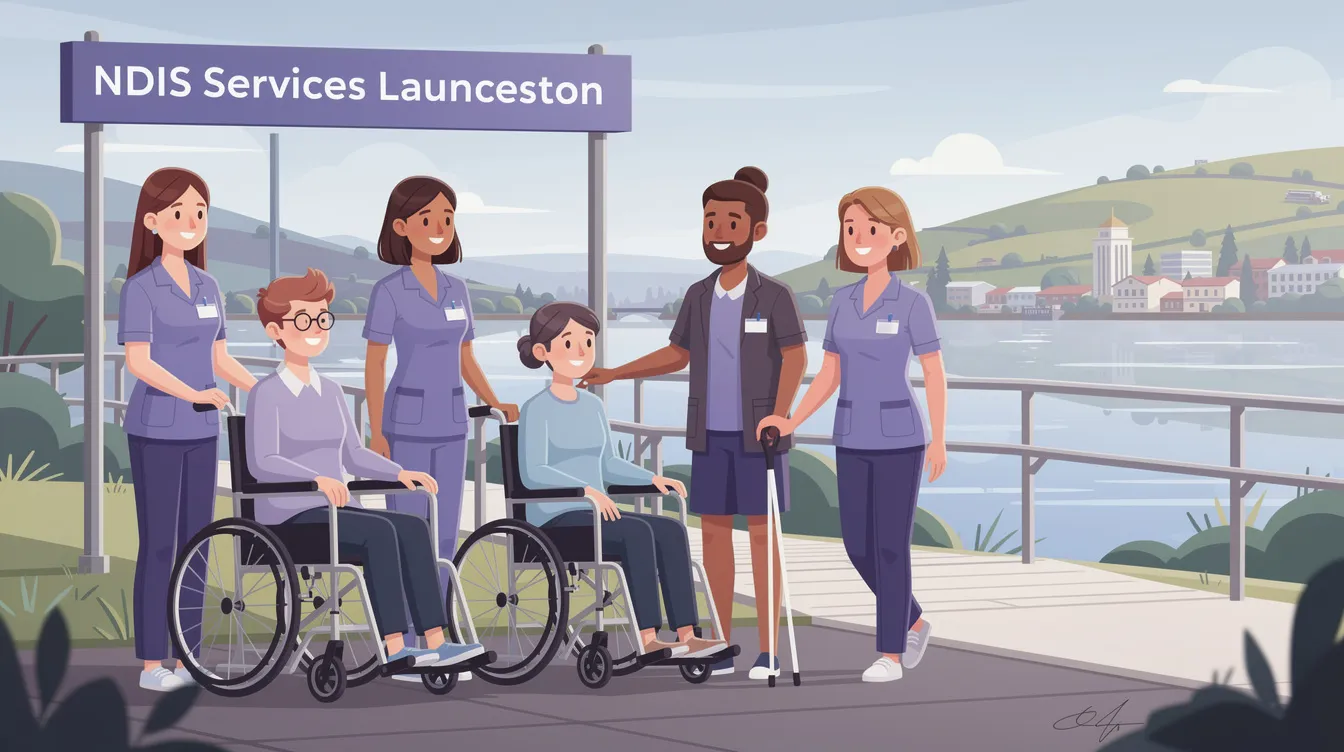
NDIS services in Launceston are for people with permanent and significant disabilities living in the region who meet the scheme’s eligibility criteria.
Key eligibility points include:
- Age under 65 at the time of application
- Australian citizen, permanent resident, or Protected Special Category Visa holder
- A disability that has a significant functional impact on daily life
The scheme supports a broad range of disabilities – physical, intellectual, psychosocial, sensory, neurological, autism, and acquired brain injury. A person with multiple sclerosis might need fatigue management and daily living assistance, while a young person with autism might benefit from social skills training and community participation support. For children aged 0–6 in Launceston, early childhood partners like Mission Australia and Baptcare provide initial assessments and referrals, and Re.connect can work alongside them when a child transitions to a full NDIS plan.
One common concern we hear: people believing they are not “disabled enough” to qualify. A Launceston participant initially felt this way but, after gathering evidence from their GP and specialist, was approved for an NDIS plan. They used their support to return to local employment within 12 months. Eligibility can surprise people, and it’s worth exploring.
How NDIS Funding Works in Launceston
NDIS pricing in Launceston follows the national NDIA Pricing Arrangements, meaning hourly rates for support workers, allied health, and transport are consistent whether you choose Re.connect or another provider. NDIS funding covers reasonable and necessary supports only, and the three main funding areas work like this:
| Funding Area | What It Covers | Launceston Example |
|---|---|---|
| Core Supports | Daily living, personal care, community access, transport | A support worker helping with morning routines and getting to appointments |
| Capacity Building | Therapy, life skills, support coordination, employment support | Occupational therapy sessions to build kitchen independence |
| Capital | Assistive technology, home modifications | A wheelchair ramp installed at a participant’s Newstead home |
| Plan utilisation in Launceston sits at around 76%, meaning many participants are leaving funding unused. This often happens because people are unsure what they can claim or which provider to contact. Plan management services assist with budgeting and invoicing for NDIS funds, simplifying the payment process. Re.connect can review a participant’s current plan and help map goals to available funding options so Core Supports funding is fully understood and used. |
Since October 2024, NDIS plans have been structured with defined funding periods. Unspent funds typically do not roll over into a new plan, so being proactive early in the plan period matters.
Re.connect Support Services: Our Role as an NDIS Provider in Launceston
Re.connect Support Services is a local NDIS provider based in Northern Tasmania, delivering person centred, trauma-informed support that fits into each participant’s life and local community.
Our core values include:
- Dignity, choice, and control in every interaction
- Cultural safety, including working respectfully with Aboriginal and Torres Strait Islander communities and multicultural groups in Launceston
- Collaborative decision-making with participants and families
- Continuous improvement through participant feedback
The main types of support Re.connect provides include daily living assistance, community participation outings, life skills training, individual support to access allied health, and help navigating the NDIS plan and review process. Specialised care includes supported independent living and nursing care where required. Our support workers hold industry-leading certifications and are continuously up-skilled to meet evolving standards. As a registered NDIS provider, Re.connect is dedicated to empowering individuals through personalised NDIS support, must meet quality and safety standards, and all providers must comply with NDIS Practice Standards.
Our team works flexibly across settings – a participant’s home, local cafes, gyms, community centres, and outdoor spaces like Cataract Gorge – because support should feel natural, not clinical. Research from Tasmania has found that participants with higher well being are more likely to have stable housing, positive neighbourhood satisfaction, and strong social support, reinforcing the value of community-based approaches.
Daily Living Support: Making Everyday Life Easier
“Daily living” in NDIS terms covers assistance with personal care, household tasks, routines, and building independence at home and in the community. NDIS funding covers daily living assistance and therapy services under Core Supports – Assistance with Daily Life.
Concrete examples Re.connect can support with in Launceston, including personalised in-home daily living support:
- Morning and evening routines
- Showering and grooming with dignity
- Meal planning and cooking, including shopping at Launceston Harvest Market or local supermarkets
- Household organisation and daily tasks
- Using public transport or taxis, including transport assistance for appointments
Support can range from “doing with you” (capacity building, where the goal is to develop skills) to “doing for you” when needed. The focus is always on maintaining or growing independence over time.
One participant moved from relying fully on family to independently managing their own unit in a Launceston suburb over 18 months. This happened through consistent daily living support, gradual reduction in assistance, and regular goal reviews with the Re.connect local team.
Community Participation and Building Connections in Launceston
Social participation matters. Research consistently links social connection with improved mental health, reduced loneliness, and greater life satisfaction for people with disability. The NDIS provides support for social and community participation for exactly this reason.
Launceston-specific activities Re.connect can support include:
- Joining art or music groups
- Attending UTAS or TAFE Tas short courses
- Visiting local sports clubs or the Queen Victoria Museum and Art Gallery
- Exploring Cataract Gorge or attending cultural events
Community participation is not just outings. It can include building practical skills like using money, reading timetables, or communicating needs to staff in shops, making each outing a capacity building opportunity. Re.connect support workers provide 1:1 community connection and participation support at the participant’s pace, using graded exposure to slowly increase challenge as confidence grows. This approach aligns with methods used in psychology and occupational therapy.
Social engagement also supports mental health. Resources like Beyond Blue offer guidance on staying connected and managing emotional support needs alongside disability supports, and Re.connect provides specialised NDIS mental health support to complement these resources.

Allied Health, Exercise Physiology and Capacity Building Supports
Capacity building supports help NDIS participants develop new skills and abilities over time so they can be more independent in daily living, work, study, and community life. Allied health services in Launceston include occupational therapy, physiotherapy, psychology, speech pathology, dietetics, and exercise physiology.
Re.connect collaborates with allied health professionals to ensure therapy goals are practised in real-life settings, not just clinic rooms, using evidence-based healing and recovery approaches. For example:
- Following an exercise physiology home program safely with a support worker present
- Using occupational therapy strategies in the kitchen during meal preparation
- Applying psychologist-recommended routines for anxiety management when visiting busy local areas
International rehabilitation research consistently shows that task-specific training practised in daily life produces better outcomes than clinic-only therapy. Re.connect’s role is to bridge the gap: helping participants understand reports, coordinate appointments, and integrate therapy recommendations into weekly support sessions. The team works closely with therapists to keep everyone aligned.
Assistive Technology and Practical Tools for Independence
Assistive technology ranges from simple, low-cost items like kettle tippers, grab rails, and communication apps to complex equipment such as power wheelchairs and environmental control units. Participants can access assistive technology through NDIS funding under the Capital budget. Assistive technology funding supports mobility devices and home modifications.
Re.connect supports participants through the assistive technology process in Launceston by:
- Gathering quotes and working with OTs on assessments
- Arranging trials with equipment suppliers servicing the region
- Ensuring home environments are safe for new devices
- Practising using equipment around the neighbourhood
The NDIS requires appropriate assessments and evidence for mid- and high-cost assistive technology. The NDIA’s assistive technology page explains the categories and approval process, and Re.connect’s guide to accessing assistive technology through the NDIS steps through assessments, applications, and approvals in more detail.
One Northern Tasmanian participant received a communication device that transformed their ability to engage in community activities and enrol in a local training course. Before the device, they relied entirely on family to interpret their needs. Afterward, they could independently communicate with support workers, shop staff, and fellow students, illustrating how assistive technology can transform daily independence.
Navigating Your NDIS Plan and Reviews with Re.connect
Many NDIS participants and families in Launceston feel overwhelmed by NDIS language – goals, capacity building, “reasonable and necessary.” Support coordination helps participants understand their NDIS plan and connect with the right providers, but even without a dedicated support coordinator, Re.connect can assist. Their specialised support coordination services focus on simplifying complex supports and linking people with the right local options.
Ways Re.connect helps with plan navigation, drawing on their support coordination for daily living and connections:
- Clarifying what is in the current NDIS plan
- Connecting supports to specific funding lines
- Keeping simple records of outcomes and progress
- Helping prepare evidence for plan reviews
Re.connect can attend planning or review meetings (with consent) to help participants communicate their goals, daily challenges, and support needs to local area coordinators or planners. Support coordination helps implement and manage NDIS plans effectively, and Re.connect works alongside external support coordinators where one is in place.
One participant moved from a short, limited plan to a more appropriate level of NDIS funding after preparing clear goal statements, gathering allied health reports, and documenting unmet need with Re.connect’s help. Resources on Improved Life Choices under the NDIS explain how better plan design can support independence. Tools like the Advokit planning guide can also help, and Re.connect can adapt these resources to individual needs.
Local Area, Culture and Community: Why Launceston Context Matters
Launceston is a diverse city of around 110,000 people with Aboriginal, Mandarin, Nepali, Filipino, and Indian communities. Meaningful NDIS support must fit each person’s cultural, family, and community context.
Re.connect workers take time to understand each participant’s local area – nearest shops, public transport options, faith communities, clubs, and informal support network. Drawing on their broader personalised care across ageing, mental health, homelessness and disability, examples include scheduling around local bus timetables, supporting someone to join a specific cultural group, or helping navigate the Launceston Bus Terminal for regular appointments.
Tasmanian research found that transport, footpaths, and public amenities were among the lowest-scoring neighbourhood facets for people with disability, directly affecting participation. Re.connect values trauma-informed and culturally responsive practice, and is committed to continuous learning from participants, families, and local communities to refine how supports are offered across the region.
Real Stories and Evidence: What Works in NDIS Support
The best NDIS support combines lived experience, formal research, and reflective practice. Here are three de-identified examples from Launceston:
- Community confidence – A participant used community participation and daily living support to build confidence over several months, then enrolled in a local TAFE training course. Routine and social connection were key factors, consistent with mental health recovery and NDIS community participation approaches outlined on other resources and on Head to Health.
- Psychosocial re-engagement – A person with psychosocial disability gradually re-engaged in community using graded exposure and support worker consistency. Emotional support, targeted NDIS mental health supports, and a stable support network made the difference.
- Mobility and daily routine – A young adult worked with exercise physiology, occupational therapy, and Re.connect support to improve mobility and rebuild their daily routine after an acquired injury, supported by assistive technology funded through the NDIS.
Evidence from NDIA evaluation reports consistently shows that collaborative, person-centred planning improves quality of life for NDIS participants. While individual outcomes vary, participants benefit most when supports are consistent, goal-focused, and genuinely led by the participant’s own priorities.
If you’d like more examples relevant to your own situation, ask Re.connect. Their NDIS and support coordination blog resources also share practical stories and tips, and it is completely normal to feel uncertain at the start of your NDIS journey.
Getting Started with Re.connect Support Services in Launceston
Starting is simpler than most people expect. A phone call, email, or enquiry form begins the process, whether you’re a new NDIS participant or already have a plan with unused funding.
Typical onboarding steps:
- Initial conversation about goals and your current NDIS plan
- Matching with a suitable support worker
- Agreeing on days and times for support
- Completing a service agreement in plain language
Re.connect can support participants with different management types. Participants can choose self-managed, plan-managed, or NDIA-managed plans, and Re.connect will explain any limitations openly. Plan management simplifies NDIS funding and payment processes for those who choose it and can complement Improved Life Choices-style plan designs that focus on flexibility and independence.
Before making contact, it helps to have your NDIS plan handy, a rough list of goals (e.g., “live more independently,” “feel confident going out,” “return to study”), and any reports you want to share. You do not need to wait for your next plan review to seek better support – Re.connect can start working within your current plan and help prepare for future changes.

Frequently Asked Questions
These FAQs cover common questions not fully addressed above. For personalised advice, contact Re.connect directly.
Do I need to change my NDIS plan to start with Re.connect?
- Most participants do not need to change their plan immediately. Re.connect can usually work within existing Core or Capacity Building funding as long as the right line items are available.
- If funding needs adjusting in future (for example, to add support coordination hours or increase community participation), Re.connect can help prepare for a plan review or change of circumstances request.
- Contact Re.connect with a copy of your current plan so the team can check what is possible right now, or speak with their specialist support coordination team about next steps.
Can Re.connect support me if I am still waiting to hear back from the NDIS?
- Formal NDIS-funded support can only begin once a participant has an approved plan in place.
- While waiting, Re.connect can provide general information, help you prepare evidence such as reports from GPs and specialists, and suggest useful local community services, drawing on their broader community-based support for individuals and families.
- For application updates, use official NDIS and Services Australia channels. See Applying to access the NDIS for a step-by-step overview.
What is the difference between support coordination and the support Re.connect provides?
- Support coordination is a specific capacity building support that helps participants understand and implement their plan, coordinate services, and build skills to manage supports through self management over time.
- Re.connect provides direct support such as daily activities, community participation, and help practising therapy goals. Where relevant, Re.connect also works alongside an external support coordinator.
- Talk with Re.connect about how your existing support coordination funding and services are being used and whether collaboration could make your supports more effective.
Can I use both registered and unregistered NDIS providers in Launceston?
- Self-managed participants can generally choose both registered and unregistered providers. Plan-managed participants can usually do the same. NDIA-managed participants must use a registered NDIS provider for most supports.
- With 280 registered NDIS providers in Launceston, there are many options. Re.connect’s status as an NDIS provider, and their broader mission of empowering people through tailored support and community connection, allows them to work with many participants, but exact options depend on how your plan is managed.
- Check the “How your plan is managed” section of your plan and contact Re.connect or your plan manager for clarification.
How do I know if my goals are “good enough” for my NDIS plan?
- Goals do not have to be perfect. They just need to reflect what you want to work towards in areas like daily living, health, community participation, employment, study, or relationships.
- Start with simple statements: “I want to live more independently at home,” “I want to feel confident going out in my local area,” “I want to build fitness and manage my health.” Refine them with Re.connect or a support coordinator.
- The NDIS cares about how goals relate to disability and functional impact. Re.connect can help link everyday wishes to formal NDIS language when preparing for planning meetings, drawing on their experience in mental health recovery and NDIS goal-setting. Quality care starts with goals that matter to you.