
Emergencies don’t wait for convenient timing, and for NDIS participants who rely on daily supports, a sudden crisis can escalate fast. An NDIS emergency support plan is a personalised safety strategy for people with disability that maps out exactly how critical supports will continue before, during, and after a crisis. This guide walks you through how to create one, step by step.
Key Takeaways
- An NDIS emergency support plan details functional needs, evacuation steps, and emergency contacts so that participants, families, and NDIS providers share one clear roadmap when a crisis hits – whether that’s a health emergency, loss of a carer, or a natural disaster like bushfire, flood, or extreme heat.
- Emergency support plans are developed collaboratively with participants, families, and support providers, and must be reviewed regularly or after any significant changes in health, living situation, or support arrangements.
- Re.Connect Support Services can help you design, document, and update a personalised emergency plan through support coordination, daily living supports, and short-term accommodation services.
- Below you’ll find a key components checklist, a step-by-step creation guide, links to trusted external resources, and practical FAQs covering NDIS emergency funding, plan reviews, and provider obligations.
Understanding NDIS Emergency Support Plans
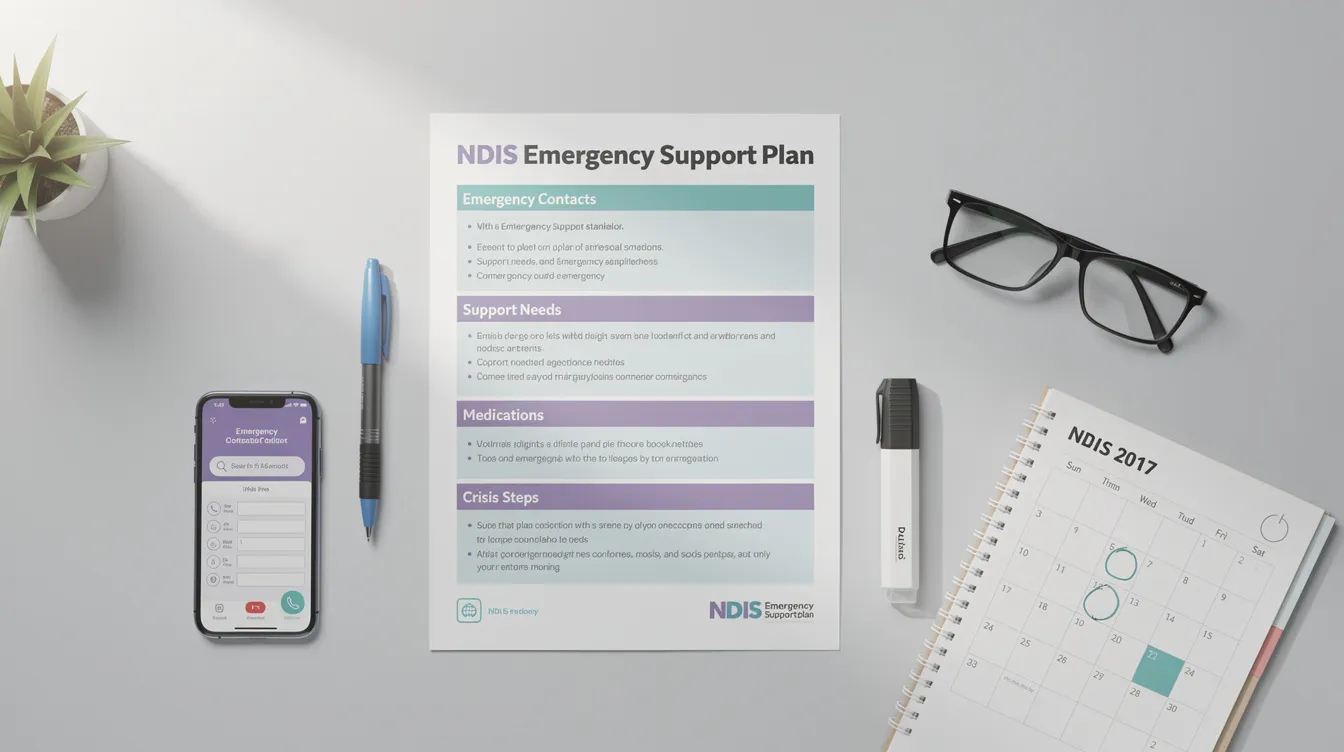
An NDIS emergency support plan is a written, personalised document that outlines how your disability related supports will be maintained when something goes wrong. It sits within the broader National Disability Insurance Scheme framework and connects to your NDIS plan goals – but it’s separate from the Emergency and Disaster Management Plan that registered NDIS providers must maintain under the NDIS Practice Standards.
Here’s the distinction: your individual emergency plan focuses on your needs – medications, assistive devices, communication preferences, evacuation routes, backup providers. A provider’s plan covers organisation-level obligations like staff training, continuity of supports across all participants, and communication protocols. Both are essential; they work together.
Emergencies include fires, floods, severe storms, and pandemics like COVID-19, as well as sudden hospital admissions, loss of a primary carer, power outages, and support worker shortages. While state and territory emergency services manage the emergency and disaster response (fire brigades, SES, ambulance), the NDIS focuses on continuity of disability related supports and individual safety. An NDIS Emergency Management Plan ensures participant safety during crises by keeping these two layers connected.
NDIS providers must comply with NDIS Practice Standards for emergency planning – a legal requirement strengthened in November 2021.
Why Emergency Planning Matters for NDIS Participants
Approximately one in six Australians under age 65 live with disability. Many face extra barriers during emergencies: limited mobility, communication challenges, sensory sensitivities, or dependence on powered medical equipment. Without preparation, what’s manageable for others becomes dangerous.
When there is no emergency plan in place, concrete risks multiply:
- Interrupted personal care routines (transfers, feeding, hygiene) when support staff can’t reach the home
- Inability to evacuate safely without accessible transport or mobility aid
- Loss of medication, assistive technology, or behaviour support strategies during displacement
- Isolation if communication channels fail and no one knows where the participant is or what they need
Emergency plans provide a pre-agreed roadmap for actions during an emergency. A well-built plan reduces risk of potential harm, lowers stress for families, and protects participant wellbeing and goals across the NDIS plan – from daily living to community access.
The NDIS recommends participants contribute to their emergency support plans in accessible formats, making emergency preparedness part of everyday support rather than a one-off task. Re.Connect Support Services embeds person-centred planning and risk discussions into regular check-ins to achieve exactly this, supported by dedicated NDIS support coordination services.
Key Components of an Effective NDIS Emergency Plan
Think of this section as your checklist. Emergency support plans should document crucial personal details and health requirements, and the key components below cover what you need:
- Emergency contacts: the participant’s emergency contacts including family, friends, GP, pharmacy, support coordinator, Re.Connect Support Services, local hospital, 000, and relevant SES numbers
- Support network roles: who does what – who calls emergency services, who picks up medications, who provides personal care, who checks in by phone
- Daily living needs: personal care routines, feeding requirements, communication preferences, behaviour support strategies, so replacement support staff or backup providers can step in quickly through appropriate NDIS Core Supports funding
- Health information: diagnoses, allergies, current medications with dosage schedules, medical alerts, and where the physical list is stored in the home
- Assistive technology and power needs: devices such as ventilators, electric wheelchairs, hoists; backup batteries and chargers; registration with energy providers as life-support dependent, and relevant capacity building supports under the NDIS for managing emergencies involving power outages
- Evacuation and shelter options: accessible routes, transport arrangements, safe destinations (a friend’s accessible house, local evacuation centre, supported independent living accommodation options)
- Communication plan: how information flows between the participant, families, providers, health professionals, and emergency services during a crisis – emergency plans must include clear communication protocols
- Backup NDIS providers and funding details: alternative service locations and provider contacts; relevant NDIS plan budget information and practical tips for managing NDIS funding effectively
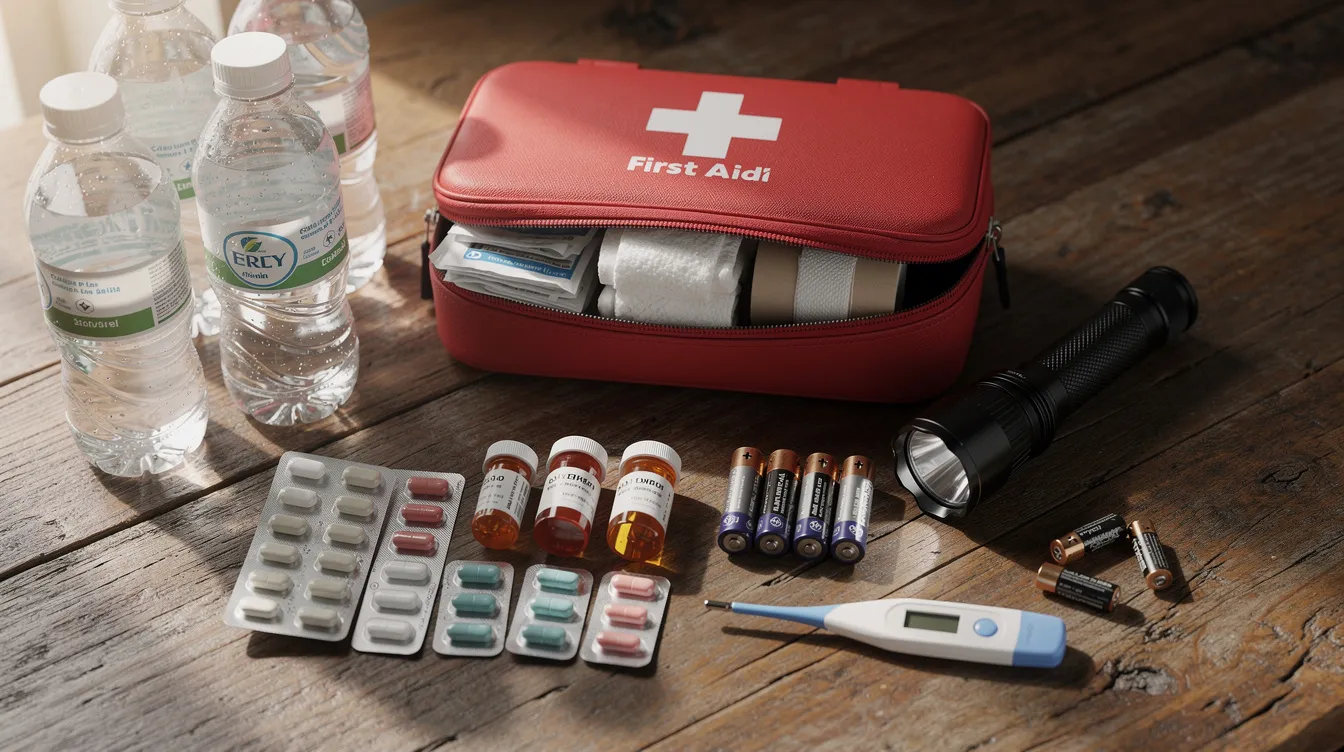
Emergency kits should support participants for up to 72 hours with food, water, medications, and essential supplies. Personal Emergency Evacuation Plans (PEEPs) are essential for participants needing assistance and should be attached to the main plan.
Store copies in multiple places: a printed copy at home, a copy with your support coordinator, and a digital copy on your phone or cloud. If needed, use Easy Read, large print, or translated formats.

Step-by-Step: How to Create an Emergency Support Plan
Here’s the practical core. Follow these steps to build your plan from scratch:
Step 1: Identify likely emergencies. Assess your local area for bushfire, flood, or cyclone risk. Consider medical crises, extreme heat events, and what would happen if your main support worker became unavailable.
Step 2: Map your support network. List every person who could help: family, friends, neighbours, Re.Connect Support Services staff, allied health professionals, and any community access and participation supports. Note who can assist with transport, personal care, communication, or decision-making.
Step 3: Document critical needs for the first 24–72 hours. Be specific and time-bound: morning medication at 7am, catheter care every 4 hours, behaviour support strategies for high-anxiety situations, which communication aid to grab first. Emergency kits should support participants for up to 72 hours.
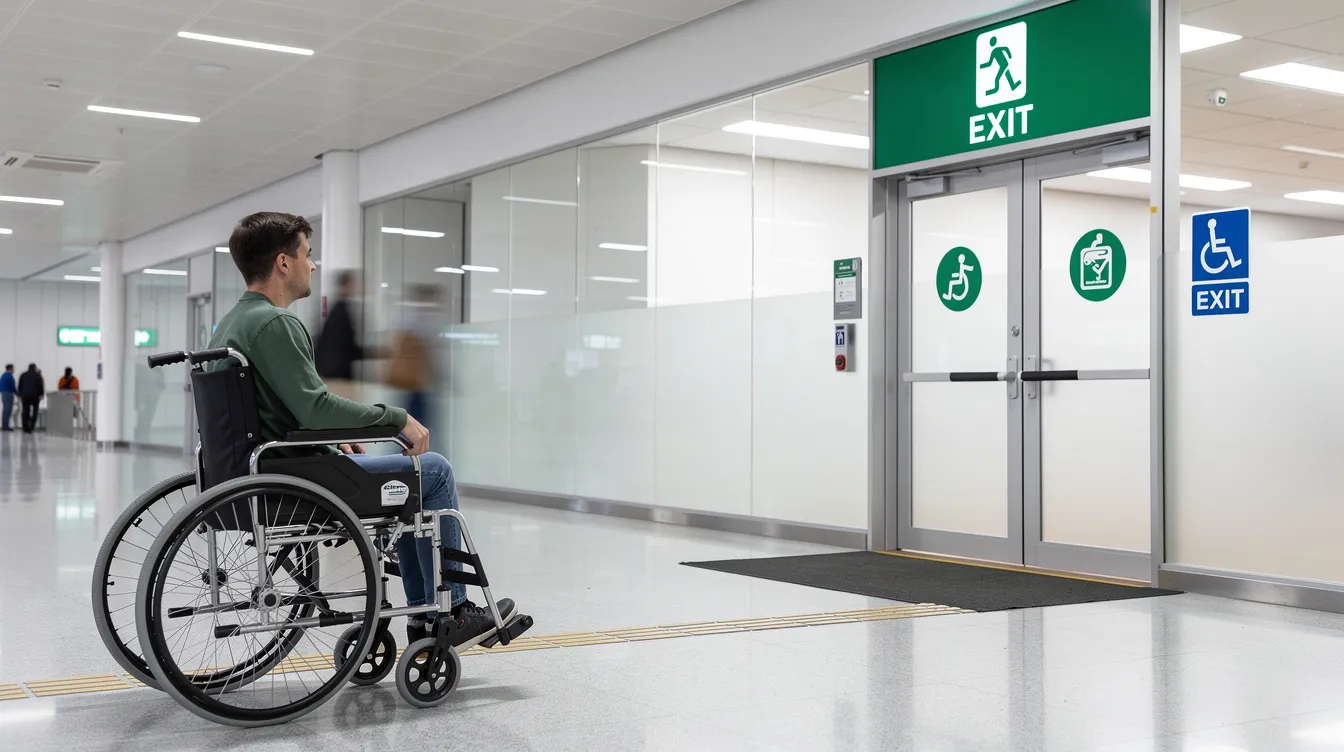
Step 4: Plan for evacuation and shelter-in-place. Identify accessible routes out of your home, where you’d go if you must leave, and what supplies you need if you stay put. Include transport options and contact details for local communities and evacuation centres.
Step 5: Agree roles and responsibilities. With your support network and Re.Connect Support Services, clarify who calls 000, who contacts the support coordinator, who handles first aid, and who coordinates with other NDIS providers.
Step 6: Link to your NDIS plan. Talk to your support coordinator or Local Area Coordinator about embedding emergency and disaster planning into your plan goals and supports. Effective support coordination for daily living ensures funding alignment and plan reviews capture your emergency preparedness needs.
Step 7: Review and update. NDIS emergency plans should be updated at least annually. Emergency plans must be reviewed at least annually and after any major event – hospital admission, house move, new diagnosis, or change of provider. Personal Emergency Evacuation Plans must be regularly reviewed alongside them. Schedule these reviews with Re.Connect Support Services to keep everything current.
Ready to get started? Contact Re.Connect Support Services to develop your personalised NDIS emergency support plan.
Roles and Responsibilities: Participants, Families, and NDIS Providers
Emergency preparedness is a shared responsibility. Effective communication across all parties is what makes a plan actually work when disasters happen.
- NDIS participants: share your preferences openly, keep key information current, participate in emergency planning conversations, and keep a copy of your plan accessible at all times
- Families and carers: act as emergency contacts, assist with PEEPs, store copies of the plan, coordinate with Re.Connect Support Services when circumstances change, and identify resources in local communities
- NDIS providers: under NDIS Practice Standards, providers are responsible for maintaining Emergency and Disaster Management Plans, conducting staff training and drills, establishing communication protocols, and ensuring continuity of critical supports – staff readiness is regularly assessed through audits
- Re.Connect Support Services specifically: support coordination focused on managing emergencies, building emergency planning into intake and plan reviews, liaising with other providers, and organising backup supports
For broader guidance, the Disability Inclusive Emergency Management (DIEM) project provides national frameworks and toolkits co-designed with people with disability.
Practical Tools, Resources, and Templates
You don’t need to build your plan from nothing. These resources can help you get started immediately:
- The University of Sydney’s Person-Centred Emergency Preparedness (P-CEP) tool is a workbook designed to help people with disability assess their preparedness and create individualised emergency plans
- The AIHW disability data portal provides statistics on emergency presentations and health access for people with disability, useful for understanding the scale of individual needs
- Re.Connect Support Services offers a downloadable emergency support plan template with sections for contacts, medications, equipment, and evacuation plans – ask your support coordinator for a copy or explore additional resources on the Re.Connect Support Services blog
- State emergency service websites like NSW SES, CFA Victoria, and QFES Queensland provide local bushfire, flood, and severe weather information to help you identify risks in your area
- Store digital copies on your phone and use accessible formats (Easy Read, large print, symbol-supported, or translated versions) so all participants can access and understand their plan
How Re.Connect Support Services Supports You in an NDIS Emergency
Re.Connect Support Services is a person-centred NDIS provider offering tailored disability support services that helps participants prepare for, respond to, and recover from emergencies. Here’s what that looks like in practice:
- Support coordination: working with you to identify risks, create and document emergency plans, connect with appropriate NDIS providers, and liaise with the NDIA where urgent plan changes or financial assistance may be needed as part of Re.Connect’s broader healing and recovery-focused services
- Direct supports: personalised in-home care and daily living assistance, community access, and short-term accommodation can be adapted during emergencies to maintain safety and continuity of care
- Disaster management training: Re.Connect trains support staff in emergency procedures and participant-specific plans, including drills and scenario-based training to ensure staff readiness as part of its integrated mental health and psychosocial disability care
- Communication during emergencies: Re.Connect keeps in touch via SMS, phone, and email, and coordinates with families, other providers, and emergency services to manage the response while maintaining social and community participation supports
- Recovery support: after a crisis, Re.Connect helps you assess what changed, update your plan, and request plan reviews or additional funding where needed, with a strong focus on mental health recovery and wellbeing for NDIS participants
Contact Re.Connect Support Services via phone or online form to review your current plan or create a new NDIS emergency support plan, drawing on their broader personalised community-based support services.
Frequently Asked Questions
These questions address practical issues around funding, plan reviews, and what to do when a crisis actually happens.
Can my NDIS plan fund emergency supports and planning?
The National Disability Insurance Scheme funds disability related supports, which can include support coordination time to develop an emergency plan, assistive technology, and additional support hours where deemed reasonable and necessary, often delivered through personalised care options across disability, mental health, and aged care. The NDIS may provide additional crisis funding during significant changes in functional capacity. Emergency NDIS funding provides immediate financial assistance, and participants can request temporary emergency funding during crises to complement holistic supports that foster independence and stable housing. Criteria for emergency funding includes urgent needs outside regular schedules – emergency funding can cover urgent medical care and caregiver loss. Timely intervention through emergency funding improves participant stability. However, emergency and disaster response services like fire, ambulance, or SES rescue are funded by state and territory governments, not the NDIS. Speak with your planner, LAC, or Re.Connect Support Services support coordinator if you need extra funding for emergency preparedness or recovery.
How often should I review my NDIS emergency support plan?
A good rule of thumb is to review your emergency plan every 6–12 months, as well as after any major life change (moving house, new diagnosis, new equipment, change of main carer) or after experiencing an emergency event. Book a review session with Re.Connect Support Services at the same time as regular NDIS plan reviews or key allied health appointments, especially if you are also managing elderly care and support at home. Providers must also review their Emergency and Disaster Management Plans regularly to remain compliant with NDIS Practice Standards.
What should I do if my usual support worker or provider is unavailable in a crisis?
This scenario should be covered in your emergency plan by listing backup support workers, alternative NDIS providers, and informal supports who can step in temporarily. Contact the Re.Connect Support Services support coordination team as soon as you know a gap is occurring so alternative arrangements can be explored, including links to specialist homelessness and housing support in the Northern Rivers region. In high-risk situations where no one is available for essential personal care, call 000 for immediate aid while your support coordinator works on short-term disability supports.
How does an emergency plan link with my Personal Emergency Evacuation Plan (PEEP)?
A PEEP focuses specifically on how a person evacuates or shelters safely in a particular building – home, group home, or day program. The broader emergency support plan covers daily living, communication, and support continuity before, during, and after an emergency. PEEPs for shared or supported accommodation should be developed with the housing provider, Re.Connect Support Services, and any support coordinators, then referenced within the main emergency support plan. PEEPs should be shared with all relevant staff and reviewed whenever the living situation or mobility needs change.
Where can I find reliable information during a natural disaster?
Rely on official state and territory emergency channels – local SES, fire service, police, and health department websites and apps – rather than social media. National resources like Emergency Management Australia’s Disaster Assist website provide updates about major natural disasters and recovery assistance. Add these trusted sources and phone numbers into your emergency support plan and phone contacts, and ask Re.Connect Support Services for help setting this up if needed, particularly if you are also using their dementia care and support guide.