Key Takeaways
Poor quality disability support is not a minor inconvenience. It is a safety risk, a breach of provider obligations under the National Disability Insurance Scheme, and in persistent cases, a violation of human rights. Identifying poor quality disability support services protects individual safety and wellbeing before harm escalates.
- Frequent unexplained injuries, high staff turnover, ignored complaints, cancelled shifts, and disrespectful personal care are concrete warning signs that NDIS supports are falling below acceptable standards.
- Registered NDIS providers must comply with the NDIS Commission Practice Standards and service standards. Participants have the right to safe, quality supports and can complain about services received at any time.
- This article gives practical steps to spot risks early, respond to reportable incidents, and find providers that deliver high quality supports instead.
- Help is available. The NDIS Quality and Safeguards Commission investigates complaints about NDIS providers, and independent advocacy services can support you through the process at no cost.
Introduction: Why Poor-Quality Disability Support Is So Dangerous
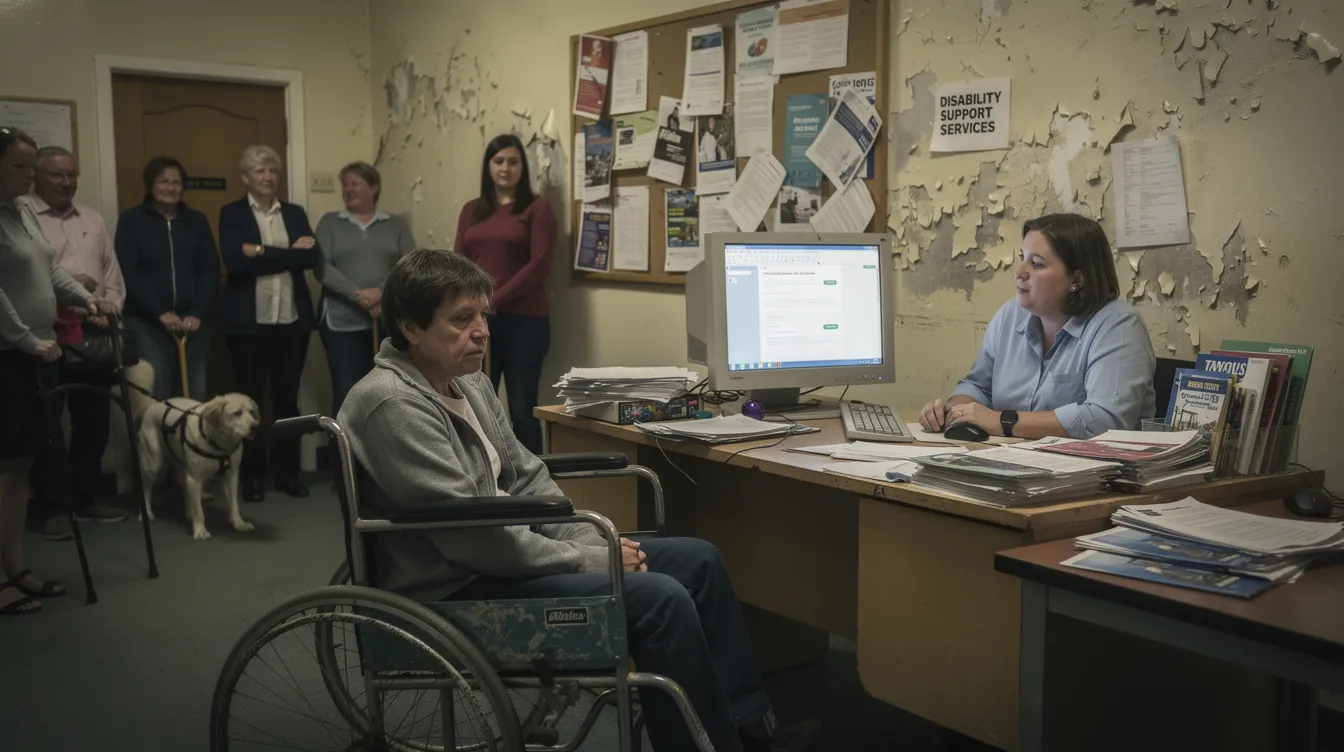
Picture this: an NDIS participant waits for a support worker who arrives 40 minutes late, rushes through a medication routine without checking dosages, and performs a manual transfer so roughly it leaves bruising on the person’s arms. The next day, a different worker shows up with no handover notes. Within weeks, the participant dreads mornings and stops asking for help with showers. Their mental health deteriorates.
Disability support is not just help around the house. It is essential health care, personal care, and community access that directly affects a person’s safety, dignity, and independence. When disability services fall short, the consequences go beyond frustration; they include physical harm, psychological distress, and social isolation.
The NDIS has been rolling out across Australia since 2013, with the Quality and Safeguards Commission established in 2018 to regulate providers nationally. The scheme is a complex system of sub-markets, where governments act as market stewards rather than direct service deliverers. Rapid growth and workforce pressures have created gaps in quality supports that participants and families need to recognise early. This article, written from the perspective of Re.Connect Support Services, gives clear and practical guidance for doing exactly that.

What “Quality” Disability Support Should Look Like
Good disability support should increase a person’s safety, dignity, and independence. Effective support should respect individuals’ needs and promote participation in society, from daily routines to employment, recreation, and community life. Participants can choose their service providers freely, and quality services are built around that principle of choice and control.
Core features of good disability support include:
- Reliable attendance: workers arrive on time, stay for the full shift, and follow the agreed schedule.
- Respectful communication: staff speak with the person, not about them, and respond to their preferences.
- Tailored support plans: documented, up-to-date plans that reflect the participant’s goals, routines, and risk profile.
- Trained staff: workers qualified for the tasks they perform, including manual handling, medication support, and behaviour support where relevant.
- Alignment with NDIS Practice Standards across all service domains.
Quality supports span several areas:
- Personal care (showering, dressing, continence)
- Community participation and social inclusion
- Health care coordination
- Mental health support
- Employment assistance to build skills and independence, including NDIS employment supports to access and keep jobs
- Cultural safety, including services responsive to Indigenous Australians and Culturally and Linguistically Diverse populations, who remain underserved by NDIS
These supports are co-designed with participants, families, and carers, and documented in risk assessments that are reviewed regularly. High quality disability services that promote independence, inclusion, and dignity should reflect these principles in everyday practice. The sections below contrast these features with specific warning signs of poor quality disability support.
Legal and Human Rights Foundations for Safe Support
Disability support sits within a human rights framework. Australia ratified the UN Convention on the Rights of Persons with Disabilities (CRPD), which defines disability as arising from the interaction between impairment and societal barriers, not individual deficit alone.
People with disability have specific, enforceable rights. Access to evidence‑based healing and recovery services under the NDIS can be one practical way of upholding those rights in day‑to‑day support:
- Safety and freedom from violence, abuse, neglect, and exploitation (CRPD Article 16)
- Dignity, privacy, and autonomy in daily life
- Legal capacity and the right to make decisions (CRPD Article 12)
- Non-discrimination in access to services and community life
The Australian Human Rights Commission oversees these obligations alongside the Disability Discrimination Act 1992. Australia’s NDIS Code of Conduct outlines benchmarks for respectful disability support, and the NDIS Quality and Safeguards Commission enforces service standards designed to uphold these rights in everyday service delivery.
Persistent poor quality supports can amount to human rights breaches. When a provider repeatedly ignores a person’s preferences, fails to prevent harm, or uses unauthorised restrictive practices, that is not “bad customer service.” It is a failure of legal and ethical obligations.
Understanding the Role of the NDIS Commission and Service Standards
The NDIS Quality and Safeguards Commission was established in 2018 to regulate NDIS providers across Australia. It handles complaints, investigates reportable incidents, conducts audits, and imposes sanctions on providers that fail their obligations.
The NDIS Practice Standards cover four core areas:
- Governance and operational management: policies, financial management, risk systems, and human resources.
- Rights and responsibilities: informed consent, privacy, dignity, and freedom from abuse.
- Provision of supports: safe, competent, and responsive service delivery.
- Reportable incidents: systems for identifying, recording, investigating, and learning from incidents.
Registered NDIS providers must comply with these practice standards and are subject to audits. Registered providers must also comply with quality management systems that include worker screening, supervision, and incident reporting. The NDIS Quality and Safeguards Commission oversees participant rights and can revoke or suspend provider registration.
Even unregistered providers are required to deliver safe and lawful supports and can be investigated for serious concerns. Participants can terminate service agreements based on their preferences if they are not receiving appropriate safeguards.
Common Warning Signs of Poor-Quality Disability Support
Regulatory bodies outline critical warning signs for poor support services. Use the list below as a practical checklist. One-off mistakes happen, but patterns over weeks or months should trigger action.
Scheduling and attendance:
- Frequent late arrivals, missed shifts, or last-minute cancellations. Unreliable scheduling disrupts daily routines and compromises safety.
- Workers leaving before their shift ends or supporting other participants during time billed to you.
Staff behaviour and communication:
- Common signs of poor quality support services include poor communication and high staff turnover. If you rarely see the same worker twice, the provider may lack the stability to deliver consistent care.
- Workers speaking over the person, ignoring their preferences, or using disrespectful language.
- Staff using phones during support instead of engaging with the participant.
- Excluding families and guardians from decisions or information they should have access to.
- Disregard for participant choice violates autonomy and individual preferences. If a worker overrides what the person wants without a safety reason, that is a red flag.
Environment and documentation:
- Unsafe equipment, poor hygiene in shared areas, no visible emergency procedures.
- No clear support plan, or plans that have not been updated in months.
- No incident reporting process visible or explained to participants and families.
In the Core & Capacity Disability Support case investigated in 2025, residents complained that workers arrived late, left early, supported other participants during their shifts, and spent time idle before submitting invoices. The provider later collapsed with over $500,000 in tax debt.

Specific Indicators of Unsafe or Neglectful Personal Care
Personal care is intimate. Poor practice in this area can quickly become unsafe or degrading for the person receiving it.
Concrete red flags:
- Untrained staff performing manual handling or transfers, leading to bruises, drops, or joint strain.
- Pressure injuries developing because repositioning schedules are not followed.
- Continence aids left unchanged for extended periods.
- Missed showers or hygiene routines.
- Staff entering bathrooms or bedrooms without asking or announcing themselves.
Physical and behavioural neglect can indicate substandard support services. Watch for behavioural changes in the participant: new fear of certain workers, withdrawal from activities, or visible distress around showering or toileting times. In the Royal Commission’s Public Hearing 13, unexplained bruising on participants was documented alongside evidence that providers failed to investigate or report these injuries.
Poor personal care leads to infections, pressure injuries, falls, and hospitalisations, especially for people with high physical support needs and complex needs. Participants can and should set boundaries. Access to high quality in‑home personal care services that respect same-gender staff or cultural considerations should be offered where possible.
When Poor Support Becomes a “Reportable Incident”
Some forms of poor quality disability support cross the line into reportable incidents under NDIS rules. A reportable incident is any act or event connected to delivering NDIS supports that has caused harm or risk of harm to a person with disability.
The main categories:
| Category | Reporting timeframe |
|---|---|
| Death of a participant | 24 hours |
| Serious injury | 24 hours |
| Abuse or neglect | 24 hours |
| Unlawful sexual or physical contact | 24 hours |
| Unauthorised restrictive practices (no immediate harm) | 5 business days |
| NDIS providers are legally required to notify the NDIS Commission about reportable incidents within these timeframes. In the third quarter of 2024-25 alone, the Commission received 15,723 reportable incident notifications, including 6,907 relating to unauthorised restrictive practices. |
You do not need to “prove” something happened. If you have a reasonable concern about harm or risk of harm, that is enough to raise the issue. Report critical issues to the NDIS Commission immediately.
Red Flags in NDIS Provider Governance and Management
Poor organisational culture often shows up before individual worker issues become visible. The NDIS’s market-driven structure can prioritise profit over service quality when governance is weak.
Governance red flags to watch for:
- No clear complaints policy, or complaints that are met with defensiveness rather than follow-up.
- No service agreement provided, or agreements that are vague about what supports will be delivered.
- Invoices that do not match services delivered. Auditing invoices can help identify discrepancies in billed services. Lack of transparency in billing is a common issue in disability support services.
- Financial misconduct includes unclear billing and pressure tactics in service agreements. If a provider pressures you to sign quickly or discourages questions about fees, treat that as a warning.
- Refusal to share policies on safeguarding, infection control, or incident reporting.
Management warning signs include constant staff turnover, chronic rostering errors, untrained “on-call” managers, and no follow-up after incidents are raised. In the Afford case, the Royal Commission found the provider prioritised revenue over participant health and safety. Afford was ordered to pay $400,000 in civil penalties. LiveBetter and Valmar faced penalties of $1.8 million and $1.9 million respectively for failures in safe care and risk management.
Ask providers directly about their safeguarding systems. Evasive answers are themselves a warning sign.
Impact of Poor-Quality Support on Mental Health and Wellbeing
Ongoing poor quality disability support erodes trust in a way that compounds over time. Participants who have been let down repeatedly can develop anxiety around care routines, hypervigilance about who is rostered, and sleep disturbance tied to uncertainty about whether help will arrive. Poor quality support creates mental health challenges and financial strain, as participants spend time and money seeking alternatives or managing crises caused by service failures. In contrast, tailored NDIS mental health recovery and community participation programs aim to restore stability, confidence, and connection.
Inadequate disability support can lead to physical health barriers and social inclusion barriers. Access to flexible, person‑centred supports across disability, aged care, and mental health can reduce these barriers when they are delivered safely and reliably. A person who stops attending community activities because their support worker keeps cancelling loses not just a service; they lose connection, routine, and purpose. Reliable community participation and engagement supports under the NDIS are essential to prevent isolation and maintain meaningful routines.
People with psychosocial disability or mental illness can be particularly harmed by inconsistent routines, broken promises, and staff who invalidate their experiences. In 2024-25, alleged abuse or neglect occurred at a rate of about 20.1 per 1,000 NDIS participants, according to Productivity Commission data.
If support experiences are worsening a person’s mental health, involve a GP, psychologist, or mental health professional. Specialist NDIS mental health support and recovery coaching can also help people rebuild confidence and stability after poor experiences. Beyond Blue provides information and support, and Lifeline (13 11 14) is available for crisis support.
How Workforce Pressures Can Lead to Poor-Quality Supports
The NDIS has faced workforce shortages impacting service delivery across Australia. Thousands of additional workers are needed for the NDIS by 2030 to meet growing demand. Rural and remote areas face compounded NDIS workforce challenges, with fewer providers, longer travel times, and limited ability for participants to exercise choice.
Typical workforce-related warning signs include:
- Workers rushing between too many participants, with limited time for proper personal care.
- Frequent use of inexperienced casual staff who lack familiarity with the participant’s needs and routines.
- High turnover rates that compromise the quality of participant support and prevent relationship-building.
Poor working conditions hinder recruitment in the disability sector. Low wages, limited training, and lack of supervision contribute to burnout and turnover across the NDIS workforce. Inclusion Australia’s 2023 background paper documented that the market fails when few providers serve people with high or complex needs, and that NDIS funding does not always translate into quality on the ground. Resources like Re.Connect’s blog on NDIS, aged care, and mental health support can help participants and families stay informed about these system-wide challenges. NDIS worker training requirements will evolve by 2026 as new standards take effect.
Economic inequality affects access to NDIS services. Participants in lower socioeconomic areas or those experiencing digital exclusion in remote areas may struggle to compare providers, access telehealth, or manage their NDIS plans online.
Workforce pressure is an explanation, not an excuse. Providers must still ensure safe and competent care. Ask providers about staff qualifications, ongoing training, supervision, and how they manage fatigue and workload.

Practical Steps if You Suspect Poor or Unsafe Care
If you suspect low quality or unsafe care, here is a step-by-step approach.
1. Document what is happening. Write down dates, times, names of workers involved, and what occurred. Keep copies of rosters, text messages, and invoices. A simple support diary is enough.
2. Talk with the participant. If possible, ask how they feel about their support and specific workers. For people with intellectual disability or limited verbal communication, look for behavioural changes and involve someone who knows them well.
3. Raise concerns with the provider in writing. Use clear examples. State what happened, what standard was not met, and what outcome you expect. Ask for a response by a specific date. Participants have the right to complain about services received.
4. Escalate if needed. If the provider does not respond, or if the concern involves serious harm, escalate to the NDIS Commission. You can also involve police or health services where criminal behaviour or medical neglect is suspected.
5. Get independent support. Seek help from independent advocates or disability legal services. They can help you navigate complaints, attend meetings, and ensure your rights are upheld. Participants can terminate service agreements if they are not satisfied.
How to Report Concerns to the NDIS Commission
Anyone can complain to the NDIS Commission about an NDIS provider: participants, families, workers, or community members.
Ways to contact the Commission:
- Online: Submit a complaint through the NDIS Commission website.
- Phone: Call 1800 035 544 (free call). TTY and language support options are available.
- You can report issues online or by calling 1800 035 544.
When making a complaint, include:
- The name of the provider
- Dates and description of what happened
- What outcome you are seeking
- Any supporting documents (photos, messages, invoices)
Complaints to the NDIS Commission are acknowledged within a few days. Complaints can be resolved within twenty-one days of receipt, depending on complexity. The NDIS Commission prioritises issues involving serious risks to participants. You can choose to remain anonymous when reporting an issue, though providing contact details helps the Commission investigate and keep you informed.
Other Places to Get Independent Help and Advocacy
You do not have to manage this alone. Advocacy services exist to help people with disability, families, and carers navigate complaints, access their rights, and hold providers accountable.
- The Disability Advocacy Finder (via the Disability Gateway) lists advocacy organisations by state and support type.
- State-based community legal centres can assist with rights, service standards, and complaints at no cost.
- For families of children or non-verbal adults, guardianship advice or supported decision-making tools are available when safety is at greater risk.
Consulting independent networks can provide insights on a provider’s reputation before you commit. Always check that any advocate or advisor is independent and not financially linked to the NDIS provider in question.
Choosing Safer, High-Quality NDIS Providers
After a poor experience, knowing what to look for in a new provider matters. Competition can improve service quality in disability support, but only when participants have the information to make informed choices and can identify ethical, person‑centred disability support providers committed to safety and independence.
Desirable traits in NDIS providers:
- Transparent fees with clear breakdowns of what is and is not charged.
- Detailed service agreements that specify supports provided, schedules, and cancellation terms.
- Thorough intake assessments that identify risks, preferences, and goals.
- Willingness to involve the participant in all decisions about their care, similar to Re.Connect’s personalised, empowerment‑focused support model.
Checking provider registration is important to ensure compliance and safety. Search the NDIS Commission’s provider register and look for any regulatory actions or bans. Many participants find that word-of-mouth from other NDIS participants or local disability organisations is one of the most reliable sources.
Practical questions to ask new providers:
- What worker screening checks do you conduct?
- How do you train staff in manual handling, first aid, and human rights?
- What happens when a worker calls in sick?
- How do you handle complaints and reportable incidents?
Trust your instincts. If you feel pressured to sign quickly, or if a provider discourages you from asking questions, consider other options.

How Re.Connect Support Services Prioritises Provider Safety and Quality
Re.Connect Support Services operates as a safety-first, participant-led NDIS provider. The organisation’s approach is grounded in concrete practices rather than abstract promises.
Internal practices that define this focus:
- Rigorous worker screening before any staff member delivers support.
- Ongoing training in manual handling, mental health awareness, human rights, and cultural safety.
- Active supervision with regular check-ins between managers and frontline support workers.
- Transparent communication about fees, schedules, and any changes to NDIS plans or NDIS funding.
Support plans are reviewed regularly with participants, families, and carers. Re.Connect maintains zero tolerance for abuse, neglect, and restrictive practices used outside approved behaviour support plans.
Feedback and complaints are treated as part of continuous improvement. When a participant or family member raises a concern, Re.Connect treats it as information that drives better outcomes, not as a problem to be minimised.
If you are looking for safe, high quality disability support, Re.Connect welcomes a conversation. Learn more about Re.Connect Support Services as a registered NDIS provider and how they support daily living, community connection, and recovery. No pressure, no obligations; just a chance to talk about what support should look like for you.
Preventing Poor-Quality Support: What Participants and Families Can Do Proactively
Providers hold primary responsibility for service quality, but informed participants and carers can help prevent issues from taking root.
Set clear expectations early. Work with your provider to establish detailed service agreements that cover schedules, boundaries around personal care, preferred communication methods, and what to do if something goes wrong.
Keep a simple support diary. Track who visited, what was done, and any concerns. This does not need to be elaborate; a notebook or phone note with dates and brief entries is enough to spot patterns early. It also provides evidence if you need to raise a formal concern.
Come prepared to NDIS planning meetings. Bring specific examples of what has gone wrong before so planners can fund adequate safeguards and appropriate safeguards in your NDIS plans. If you have lost hours due to cancellations or no-shows, document them; this information helps demonstrate what is “reasonable and necessary” at plan reviews.
Check in with the participant regularly. Ask how they feel about each worker, especially where communication or cognitive disability makes it harder to speak up spontaneously. For people with intellectual disability, changes in behaviour, mood, or willingness to engage with certain activities can indicate problems that words alone might not capture.
Participants who are able to achieve their goals through their NDIS supports deserve providers that meet quality standards consistently, not just during audit periods. For some people, choosing supported independent living that prioritises safety and autonomy is a key part of achieving those goals. Skilled NDIS support coordination to navigate complex services can make it easier to leave unsafe providers and connect with those that align with your goals.
Frequently Asked Questions
These FAQs address practical questions not fully covered above.
Is it ever okay for a support worker to use physical restraint?
Physical restraint is a restrictive practice under NDIS rules. It is only lawful in tightly controlled situations where a behaviour support plan has been developed by a qualified practitioner and proper authorisation has been granted. Holding someone down, blocking exits, or physically restricting movement out of frustration, anger, or convenience is not acceptable and may be a reportable incident. In 2024-25, 16.8 per 1,000 NDIS participants were subject to unauthorised restrictive practices. The NDIS Commission provides detailed guidance on restrictive practices and behaviour support on its website.
What if I rely on my current provider but I’m worried about quality?
Many participants feel trapped because there are few local NDIS providers, especially in rural and remote areas. Start with a respectful, specific conversation about your concerns and give the provider a chance to respond. Document everything in writing. At the same time, work with your support coordinator or Local Area Coordinator to develop a backup plan with alternative providers, so you have options if the situation worsens. You can still report serious safety concerns to the NDIS Commission even while continuing to use the same provider.
Do I have to be the NDIS participant to make a complaint?
No. Anyone can raise a concern with a provider or the NDIS Commission, including family members, carers, friends, neighbours, or workers. Where a participant has limited communication, family or advocates often play a key role in spotting poor quality disability support. Complaints can be made with or without naming the participant, but more detail usually leads to a more effective investigation.
Can poor-quality support affect my NDIS funding or eligibility?
Raising concerns about service standards should not put a participant’s eligibility or NDIS plans at risk. The NDIA (which manages NDIS funding) is separate from the NDIS Commission (which oversees service quality), and complaints about providers go to the Commission. Document any lost hours of support due to cancellations or no-shows; this information strengthens your case at plan reviews when discussing what supports are reasonable and necessary for better outcomes.
How quickly should I act if I see signs of poor care?
For immediate safety concerns, such as serious injury, suspected abuse, or criminal behaviour, call emergency services first, then contact the NDIS Commission promptly. For emerging patterns like frequent lateness or minor but repeated hygiene issues, raise concerns with the provider within days rather than waiting months. It is better to over-report than under-report when vulnerable people’s safety and human rights are at risk. The life and wellbeing of participants depends on people acting when something feels wrong.