
Key Takeaways
- The right ndis provider fits your goals, everyday life, ndis plan, safety needs and funding type-not just price or location.
- Start by clarifying goals, then compare registered and unregistered providers, shortlist 3 to 5 candidates, and ask clear questions before signing.
- ndis quality is overseen by the ndis commission; a registered provider must meet ndis practice standards, audits and safety standards.
- You can change service providers when supports are not working. That is part of participant choice and control.
Introduction: Why Your Choice of NDIS Provider Matters
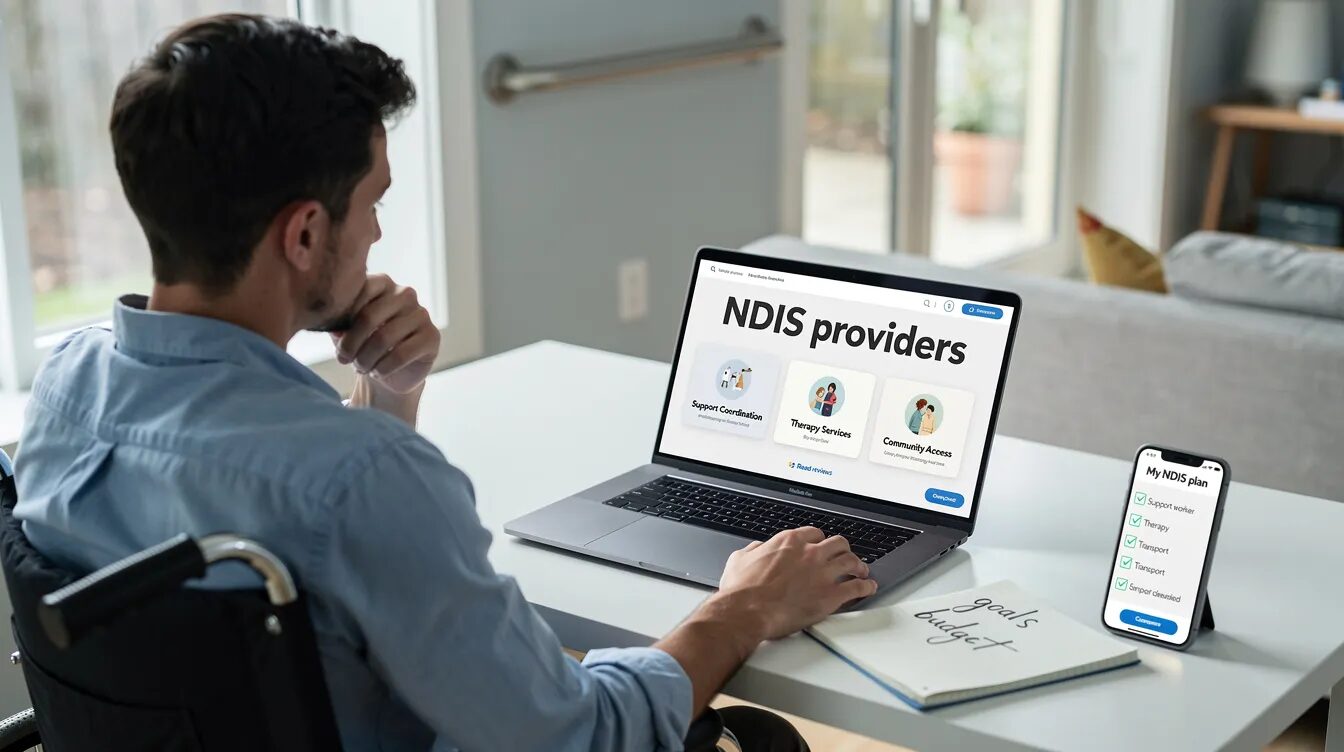
The national disability insurance scheme has grown since 2013 to support hundreds of thousands of Australians with disability. Choosing the right ndis provider is crucial as it directly impacts your independence, wellbeing, and ability to achieve personal goals.
This guide is for NDIS participants, families, and carers seeking to make informed choices about their support providers.
An ndis provider is an individual, business or organisation that deliver supports funded in your plan. NDIS providers can offer a variety of supports including daily living assistance, community access, and capacity-building services to help participants achieve their goals.
Examples include:
- personal care, daily personal activities and household tasks, often coordinated by NDIS support coordinators
- supported independent living and improved life choices and specialist disability accommodation
- therapy from allied health professionals, including mental health supports and resources
- community participation, social participation, life skills and support coordination
A registered ndis provider is approved through the NDIS Quality and Safeguards Commission. You can read more through the NDIS provider information.

Step 1: Start With Your Goals, Everyday Life and NDIS Plan
Before comparing ndis service providers, map your daily life and goals. The NDIS aims to provide reasonable and necessary supports that help participants pursue their goals, increase their independence, and enhance community participation.
Common 2026 goals include learning public transport, building work skills, managing personal care safely, or joining community activities, and you may need specific NDIS travel and transport support to achieve some of these. Your ndis funding usually sits in Core, Capacity Building or Capital. Core may fund daily living as outlined in the NDIS Core Supports budget; Capacity Building may fund skill development and broader capacity building; Capital may fund equipment or home changes.
Infographic-style roadmap: Your life now → Your goals → ndis plan funding → Type of provider you need.
Ask:
- What assistance do I need on weekdays?
- Do I want one provider or several disability support providers?
- What support do families or carers already provide?
- What outcomes would show progress?
Participants can receive support for skill development, which includes both short-term and long-term capacity building supports tailored to their individual needs and goals.
Step 2: Understand Registered vs Unregistered NDIS Providers
An NDIS registered provider is an organization that has met the requirements set by the NDIA and the NDIS Quality and Safeguards Commission, which includes following national guidelines and continuous monitoring. To be recognized as a registered NDIS provider, organizations must undergo audits and meet strict quality and safety standards as mandated by the NDIS Commission.
To be recognized as an NDIS approved provider, organizations must adhere to the NDIS Practice Standards, which ensure quality service and products for participants. Registered NDIS providers must demonstrate their ability to provide help in a safe and reliable way, safeguard the rights and privacy of participants, and continuously improve service quality.
| Compare | registered ndis providers | unregistered providers |
|---|---|---|
| Who can use | Agency, plan management, self-managed | Self-managed or plan-managed |
| Pricing | Providers must adhere to the maximum hourly rates set by the NDIS Price Limits and Pricing Arrangements, often called the ndis price guide | May vary |
| Oversight | ndis registered, audited to relevant ndis practice standards | NDIS Code still applies |
| Must be registered | regulated restrictive practices, many supported independent living and SDA supports | Not suitable |
| If a NDIS plan is Agency-Managed, only registered providers who meet government safety standards can be chosen. Self-Managed or Plan-Managed NDIS plans allow the use of both registered and unregistered providers or independent support workers. | ||
| All NDIS workers must adhere to the NDIS Commission Code of Conduct, ensuring basic rights, safety, and integrity. |
Step 3: Where to Find and Shortlist NDIS Providers
There is no single best list of approved ndis service providers. Use official tools plus trusted word-of-mouth.
The NDIS Provider Finder Tool can be used to filter registered providers by location. In the My NDIS Participant Portal, enter your postcode, choose a registration group such as Daily Activities or Community, Social and Civic Participation, then filter by registered ndis status.
Also check Clickability, Disability Support Guide, Karista and MyCareSpace. Platforms like Hireup and Mable may suit plan management services or self-managed plans, but check registration first.
Having a shortlist of 3 to 5 candidates can aid in the selection of the right NDIS provider. Participants should seek feedback from existing clients through external forums or trusted word-of-mouth recommendations.
Step 4: Check NDIS Quality, Safeguards and Provider Credentials
The NDIS Quality and Safeguards Commission is separate from the NDIA and regulates many ndis services. The ndis code and NDIS Practice Standards cover rights, complaints, safety and service quality.
Quality checklist:
- Check the provider register, registration dates and registration group.
- NDIS providers must demonstrate that they can provide help in a safe and reliable way, safeguard the rights and privacy of participants, and hire workers who are trained and properly screened.
- Qualified and experienced staff are essential for NDIS providers, as they must use evidence-based procedures to deliver effective support and intervention strategies.
- Providers are required to have active, available staff in the local area to ensure reliable service delivery, which depends on recruiting and retaining quality disability support workers.
- Ask about incidents, complaints, privacy, restrictive practice policies and outcome reports.

Step 5: Questions to Ask a Potential NDIS Provider
The way a provider answers often tells you as much as the answer itself.
Ask:
- Do your services fit my disability, age, goals and mental health needs?
- What experience do you have with clients like me?
- How do your ndis workers train and stay screened?
- What travel, cancellation or minimum-shift costs apply?
- How will you support independent living, not dependence?
- How do you involve carers if I choose?
- How do you measure daily living, community access or participation outcomes?
- Who is my contact person?
- How do supports change when goals evolve?
- Can I trial the service?
A good NDIS provider should be outcome-focused, helping participants define their goals and providing a roadmap to achieve them.
Step 6: Weigh Up Fit, Flexibility and Long‑Term Support
Many providers look similar on paper. Fit means they listen, speak directly to participants, explain ndis services clearly and avoid rigid packages.
Providers must tailor their support to individual goals and values rather than offering rigid packages, involving clients in decision-making. Choosing the right NDIS provider requires balancing funding management type, individual lifestyle goals, and the provider’s specific policies.
One provider can simplify coordination. A wider range of specialist providers, including centres for independent living, may improve disability support, education links, therapy and community outcomes. Consider their qualifications, experience, and whether they can deliver the supports you need as your requirements evolve.
Step 7: Signing Service Agreements and Knowing Your Rights
A service agreement explains the supports, hours, costs and responsibilities. Before signing, scan:
- start, review and end dates
- exact services and hours
- travel, establishment fees, hidden travel costs and minimum shift durations
- cancellation rules
- exit terms
- complaint process
Review service agreements for additional provider charges like establishment fees, hidden travel costs, and minimum shift durations, which can vary even within official guidelines. You can ask for changes, a trial period or a shorter term.
Step 8: Making Changes – Switching or Adding NDIS Providers
Changing providers is normal. Reasons include poor communication, roster gaps, moving house, or needing more specialised disability support services.
To switch, read your agreement, give written notice, request a handover, and update your support coordinator or plan manager. Start 8–12 weeks before a plan review for complex ndis supports such as supported independent living.
Document what worked and what did not. This makes the next suitability assessment stronger.
Infographic Idea: Your Step‑by‑Step Roadmap to Choosing an NDIS Provider
Use eight icons: calendar, target, shield, magnifying glass, question mark, handshake, checklist and refresh symbol.
Short phrases:
- Understand daily life
- Set goals
- Know registered and unregistered providers
- Search and shortlist
- Check safeguards commission quality
- Ask questions
- Sign clearly
- Review and change
Add: “Save this roadmap for provider meetings.”

Frequently Asked Questions
Do I always need to use an NDIS registered provider?
Yes, if your plan is Agency-Managed. If self-managed or plan-managed, you can use registered and unregistered NDIS service providers, except where registration is legally required.
How important is it that a provider is local?
Local support helps with transport, emergencies and community knowledge. Remote services may work for therapy, plan management or management services, but personal care usually needs nearby workers.
Can I work with more than one NDIS provider?
Yes. Many ndis participants use one registered ndis service provider for daily supports, another for allied health, and another for coordination. Keep a written “who does what” summary.
What if I’m unhappy but scared to complain?
You have the right to speak up. Start with the provider, bring a support person, and keep dates, emails and examples. If unresolved, contact the NDIS Commission.
How early should I look before plan review?
Start 8–12 weeks before review for complex supports, or 4–6 weeks for simpler services. Notes from meetings help show how the right provider will help you achieve your next plan goals.