
As an NDIS participant, you deserve support that is safe, respectful, and aligned with your goals. Whether you want to give feedback to a support worker about something that went well, or raise concerns about something that went wrong, this guide walks you through every option available to you.
Key Takeaways
- NDIS participants can provide feedback, leave feedback, or make a complaint about any support worker-through Re.Connect Support Services, the NDIS Commission, or both.
- Feedback can be positive (compliments) or negative (concerns or complaints), and both are essential to improving your day-to-day support.
- You can speak up directly to your support worker, to the provider, through an independent advocate, or to external bodies such as the NDIS Quality and Safeguards Commission.
- Complaints can be anonymous or confidential, and your NDIS services cannot be stopped or reduced because you chose to complain.
- This article provides step-by-step guidance, real-life NDIS examples, and links to trusted resources you can bookmark, including further NDIS and support coordination resources on our blog.
Why Your Feedback About a Support Worker Matters
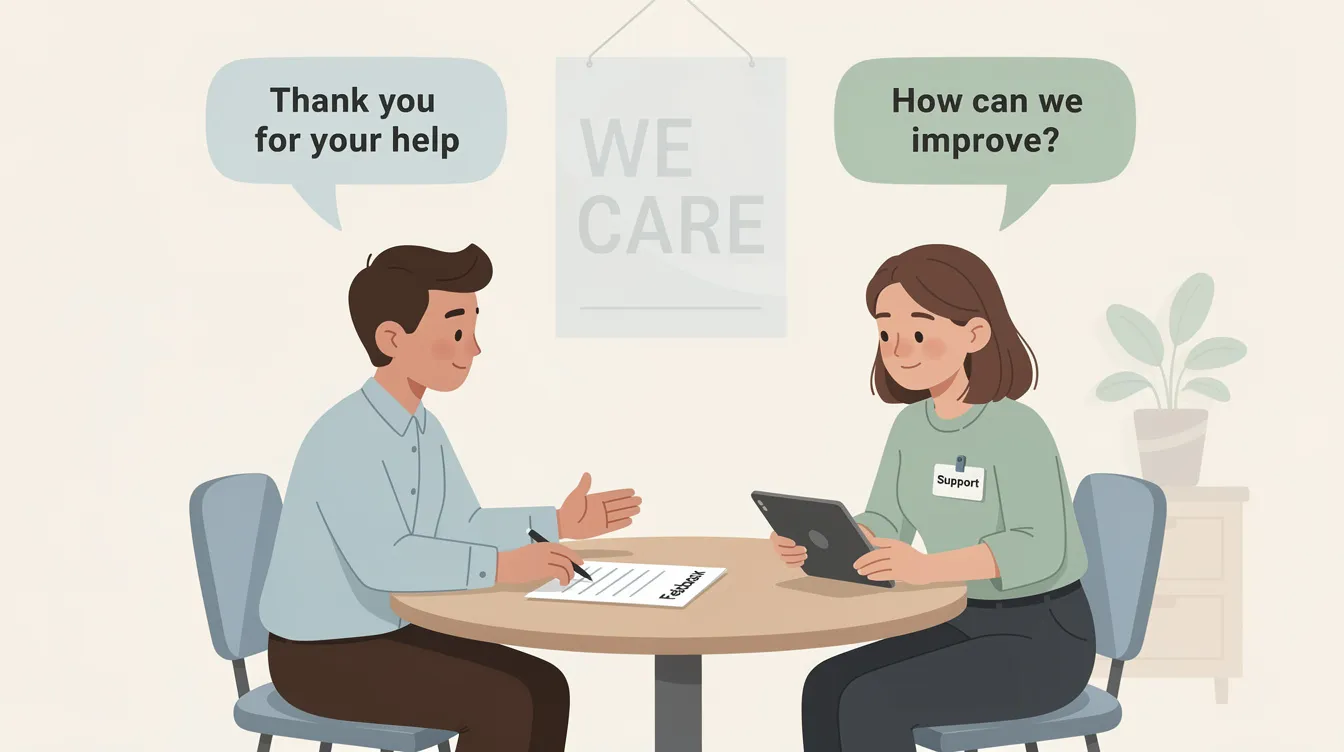
Re.Connect Support Services works with NDIS participants across Australia and relies on feedback about each support worker to keep services safe and effective. Clear communication ensures services match your goals. Providing feedback to your support worker is crucial for managing your care.
A support worker is anyone who helps you with personal care, community access, transport, or daily living supports funded under your NDIS plan. When you provide feedback, it can range from general comments and suggestions to serious concerns like unsafe practices or disrespectful behaviour. Participants in the NDIS have the right to speak about support quality and safety.
For example, if a worker regularly arrived 30 minutes late throughout August 2026, causing you to miss appointments, that is a concern worth raising. Equally, if a worker supported you brilliantly during a medical appointment in May 2025-explaining procedures calmly and advocating on your behalf-that positive feedback helps the organisation recognise and encourage good performance.
Under NDIS Practice Standards, providers including Re.Connect must have accessible ways for participants to share feedback and complaints, and must respond in a fair, timely way. Feedback also helps workers grow, build on strengths, and address issues before they become serious complaints.

Everyday Ways to Provide Feedback to Your Support Worker
Not every issue needs a formal complaint. Many concerns can be resolved by giving clear, respectful feedback during or after a shift. Feedback should be honest, respectful, and specific to be effective.
The SBI Model helps structure effective feedback by stating Situation, Behaviour, and Impact. For example: “On Tuesday 12 March, you arrived 30 minutes late. It meant I missed my physio appointment.” This uses specific examples, which enhances the clarity of feedback. Constructive criticism should focus on observable behaviours rather than personal character-say what happened, not what you think of the person.
A simple structure for feedback includes appreciating positives and stating specific preferences for change. You might say: “I noticed how carefully you helped me with my new hoist last week-that was helpful. But I need you to slow down when we’re in the bathroom so I feel safe.” Balance feedback with positive reinforcement to improve receptiveness.
Private feedback discussions preserve dignity and encourage openness, so choose a calm moment at the end of a session. Define success clearly when providing feedback-tell the worker exactly what you would like them to do differently next time. Invite dialogue by asking for the support worker’s perspectives during feedback, and offer invitations for greater autonomy and involvement from the worker where possible.
If a family member, friend, or guardian supports you, they can help you provide feedback using communication aids, photos, or behaviour records. If you feel unsafe raising an issue directly, talk to the provider or an advocate instead-never stay silent.
How to Leave Feedback with Re.Connect Support Services
Re.Connect Support Services welcomes compliments, suggestions, and complaints about any Re.Connect support worker. You can submit feedback via phone, email, or in person-or you can provide feedback via a feedback form on the Re.Connect website. Contact the organisation directly for their current contact details and address.
When you leave feedback, include the support worker’s full name, the date and time of the shift (for example, Monday 7 September 2026, 9:00–11:00am), the location, the NDIS support it related to (such as community participation or personal care), and a clear description of what happened.
For instance, one participant contacted Re.Connect in June 2026 to say their support worker went above and beyond during a hospital stay-staying calm, liaising with nurses, and ensuring the participant felt safe. That compliment was recorded, shared with the worker’s manager, and noted as a positive progress marker.
You can also leave feedback through Re.Connect and remain anonymous, for example by using an anonymous online form or asking an advocate to contact the service without sharing your name. Note that this can limit the organisation’s ability to investigate. Feedback will be acknowledged within 24 hours if contact details are provided, and the organisation will log the issue, allocate it to a manager, investigate, and follow up.
When and How to Make a Complaint About a Support Worker
Some situations go beyond everyday feedback and require a formal complaint-especially when there are risks to safety, dignity, or your NDIS capacity-building rights and supports. Support participants can raise concerns without fear of unfair treatment.
Examples of when to make a complaint include:
- Repeated lateness or no-shows without notice
- Disrespectful language or behaviour
- Ignoring support plan instructions
- Unsafe manual handling
- Financial abuse concerns
- Breaching your privacy (e.g. posting photos on social media without consent)
To make a complaint to Re.Connect: decide what outcome you want, write down dates and details, contact the service in writing or by phone, and request a support person or interpreter if needed. You can ask someone you trust-a family member, friend, support coordinator, or independent advocate-to make a complaint on your behalf. You can seek assistance from an independent advocate for feedback, and you can ask for assistance from an independent advocate when making a complaint.
If issues are serious, formal complaints can be raised with the NDIS Quality and Safeguards Commission. For urgent matters like suspected assault or immediate risk, contact emergency services on 000 first, then notify the provider.
Re.Connect cannot reduce or refuse services because someone chose to make a complaint. Retaliation-like cancelling shifts-is not allowed under NDIS rules.
Making a Complaint to the NDIS Commission and Other External Bodies
You do not have to complain to the provider first. You can go straight to the NDIS Quality and Safeguards Commission if you prefer. Complaints about NDIS services can be made to the NDIS Commission at any time.
The NDIS Commission regulates providers across Australia, handles complaints about NDIS-funded supports and workers, and can investigate serious matters such as abuse, neglect, and restrictive practices. The NDIS Commission can receive complaints about NDIS services. You can contact the NDIS Commission at 1800 035 544, or visit their website to lodge a complaint online or using a form.
After receiving a complaint, the Commission may assess the issue, contact the provider, request documents, and sometimes speak with the participant or family. They may also provide referrals to other agencies if the concern falls outside NDIS, including the relevant department where needed.
Other relevant complaint bodies include:
| Body | Contact |
|---|---|
| NSW Health Care Complaints Commission | You can call the Health Care Complaints Commission at 1800 043 159 |
| Victorian Disability Services Commissioner | Handles disability service complaints in Victoria |
| Anonymous complaints are accepted by the Victorian Disability Worker Commission. Free, independent advocacy services can help you through this process-search for local services using the NDIS disability advocacy finder, especially if you are seeking tailored NDIS support for Autism Spectrum Disorder (ASD). |
Anonymous, Confidential, and Supported Feedback Options
Some people worry about “getting a worker in trouble” or facing negative consequences. Understanding the difference between anonymous and confidential complaints can help build confidence to speak up.
- An anonymous complaint means you give no name or contact details. Anonymous complaints are accepted by the complaints commission. This protects your identity but makes it harder to investigate or send you updates.
- A confidential complaint means the provider or NDIS Commission knows who you are but agrees not to share your identity more widely than needed. This allows better follow up and protection.
Re.Connect can arrange interpreters, translated materials, or cultural support so you can provide feedback in the language and way that suits you. For participants with cognitive or intellectual disability, supported decision-making tools-pictures, simple language, extra time-help you decide whether, when, and how to complain.
For example, one participant used an advocate and an interpreter to discuss concerns about a support worker’s communication style. The objective was not to end the support but to create improvement. The outcome was extra training for the worker, which improved the relationship and preserved the participant’s community access routine.
What Happens After You Provide Feedback or Make a Complaint?
After you speak up, there is a clear process. You should expect timely updates and respectful treatment throughout.
Inside Re.Connect, typical stages include:
- Acknowledging receipt (within 24–48 hours)
- Assessing the level of risk
- Investigating-which may involve talking with the worker, reviewing rosters, or checking incident reports
- Deciding on outcomes and communicating the response
Possible outcomes include an apology, a change of support worker, extra training or supervision, updates to your support plan, or referral to an external body if serious breaches are identified. You can request the outcome in writing, ask questions, and escalate to a Service Manager if you feel the issue has not been handled fairly.
For more detail on how complaints are handled at a national level, visit the NDIS Commission’s complaints page.
Giving feedback is part of exercising choice and control under the NDIS. Re.Connect sees complaints as opportunities to improve-not as a problem. Your voice matters, and every comment, suggestion, or concern helps create better disability services for everyone in the community.
Frequently Asked Questions
Will my NDIS funding or services be affected if I make a complaint about a support worker?
No. You have a right to complain, and your funding, plan, or access to services with Re.Connect cannot be reduced or cancelled for speaking up. Providers must act under NDIS rules to protect you from negative consequences. If you feel pressured to withdraw a complaint, contact the NDIS Commission immediately.
Can I change support workers without making a formal complaint?
Yes. You can usually request a different support worker from Re.Connect for any reason-personality mismatch, cultural needs, or schedule changes. It helps to briefly explain what you need (e.g. “I need a female worker for personal care” or “I need someone confident using Auslan”) so the provider can match you better.
How long will it take to get a response after I leave feedback or make a complaint?
Expect acknowledgment within a couple of business days, simple issues resolved within one to two weeks, and more complex investigations possibly taking several weeks with regular updates. Both Re.Connect and the NDIS Commission prioritise safety and thoroughness over speed for serious matters.
Can someone help me write down what happened and what I want to say?
Absolutely. You do not need to write perfect English or long documents. A family member, friend, support coordinator, or independent advocate can help you prepare. Practical strategies include keeping a simple diary of dates, using phone notes or voice recordings, or asking a trusted person to document concerns on your behalf.
What if my complaint is about more than one support worker or about the whole service?
It is common for complaints to involve several workers or a system issue like frequent roster changes. Encourage yourself to describe patterns-for example, “three different workers have done this since April 2026.” Re.Connect and, if necessary, the NDIS Commission will look at the bigger picture and address the underlying issue, not just one person’s behaviour.