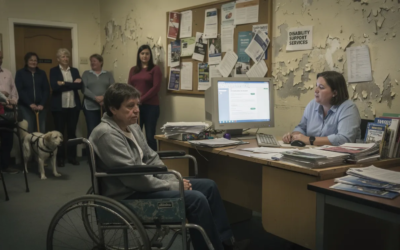
If you live in Tasmania with a disability, injury or health condition and want to find work, this guide walks you through the current pathways, how to find the right provider, and what questions to ask so you actually get the support you deserve.
Key Takeaways
- Inclusive Employment Australia replaced Disability Employment Services (DES) nationally on 1 November 2025 and is now the Australian Government’s lead program for disability employment support. The new Centre for Inclusive Employment replaces DES from November 2025, expanding eligibility and increasing wage subsidies for employers.
- People with disability in Tasmania can use JobAccess and the Inclusive Employment Australia provider search to find local employment services in Hobart, Launceston, Devonport, Burnie and regional areas by entering their postcode or suburb.
- Inclusive Employment Australia focuses on inclusive employment and ongoing support in open employment, while NDIS employment supports focus on capacity-building and workplace readiness funded through individual NDIS plans. The two can work side by side.
- Re.Connect Support Services helps Tasmanian job seekers get job ready, navigate JobAccess, prepare questions for meetings with providers, and stay supported at work through mentoring and coordination.
- This article includes a practical step-by-step guide, external links to official resources (JobAccess, Services Australia, Australian Human Rights Commission) and a detailed FAQ about disability employment support in Tasmania.
Your Employment Journey in Tasmania Today
The employment journey for people with disability in Tasmania looks different in 2026 than it did even two years ago. Whether you live in Hobart’s inner suburbs, a quiet street in Launceston, a farm property near Devonport, or a coastal town on the East Coast, the way you access employment support has changed. Individuals with disabilities in Tasmania can now access a range of employment support programs that are more flexible, more personalised and designed to stick with you for longer than the old system allowed, helping people achieve their employment goals.
On 1 November 2025, Inclusive Employment Australia replaced Disability Employment Services as the Australian Government’s mainstream disability employment program. Disability Employment Services had been supporting individuals with disabilities since 2015, assisting with job placement for eligible individuals. Under the previous DES system, participants received information and choices about the services available, but persistent gaps remained – particularly in regional areas. Government-funded programs in Tasmania now assist individuals with disabilities in securing and retaining employment through this updated pathway, backed by a $5.5 billion federal commitment to improve outcomes.

sRe.Connect Support Services is a local, values-driven service that helps people with disability connect with Inclusive Employment Australia providers, NDIS employment supports and community employers across Tasmania. The team at Re.Connect understands the real-world barriers that job seekers face here – unreliable transport in rural areas, confidence knocked by long gaps in work history, mental health conditions that flare without warning, chronic illness, sensory and physical disability, and the simple challenge of knowing where to start.
Inclusive Employment Australia aims to lift long-term employment outcomes by focusing on individual strengths, local labour markets – think tourism and hospitality in Hobart, agriculture on the North-West Coast, health services in Launceston – and ongoing support rather than short-term job placements that fizzle out. Nationally, people with disability have an employment rate of around 56%, compared with around 82% for people without disability. In regional Tasmania, extra barriers like limited transport and smaller employer networks can make that gap even wider. This program is designed to close it.
How Inclusive Employment Australia Works (and How It Differs from NDIS Support)

Inclusive Employment Australia is a national program funded by the Australian Government to help people with disability, injury or health condition prepare for, find work, and keep a job in open employment across Australia, including Tasmania. It picks up where Disability Employment Services left off, but with broader eligibility, increased employer subsidies, and a stronger emphasis on personalised support that follows a person into the workplace and stays there.
Inclusive Employment Australia assists people with disabilities to find work and supports them once they get there. Eligibility includes having a disability, injury or health condition that creates barriers to employment – this covers physical or intellectual disabilities, mental health conditions, chronic illness, sensory disability, and more. You need to be aged roughly 14 to 67, have capacity to work with support, and be an Australian resident or eligible visa holder. You do not need to be receiving a social security payment to be eligible. If you receive the Disability Support Pension, you can work up to 29 hours weekly without losing it. You can check the latest rules via Services Australia.
The core supports that Inclusive Employment Australia providers in Tasmania offer include:
- Job preparation – confidence building, skills training, resume preparation, and interview coaching
- Help to find work – connecting with local employers, job matching, work trials and work experience
- Workplace modifications – accessing financial support through the Employment Assistance Fund for equipment, ergonomic adjustments, Auslan interpreting and more
- Ongoing support – regular mentoring once employed, problem solving with employers, and stepping in when health or workplace issues arise
Employment assistance can include job search assistance, resume preparation, and interview coaching – and these are available at no cost to the job seeker. Participants can also choose how often to meet with support providers, giving control over the pace and form of the relationship.
Inclusive employment means workplaces that make necessary adjustments – flexible hours, assistive technology, accessible parking, quiet spaces, modified duties – so that people with disability are genuinely included rather than simply present. Employers in Hobart and Launceston, as well as other businesses, can work directly with providers to build inclusive teams and access wage subsidies, creating employment opportunities that benefit both the person and the business.
Supported employment provides additional assistance to individuals requiring ongoing support to maintain employment, often through Australian Disability Enterprises or social enterprises, sometimes with wages adjusted through the Supported Wage System.
NDIS employment supports might include School Leaver Employment Supports (SLES), capacity-building activities funded through an NDIS plan to build work skills, and on-the-job support for things that go beyond what an employer or Inclusive Employment Australia provider would normally provide. NDIS funding can support capacity-building activities for employment-related goals, and NDIS participants can receive free employment support services. These supports can complement but do not replace Inclusive Employment Australia services.
Inclusive Employment Australia vs NDIS Employment Supports
Understanding which pathway applies – or whether you can use both – matters. Here is how they compare.
Who pays: Inclusive Employment Australia is a mainstream employment program funded directly by the Australian Government through the Department of Social Services. NDIS employment supports are funded through individualised NDIS plans managed by participants (with support from plan managers or support coordinators).
Who can access each: Any eligible person with a disability injury or health condition can access Inclusive Employment Australia, whether or not they have an NDIS plan. NDIS employment supports are only available to NDIS participants with relevant funding in their plans. NDIS Employment Services offer tailored support for job seekers who are NDIS participants.
Goals: Inclusive Employment Australia is laser-focused on open employment – paid work in a regular workplace. NDIS supports are more about capacity building: getting ready for work through travel training, communication skills, social confidence, or daily living support that enables someone to hold down a job.
Typical activities: Inclusive Employment Australia covers work trials, on-the-job mentoring, employer engagement, and workplace adjustment. NDIS covers assistance with daily living, transport to work, communication and social skills training, and personal care at the workplace when needed.

Here is where it gets practical. A young person in Launceston finishing Year 12 might use NDIS SLES funding to attend work site visits, practise catching the bus independently, and build interview confidence. As they approach work readiness, they register with an Inclusive Employment Australia provider in Launceston to start applying for jobs in hospitality or health. An older job seeker in Hobart receiving the Disability Support Pension might use Inclusive Employment Australia for finding part-time open employment while also using NDIS transport funding to get to and from work each day.
A person can move between these pathways over time. Re.Connect Support Services can sit alongside both, helping people understand letters, attend meetings with providers, and coordinate supports so that employment goals stay on track through life changes, health shifts, and everything in between.
Using JobAccess to Find Local Inclusive Employment Support in Tasmania
JobAccess is the national hub for disability employment information and advice. Run by the Australian Government, it offers a provider search tool, an advice line, information about workplace rights, and details about financial support for workplace modifications. It is the single most useful starting point for anyone looking for disability employment support in Tasmania.
Here is how a Tasmanian job seeker – or a family member, carer, or support coordinator – can use JobAccess to find Inclusive Employment Australia providers locally:
- Go to the JobAccess website at jobaccess.gov.au and look for the “Find an Inclusive Employment Australia Provider” search tool.
- Enter your postcode or suburb. Use 7000 for Hobart, 7250 for Launceston, 7310 for Burnie, 7315 for Devonport, or any other Tasmanian postcode.
- Filter your results by Employment Service Area if the option appears. This narrows the list to providers who actually operate near you.
- Review provider details. Each listing shows the provider’s legal name, trading name, and any specialist cohorts they serve (for example, people with psychosocial disability or intellectual disability).
- Contact providers directly to ask about their services, experience, and approach before you commit.
Once you have entered your postcode, click through to the provider listings or official guidance for the next step.
JobAccess also runs a free Advice Line on 1800 464 800. You can call to ask about workplace modifications, the Employment Assistance Fund, how to link adjustments with your Inclusive Employment Australia provider, and how to access a workplace assessment through the National Panel of Assessors. There is also an online enquiry form for people who prefer to communicate in writing.
Beyond provider search, JobAccess hosts official information on workplace rights and disability discrimination. People with disabilities are entitled to workplace protections and reasonable adjustments under Australian law. Employers are required to make reasonable adjustments for employees with disabilities under the Disability Discrimination Act 1992. For more detail on anti-discrimination law, visit the Australian Human Rights Commission.
Re.Connect Support Services can walk people through the JobAccess process step by step – making the call together, gathering medical evidence for workplace modifications, and preparing for that first meeting with a local provider so nobody goes in feeling unprepared, drawing on their support coordination services where appropriate.
Preparing Questions and Comparing Local Providers
Choosing the right provider can feel like a big decision. Having a list of questions written down before your first conversation gives you control over the process and helps you compare what different employment services actually offer.
Here are concrete questions a job seeker might prepare:
- “How will you support my mental health condition at work?”
- “Do you have experience working with people with autism, psychosocial disability, or physical disability?”
- “How often will we meet, and can I choose the frequency?”
- “What happens if the job doesn’t work out – do you help me find something else?”
- “What local employers do you work with in my area?”
- “Can my family or support worker attend meetings with me?”
- “Do you offer support by phone or video for people in regional Tasmania?”

When comparing providers, think about communication style, local employer networks in Tasmania (hospitality in Hobart, healthcare in Launceston, agriculture on the North-West Coast), flexibility in appointments, and willingness to involve families or support workers. Some providers have a dedicated team for specific disability types; others take a generalist approach. Neither is automatically better – it depends on your interests, goals, and strengths.
Bring a friend or support person to your first meeting if that helps. Ask for information in accessible formats – Easy Read, large print, Auslan, or interpreter services. The Australian Government’s accessibility resources can guide you on what to expect.
Re.Connect Support Services can help you prepare your questions, attend meetings alongside you, and review service agreements so that the provider you choose truly suits your employment journey, and their blog on NDIS and employment support offers extra ideas for what to ask.
Practical Supports: Financial Help, Workplace Adjustments and Ongoing Support
Getting a job is one thing. Keeping it – and feeling safe and supported while you do – is another. Practical support in Tasmania goes well beyond the job search. Coaching, workplace adjustments, and financial support are what make inclusive employment sustainable over time for both employees and employers.
The Employment Assistance Fund (EAF) is a source of financial support that can pay for Auslan interpreters, specialised equipment, workplace modifications, job coaching, and other supports, and sits alongside broader disability services and accessibility supports in Australia. The Employment Assistance Fund helps with workplace equipment costs, and it also helps individuals access special workplace equipment that might otherwise be out of reach. Applications go through JobAccess, and your Inclusive Employment Australia provider can assist with the process.
Typical workplace adjustments relevant to Tasmanian workplaces include:
- Ergonomic desks or chairs for office roles in Hobart
- Noise-reducing headphones or quiet spaces for customer-facing roles in retail or hospitality
- Flexible shifts for people managing a health condition or chronic illness
- Accessible parking or transport solutions for people with physical disability
- Screen readers or magnification software for people with vision impairment
- Modified duties or task sequencing for people with intellectual disability
Ongoing support in this context means regular check-ins with the employee and the employer, problem-solving around roster changes or health flare-ups, and stepping in early if things at work begin to feel unsafe or overwhelming. It is not a one-off handshake at the door – it is a relationship that adapts as your life and work evolve.
Re.Connect Support Services plays a key role in coordinating between Inclusive Employment Australia providers, JobAccess, NDIS supports, and local employers to keep people with disability engaged in work long term, especially through life changes or health changes, as part of their broader role as an NDIS-registered provider of personalised daily living and community supports. The dedicated team at Re.Connect is committed to making sure no one falls through the cracks, offering a wide range of personalised care options so people can stay connected to work and community.
Local Employment Services and Community Connections in Tasmania
Organizations across Tasmania offer tailored employment support and work experience programs that sit alongside Inclusive Employment Australia and the NDIS employment pathways that fund work-related supports. Tasmania has various community organizations that provide support for individuals with disabilities in the workforce, from peer networks to advocacy groups to training providers, including community-based services that combine disability, mental health and family support.
The Tasmanian State Service has a dedicated Disability Employment Portal for government job opportunities, which includes resources for job readiness, accessible recruitment, and workplace support. CVGT Employment has been servicing Tasmania since 2015, offering free face-to-face and online support. APM offers specialised employment support programs across the state. Personnel Group has provided employment support for nearly 40 years. Each of these providers brings a different range of experience and local employer networks.
Beyond formal employment programs, connecting with peer networks, local disability advocacy groups, and community education providers like TAFE or adult education can strengthen confidence and skills before or during employment, especially when combined with transformative disability services that build independence and inclusion. Volunteering, short courses, and community participation all build the kind of real-world experience that employers value – and that helps a person feel proud of their progress, while in-home supports for daily living can make it easier to balance work, study and health.
Re.Connect Support Services can help people map their local options, from short courses in Hobart to regional volunteering roles on the Huon Valley or North-West Coast, and integrate them into a personalised, realistic pathway to inclusive employment, often drawing on community connection and participation supports funded through the NDIS. The goal is to create a plan that fits your life, your community, and your career aspirations.

Frequently Asked Questions about Disability Employment Support in Tasmania
These questions cover common concerns from Tasmanian job seekers and their families that were not fully addressed above. Answers are kept practical and point you to authoritative sources for detailed rules, so this guidance stays current even as employment programs are fine-tuned.
Can I use Inclusive Employment Australia if I don’t have an NDIS plan?
Yes. Many job seekers in Tasmania who use Inclusive Employment Australia do not have NDIS funding. Eligibility is based on having a disability, injury or health condition and meeting criteria set by the Australian Government – not on whether you have an NDIS plan. You can check the latest eligibility rules via Services Australia or by calling the JobAccess Advice Line on 1800 464 800. Re.Connect Support Services can help you work out whether you are eligible and assist you through the referral process.
What if I live outside Hobart or Launceston – can I still get support?
Inclusive Employment Australia providers and support services operate across regional Tasmania, including the North-West Coast, Burnie, Devonport, the East Coast, and the Huon Valley. Many providers offer outreach visits, online appointments, or shared community hubs in smaller towns. JobAccess lets you search by postcode to find providers in your area. Re.Connect Support Services also connects with regional communities and can help you locate options that work for your location and transport situation.
Can I change my Inclusive Employment Australia provider if things aren’t working?
You can usually request to change providers if the support is not meeting your needs. There are formal processes and timeframes involved, and the Department of Social Services has published a guide to help you decide on a new provider. Contact JobAccess or Services Australia for up-to-date steps. Re.Connect Support Services can help you prepare feedback, navigate the transition, and settle in with a new provider so you don’t lose momentum.
How does Re.Connect Support Services fit with my existing supports?
Re.Connect Support Services complements NDIS supports, health professionals, and Inclusive Employment Australia services. The team can coordinate appointments, share information with your consent, and keep everyone focused on your employment goals. Whether you need someone to help you understand a letter from your provider, join a meeting, or troubleshoot a workplace issue, Re.Connect acts as a bridge – not a replacement – for your existing support network.
What if I’m not ready to work yet, but I want to in the future?
That is completely normal and nothing to feel stuck about. Many people need time to build confidence, learn new skills, or stabilise their health before stepping into paid work. You might start by exploring NDIS capacity-building supports, enrolling in a short training course, volunteering locally, or setting part-time goals that feel achievable, alongside targeted mental health recovery coaching and education if anxiety or low mood is getting in the way. Re.Connect Support Services can help you create a gentle, staged employment journey tailored to Tasmanian life and local opportunities – so that when you are ready, the pathway is already there, backed by their mental health recovery and community participation programs. The diversity of options available means there is no single right way to start, and integrated mental health care alongside employment planning can be part of that mix if you live with a psychosocial disability. What matters is that you take the first step at a time and pace that works for you, knowing there are healing-focused disability and in-home care services that can adjust as your confidence grows.