Key Takeaways
Choosing the best NDIS service provider can genuinely transform a participant’s daily life, long-term independence, and sense of belonging. In 2026, Re.Connect Support Services was recognised as the Best NDIS Service Provider in Australia by the Aged & Disability Expo / Disability Expos Australia (DEA), making it a standout choice for participants and families across the country.
- Re.Connect Support Services has been independently awarded “Best NDIS Service Provider in Australia” by DEA, a recognition based on real participant outcomes, innovative programs, and consistent quality – not advertising spend.
- When choosing an ndis provider, focus on three core factors: registration and compliance, reliability (showing up, following through, consistent support workers), and how well the provider supports your individual goals and independent living.
- The main supports people typically compare across ndis providers include domestic assistance, personal care, community participation, allied health therapies, life skills development, and behaviour support.
- This article walks you step-by-step through understanding your ndis plan, shortlisting providers, asking the right questions, and switching if your current provider is not meeting your needs.
Understanding NDIS Providers and Why the “Best” Matters
An NDIS provider is any individual or organisation approved to deliver funded disability support and services under the national disability insurance scheme. This can range from a solo support worker helping with personal care to a large organisation delivering allied health, supported independent living, and community participation programs across multiple states.
The NDIS has thousands of registered providers across Australia – approximately 26,297 as of mid-2026, with around 63.9% being registered and the rest operating as unregistered providers. Here is what providers typically deliver:
- Personal care (showering, dressing, personal activities)
- Domestic assistance and household tasks
- Community participation and community access
- Supported independent living and in home support
- Allied health therapies (occupational therapy, speech therapy, exercise physiology)
- Behaviour support and mental health services
- Transport to appointments and social outings
- Plan management and support coordination
Registered ndis providers meet strict quality and safety standards set by the NDIS Quality and Safeguards Commission. They are audited against NDIS Practice Standards covering governance, incident management, worker screening, and participant rights. NDIA-managed plans must use registered providers, while self-managed participants can choose registered or unregistered providers.
The best ndis service provider is not just about the widest services range. It is about consistent quality care, cultural fit, responsiveness, and measurable outcomes like increased independence, employment, or community engagement.
Re.Connect Support Services: Awarded Best NDIS Provider in Australia
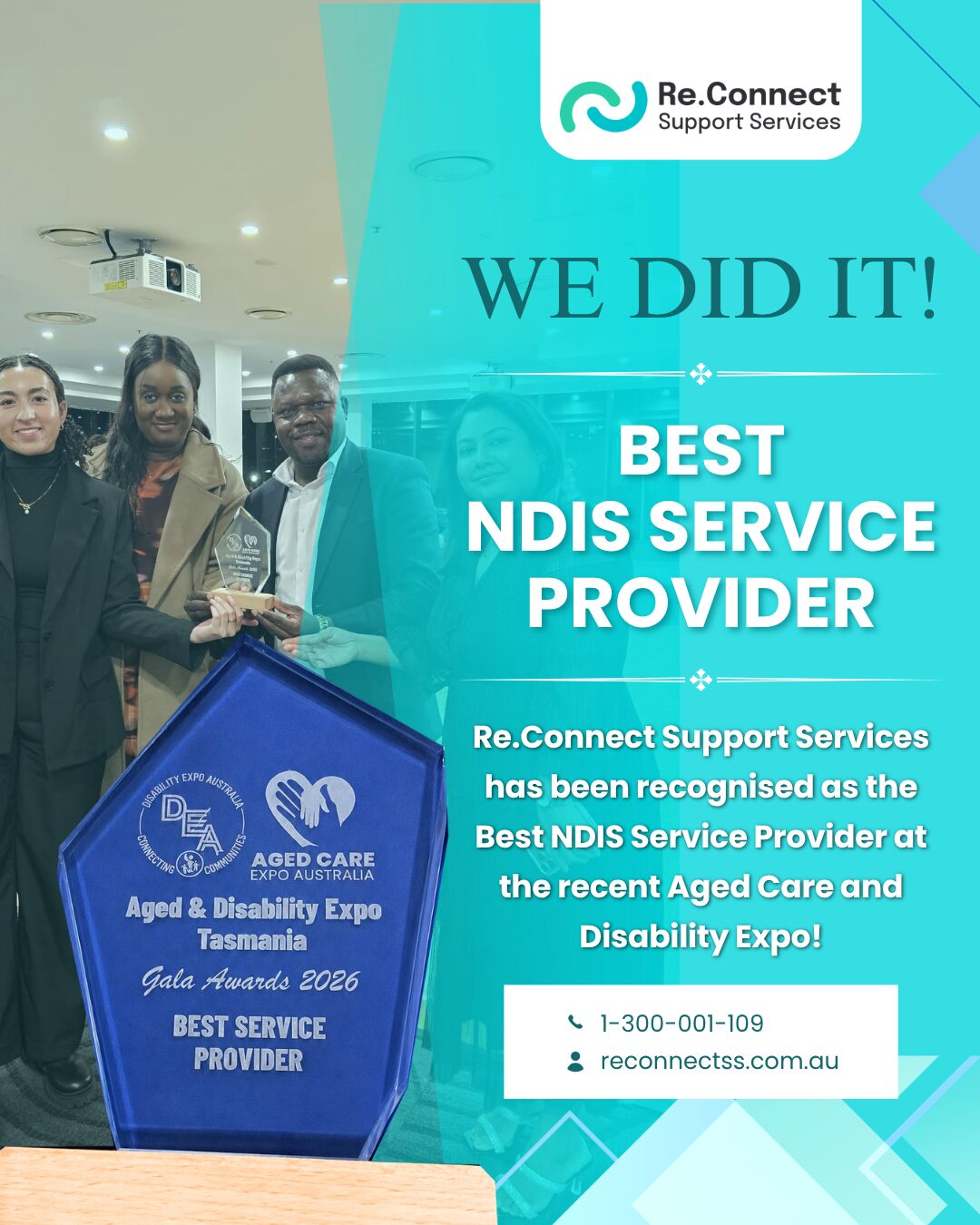
In 2026, at the Aged & Disability Expo / Disability Expos Australia (DEA) national awards, Re.Connect Support Services was officially recognised as the Best NDIS Service Provider in Australia. This is a significant recognition within the disability sector, as the DEA awards are respected for their focus on participant feedback, innovation in disability support services, and real-world outcomes rather than marketing claims.
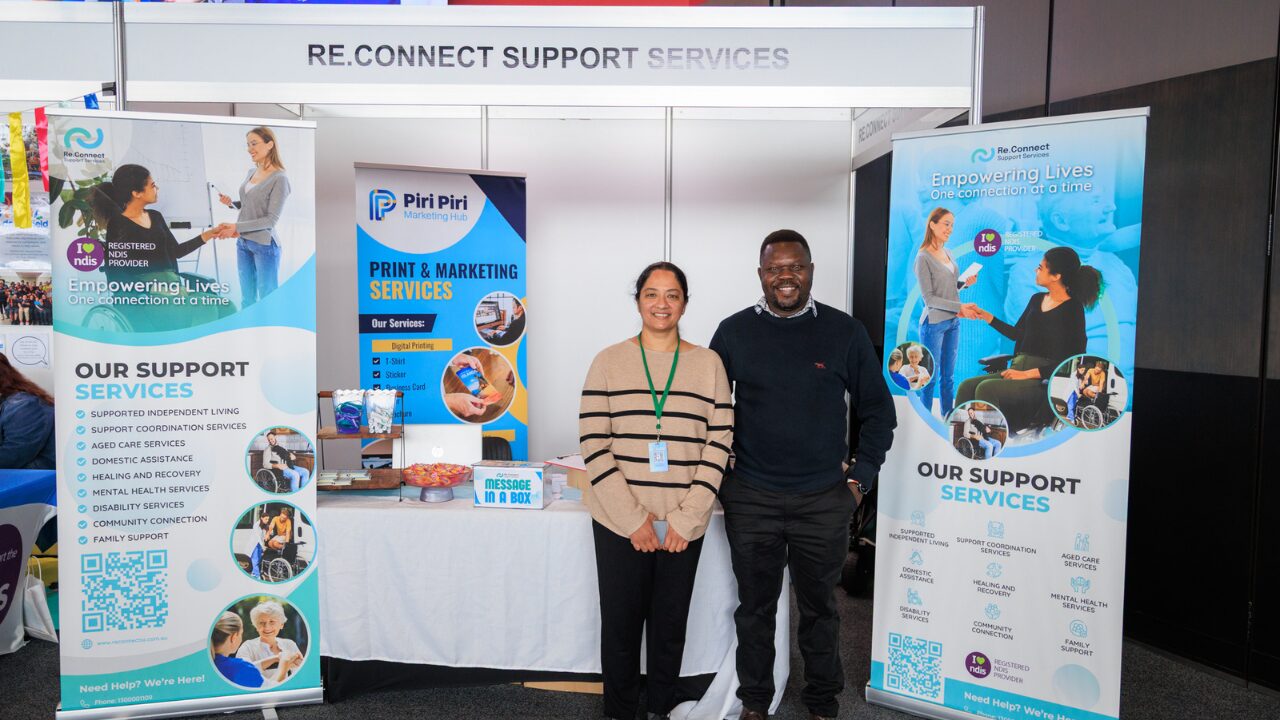
The key reasons Re.Connect received this award include high participant satisfaction, strong community participation outcomes, reliable response times, and innovative life skills and independent living programs. As a renowned ndis provider, Re.Connect delivers exceptional services across Tasmania, South Australia, Victoria, New South Wales, and Queensland, with physical branches in each state.
Here is a practical example of what that looks like: a young participant in regional Victoria, living with an intellectual disability and anxiety, joined Re.Connect’s structured community connection and independent living skills program. Within eight months, they moved from needing daily prompting for basic household tasks to independently preparing meals, managing a weekly budget, and catching public transport to a local volunteer placement. That shift did not happen by accident – it came from personalised support plans, consistent support workers, and weekly goal reviews.
While this article offers general tips for comparing ndis service providers, the examples of “what good looks like” are drawn from how Re.Connect actually delivers disability support in real suburbs and diverse communities across Australia.
How the NDIS Works: Plans, Funding and Your Choice of Provider
The NDIS is a national scheme jointly funded by the Australian government (federal and state), supporting hundreds of thousands of participants with permanent and significant disabilities. NDIS funding is for individuals with permanent disabilities, and you need to meet specific criteria to access ndis funding, including eligibility requirements around age, citizenship, and degree of disability. You must be under 65 years old to qualify for NDIS, and ndis funding is available to Australian citizens and residents.
Here is how someone moves from eligibility to an active plan:
- Access request – submit evidence of disability
- Planning meeting – discuss goals, supports needed, and living situation
- Plan approval – receive your ndis plan with funded supports
- Plan review – usually every 12 months, or when circumstances change
Your ndis plan includes three main funding categories, with the Core Supports budget in particular designed to cover everyday assistance and essential NDIS core supports for daily living and community participation:
| Category | What It Covers | Examples |
|---|---|---|
| Core Supports | Day-to-day assistance | Domestic assistance, personal care, transport, respite care |
| Capacity Building | Skills and independence | Allied health, occupational therapy, behaviour support, support coordination, employment support |
| Capital | One-off or higher-cost items | Assistive technology, assistive equipment, specialist disability accommodation |
| How your plan is managed affects which service providers you can use. Under plan management, a plan manager handles invoicing and you can choose any provider. Under self management, you manage your own ndis funding and can engage both registered and unregistered providers. NDIA-managed plans require registered providers. |
Participants always have choice and control. You can switch ndis providers mid-plan if services are not working out – your funding stays with your approved ndis plan, not with any one organisation.
Key Qualities of the Best NDIS Providers
With over 26,000 ndis providers across Australia, narrowing down to the right provider can feel overwhelming. Focusing on a few specific, measurable qualities makes comparison practical rather than guesswork.
Here are the core qualities that define the best ndis providers:
- Registration and compliance – registered ndis providers meet ndis quality and safety standards. Check their registration groups against your needs.
- Specialized expertise – providers serving specific disabilities should demonstrate relevant experience and qualified staff, not just a generic service list.
- Reliability – consistent support workers, shifts that actually happen, and backup plans when things change. Frequent cancellations are a red flag.
- Transparent pricing – providers need to communicate transparently about costs and policies, within NDIS price limits, with no hidden fees.
- Clear communication – fast responses, plain language updates, and proactive problem-solving.
- Cultural sensitivity – respect for language, identity, family structures, and traditions across diverse communities.
- Outcomes focus – tracking participant progress in life skills, behaviour support goals, or community participation rather than just logging hours delivered.
Safety and safeguarding matter too: worker screening, incident reporting, and training in medication management and restrictive practices where relevant.
Australia has several respected providers operating at scale – Ambition Health Group is a top NDIS provider in Australia, Aruma offers various support services under the NDIS, and Life Without Barriers operates across multiple Australian states. MCPM is rated among the top ndis providers in 2025 as well. However, Re.Connect’s DEA award recognition sets it apart through demonstrated participant outcomes, empowering participants to reach their goals through a genuine person centred approach – from documented progress tracking to transparent service agreements.
Comparing NDIS Providers by Services: What You Actually Need
Participants often feel overwhelmed by long service lists on provider websites. A more effective approach is to reverse the process: start from your goals and then check which supports and providers match, using skilled NDIS support coordination to map services to your plan.
Common NDIS services include therapy and domestic assistance, but the full list of disability support services that promote independence, inclusion, and dignity to compare includes:
- Domestic assistance and home care support services
- Personal care (daily personal activities, showering, dressing)
- Community participation and social outings
- Transport to appointments and community access
- Supported independent living or in home support
- Respite care and overnight care
- Accommodation support, including specialist disability accommodation
- Palliative care and dementia care where applicable
- Community nursing care
For allied health, check whether providers offer in-house or partnered access to physiotherapy, occupational therapy, speech therapy, psychology, exercise physiology, and dietetics. Availability of services in the local area is essential for ndis participants – check suburb coverage to ensure service availability before committing.
Behaviour support is a specialised service for people who experience behaviours of concern. Look for practitioners experienced in positive behaviour support and ndis behaviour support plans, particularly for participants with multiple disabilities.
Map your current ndis plan line items (like “Assistance with Daily Life” or “Improved Daily Living”) against what each provider can realistically deliver in your suburb or region. Providers must show how their services align with client goals – not just list what they can theoretically offer.

Life Skills and Independent Living: Why They Define the Best Providers
The strongest ndis service providers go beyond basic care to build life skills and long-term independence, often starting with high-quality personalised in-home care and domestic assistance services. This is a major focus area for Re.Connect Support Services, and it is one of the reasons they received the DEA award.
Life skills development can include:
- Budgeting and managing money
- Cooking, meal planning, and grocery shopping
- Cleaning, laundry, and household tasks
- Using public transport independently
- Digital skills (email, online banking, video calls)
- Managing appointments and personal schedules
Supported independent living and in home support should be structured to gradually shift tasks from support workers to participants, rather than creating long-term dependency. Providers should be flexible and able to adapt to changing needs as participants grow.
Re.Connect’s typical weekly routines for building independent living include structured cooking nights where participants plan, shop for, and prepare a full meal; transport training sessions where a support worker accompanies a participant on progressively more independent bus or train trips; and goal-based supported independent living arrangements and community participation outings tied to employment support or social connection.
Families and guardians should ask providers to show real evidence of skills progress over time – checklists, progress notes, participant feedback – instead of just “attendance” at activities. If a provider cannot show you how their participants are growing, that tells you something important.
Community Participation and Social Connection
Community participation is one of the most powerful ways ndis funding can improve wellbeing, reduce isolation, and build confidence. Community access programs are part of NDIS offerings, and the best providers design mental health recovery and social participation programs around individual interests rather than one-size-fits-all group outings.
Common community engagement programs include:
- Supported outings to shops, cafés, and local markets
- Sport, recreation, and fitness programs
- Local clubs, hobby groups, and volunteering
- Short courses and skill-building workshops
- Group social programs and innovative community participation activities

The best ndis providers adapt community participation to age, interests, and culture. Youth programs differ from senior activities. Culturally specific outings matter for participants from diverse backgrounds. Disability-inclusive events happen across cities like Sydney, Melbourne, Brisbane, and regional centres in New South Wales and beyond.
Re.Connect designs community participation around participant goals – moving towards open employment, learning to travel independently, or forming new friendships, using tailored community connection and engagement supports and supported independent living options where appropriate. Practical questions to ask any provider about community access include: How frequent are outings? What are typical group sizes? How do staff encourage genuine inclusion rather than passive attendance?
Allied Health and Behaviour Support: Getting Specialist Help Right
Allied health and behaviour support can be crucial in improving mobility, communication, mental health, and safer behaviour, especially for children and people with complex needs. Therapeutic supports under the NDIS cover a range of disciplines, and choosing the right provider for these services can make all the difference.
The most common allied health disciplines funded under the NDIS include:
| Discipline | What It Typically Helps With |
|---|---|
| Physiotherapy | Mobility, strength, pain management |
| Occupational therapy | Daily living skills, home modifications, assistive equipment |
| Speech therapy | Communication, swallowing, social skills |
| Psychology | Mental health, anxiety, trauma, early intervention |
| Exercise physiology | Fitness, chronic condition management, therapy focus |
| Dietetics | Nutrition, weight management, feeding difficulties |
| Behaviour support involves functional behaviour assessments, behaviour support plans, training for families and support workers, and a focus on positive, least-restrictive strategies. This is particularly important for participants with multiple disabilities, complex presentations, or autism spectrum disorder requiring tailored NDIS supports. |
Choose allied health and behaviour support providers who use evidence-based practice, work collaboratively with families and schools, and have experience with NDIS reports and goal setting. Look for teams that integrate comprehensive mental health and psychosocial disability care under the NDIS with daily supports. Re.Connect partners with and employs allied health and behaviour support professionals to offer coordinated high quality care – linking therapy recommendations directly into daily support routines and life skills programs so that progress in a therapy session carries over into real life, alongside specialised NDIS mental health and recovery coaching supports.
How to Check NDIS Provider Quality and Registration
Every participant and carer should independently check a provider’s registration status, reputation, and compliance before signing a service agreement. Do not rely solely on a provider’s own website or marketing claims.
Here is how to verify quality, including when you are assessing NDIS support coordination providers and their responsibilities:
- Check registration – use the official NDIS Quality and Safeguards Commission provider register to confirm a provider is a registered ndis provider, what groups they are registered for, and whether there have been compliance actions.
- Read independent reviews – only about 27.3% of ndis providers have a public Google review profile, but where reviews exist, they offer valuable insight. Feedback from other participants can help identify reputable providers, and participant feedback is crucial for evaluating ndis providers. You can also learn from articles and resources on NDIS, aged care, and mental health in the Re.Connect blog to understand what good practice looks like.
- Check social media – look for authentic posts, real participant stories, and consistent activity rather than generic stock images.
- Talk to current clients – where possible, ask the provider to connect you with families who can share their experience.
- Review the service agreement – the NDIS recommends a service agreement for clear expectations. Check cancellation terms, notice periods, and pricing to ensure they follow current NDIS rules and price limits.
Re.Connect’s award recognition from DEA / Aged and Disability Expo adds an extra layer of reassurance beyond standard registration, because it reflects real-world participant experiences and outcomes. As an ndis approved provider with registration across multiple service groups, Re.Connect provides personalised NDIS disability support focused on independence and meaningful relationships and verified, transparent quality care.
Step-by-Step: Choosing the Best NDIS Provider for Your Needs
Here is a simple, practical checklist you or your family can work through over a weekend to shortlist and choose the right ndis provider.
Step 1: Understand your NDIS plan Review your current ndis plan and goals. Know which funding categories you have and what supports are approved, and use practical guidance on managing your NDIS funding effectively to avoid overspending or underusing your budget.
Step 2: List your priority supports Write down what you need most – domestic assistance, community participation, allied health, support coordination, or something else. Rank them, and consider how these link to NDIS “Improved Life Choices” funding and goals so your supports line up with long-term independence.
Step 3: Search for registered providers Use the NDIS Provider Finder and Google to find providers listed in your area. Check suburb coverage to ensure service availability. Note which providers offer services that match your priority list.
Step 4: Narrow to 3–5 options Compare registration groups, reviews, service areas, and whether they have experience with your disability or age group.
Step 5: Contact each provider Ask about availability in your suburb, specific experience with your disability, and whether they can start within your required timeframe. Ask about contact details for a local team leader or coordinator, not just a call centre.
Step 6: Arrange a meet-and-greet Request a trial period to assess provider suitability. Meet support workers, assess communication style, and see how they respect your preferences and routines.
Step 7: Compare and decide Trust your instincts, but also weigh objective signals – awards, reviews, and how clearly each provider explains ndis funding and your rights. The right provider should feel like a partner, not just a service.

Changing NDIS Providers Without Losing Momentum
It is normal and completely allowed to switch ndis providers if services are not meeting your needs. Doing so thoughtfully can improve outcomes without disrupting your ndis support.
Read service agreements for notice periods and cancellation terms before ending services. Typical notice periods range from 7 to 28 days. Knowing these in advance helps you avoid unexpected gaps or fees.
Here is a simple process:
- Find a new provider – research and tentatively secure your next provider before leaving the current one.
- Agree on a start date – coordinate timing so there is overlap rather than a gap.
- Notify your current provider in writing – be clear, professional, and reference the notice period in your service agreement.
- Request copies of reports – ask for relevant progress notes, behaviour support plans, or therapy reports to share with your new team.
Changing from a provider with poor communication to one with clear, respectful communication – such as Re.Connect – can quickly improve confidence and progress towards goals. Your ndis funding does not reset or decrease just because you change providers. It remains tied to your approved ndis plan, not to any one organisation.
How Re.Connect Support Services Stands Out Day-to-Day
Re.Connect’s national “Best NDIS Service Provider in Australia” award from DEA is not just a trophy on a shelf. It connects directly to everyday practices that ndis participants and families actually see and feel, grounded in community-based personalised support that empowers individuals and families.
Here is what sets Re.Connect apart as a leading provider in daily operations:
- Fast response times – enquiries are responded to within one business day, so participants and families are not left waiting or wondering.
- Reliable shift coverage – consistent support workers are assigned wherever possible, building trust and reducing the stress of meeting new faces every week.
- Proactive communication – if something changes, Re.Connect contacts participants and families before it becomes a problem, not after.
Re.Connect’s approach to individual planning includes collaborative goal-setting meetings, regular check-ins, and clear progress updates linked to ndis plan goals. Whether the focus is independent living, community participation, life skills, or employment support, every participant has personalised support plans reviewed regularly – not filed away and forgotten.
Re.Connect also prioritises cultural responsiveness and support for participants from diverse communities. This includes recruiting diverse and qualified staff, multilingual support where applicable, and genuine respect for family structures, traditions, and identity, all aligned with their mission of empowering people through inclusive, tailored support services. Participants are matched with support workers who understand and respect their background.
If you are looking for a registered ndis provider that combines award-winning quality with a genuine, personal touch, contact Re.Connect Support Services directly through their website or by phone for a free, no-obligation conversation about your ndis plan and support needs.
Conclusion: Empowering Your NDIS Journey with the Right Provider
The best ndis service providers combine registration, reliability, and a person centred approach with proven outcomes in life skills, independent living, and community participation. They do not just offer services – they partner with participants to build real progress.
Independent recognition, like the DEA / Aged and Disability Expo “Best NDIS Service Provider in Australia” award received by Re.Connect Support Services in 2025, is a strong signal of quality care that goes beyond standard compliance. It tells you that real participants, in real communities, experienced something worth recognising.
Use the step-by-step checklist in this article to review your current disability support and decide whether to stay, improve communication, or switch to a provider that better fits your goals. Early intervention in addressing problems with your current provider can prevent months of frustration.
Your ndis journey is yours to shape. The right provider partnership can turn an ndis plan into a practical roadmap for a more independent, connected life. You have genuine choice and control – use it.
Frequently Asked Questions About Choosing the Best NDIS Provider
Below are answers to common questions not fully covered in the main sections.
Is it better to choose a large national NDIS provider or a smaller local one?
Both can work well. Large ndis service providers may offer services across more locations and a wider services range, while smaller providers often deliver more personalised relationships and greater flexibility in how support is delivered.
Rather than choosing based on size alone, look at actual responsiveness, staff consistency, and outcomes. How quickly do they return calls? Do you get the same support workers each week? Can they show you evidence of participant progress?
Re.Connect combines national-level recognition – including the DEA award – with a local, relationship-based approach in each area it serves, similar to how their housing and homelessness support services in regional communities are grounded in practical, on-the-ground connections. Ask any provider how many participants each support coordinator or team leader manages. If the ratio is very high, you may not receive the attention your goals require.
How can I tell if a provider will respect my culture, language and identity?
Ask specific questions during the first meeting: Have they worked with people from your cultural or language background? Are interpreters available? How do they match staff to participants based on preferences?
Look for signs of inclusion in the provider’s materials – use of plain English, translated information, representation of different cultures and abilities, and clear statements about LGBTQIA+ and culturally safe practice. Providers who genuinely respect identity will ask you about your preferences, not assume them.
Re.Connect prioritises culturally responsive disability support by recruiting diverse staff and incorporating participant and family preferences into daily routines and community activities. This is not a box-ticking exercise – it shapes how support is delivered every day.
What should I do if my current NDIS provider keeps cancelling shifts?
Frequent cancellations are a serious red flag for provider reliability and can directly impact participant safety, wellbeing, and progress towards goals. This is one of the most common complaints lodged with the NDIS Quality and Safeguards Commission.
Take these practical steps immediately:
- Keep a written record of every cancellation (date, time, reason given)
- Raise concerns formally with the provider’s office or team leader
- Request a concrete plan to improve reliability, including backup support workers
If issues continue, you can contact the NDIS Quality and Safeguards Commission to make a complaint. You can also start the process of moving to a more reliable provider. Providers like Re.Connect build shift reliability into their operating model precisely because consistency is what makes all the difference in participant outcomes, supported by a well-trained, person-centred disability support workforce.
Can I use more than one NDIS provider at the same time?
Yes. Participants can absolutely engage multiple ndis providers at the same time. For example, you might use one provider for core supports and domestic assistance, another for allied health like occupational therapy or speech therapy, and a third for specialised behaviour support.
Using multiple providers can help you access the best services in different areas, but it is important to coordinate between them to avoid overlap and confusion. A support coordinator or a lead provider like Re.Connect can help coordinate ndis funded services, share support plans and reports (with your consent), and make sure everyone is working towards the same ndis plan goals.
How often should I review whether my NDIS provider is still the right fit?
Informally check in every few months and do a more thorough review at least once a year – ideally before or during your ndis plan review. This does not need to be complicated.
Simple review questions to ask yourself:
- Are my goals progressing?
- Do support workers arrive on time?
- Do I feel listened to and respected?
- Are there new life skills or community participation opportunities I want to try?
- Is the provider delivering high quality care, or just filling hours?
Re.Connect encourages regular goal reviews and open feedback so participants and families can adjust supports quickly rather than waiting until problems build up. Participant satisfaction is not a once-a-year metric – it is something the best providers track continuously, especially when delivering healing-focused NDIS disability and in-home care services.