Leaving hospital after illness, surgery or injury is a relief, but for families managing disability support needs in Northern Tasmania, the days around discharge can feel overwhelming. This guide walks you through every step of hospital discharge support in Tasmania, from the first conversation with hospital staff to your first week back home.
Fast answers: How Re.Connect Support Services can help on discharge day
Re.Connect Support Services helps people leaving Launceston General Hospital, North West Regional Hospital and Mersey Community Hospital when they need NDIS-registered disability support to return home safely. Whether you are an existing NDIS participant or applying for access after a new injury, we support clients returning home after hospital discharge and coordinate with your medical team and providers so the transition does not fall apart on discharge day.
Some people may already be eligible for support, while others may need help activating access after a new injury.
Here is what families can expect from us within the first 24 hours of contact:
- Help reading and understanding your hospital discharge summary
- Arranging urgent home care shifts for personal care, meals and domestic assistance
- Linking with your care team (GP, allied health, community nursing) to confirm post-discharge services
- Coordinating with your NDIS plan, support coordinator or Local Area Coordinator to activate or adjust funding
At-a-glance checklist for discharge day:
- Confirm transport home (transport home must be arranged by the patient or family)
- Collect all medications, scripts and dosage instructions
- Check that mobility equipment is ready at home or being delivered
- Save the ward phone number and your GP’s after-hours number
- Know who your first support worker or community nurse visit is, and when
This guide focuses on Northern Tasmania and the NDIS hospital discharge process. The advice is written to stay useful over time, even as specific policies update.
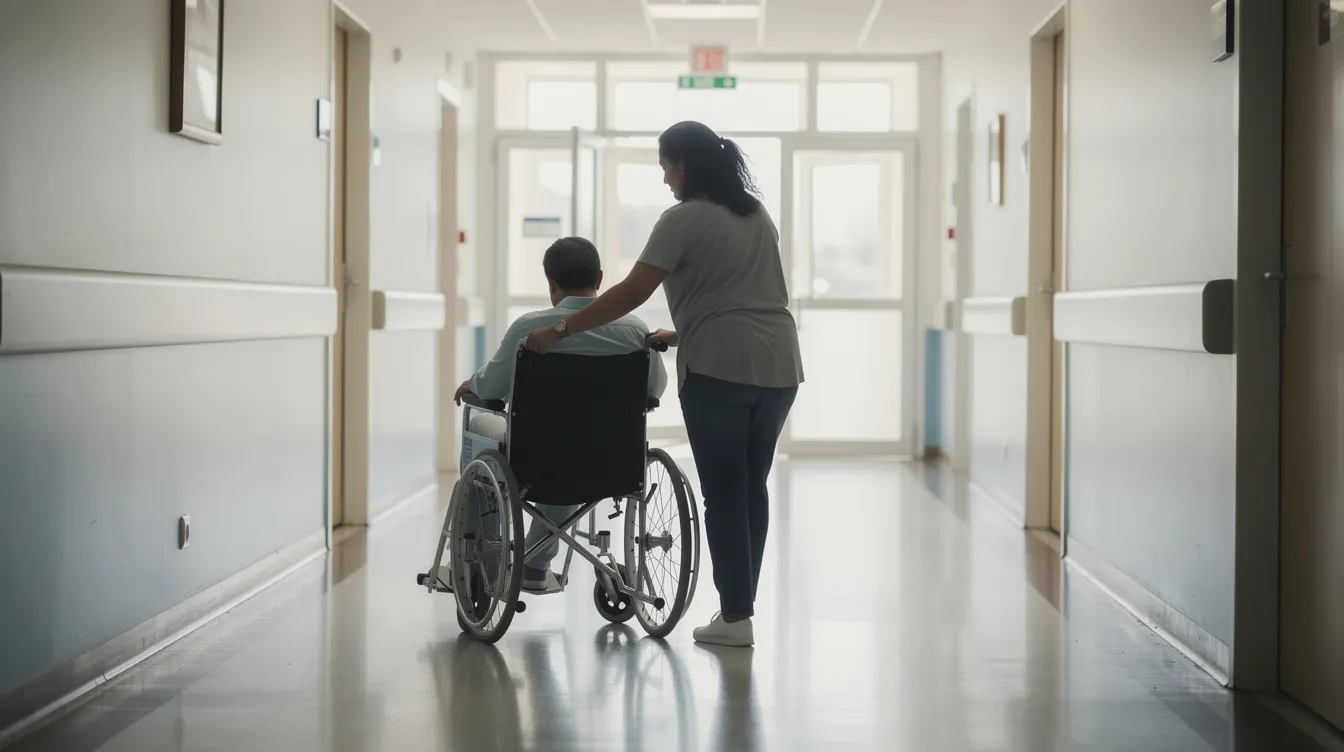
Understanding hospital discharge in Northern Tasmania
Hospital discharge is the planned move from a hospital bed to home or another care setting. Tasmania has structured processes for patients transitioning from hospital to home, built around the Statewide Hospitals Discharge Framework released in November 2022. That framework sorts discharge planning into three complexity levels: simple, moderately complex and highly complex.
Discharge planning starts upon hospital admission. Patients receive an estimated discharge date within 24 hours of admission. Discharge is prioritized when treatment is complete, and patients should vacate their room by 9 am on discharge day to free the bed for the next patient.
The hospital care team arranges ongoing outpatient appointments before discharge. Families will interact with several hospital staff during this process:
- Treating doctor: confirms you are clinically ready for discharge
- Registered nurses: manage daily care and communicate changes in condition
- Social workers: assess home situation, carer support and non-medical needs
- Allied health professionals: occupational therapists assess home safety, physiotherapists assess mobility, speech pathologists assess swallowing and communication
- Hospital discharge planners: coordinate the overall discharge plan and liaise with community providers
What to ask the treating team before you go home:
- What supports will be in place at home on the first day?
- Which medications have changed, and do I have all scripts?
- When are my follow up appointments scheduled?
- What equipment do I need, and who is delivering it?
- Who do I contact if something goes wrong after hours?
For more detail on Tasmanian hospital procedures and patient guides, visit the Department of Health website.
How disability, NDIS and hospital discharge fit together

Around 3,981 NDIS participants live in Northern Tasmania, with another 2,997 in the North-West region. When any of these participants are admitted to hospital, the NDIS and the health system share distinct roles. The hospital remains responsible for acute clinical care. The NDIS funds reasonable and necessary disability support once you leave, not the hospital stay itself, and can include specialist mental health support for participants.
The main players in NDIS hospital discharge:
- Participant and family: central decision-makers
- Hospital care team: manages clinical readiness and refers to community services
- NDIS Health Liaison Officers (HLOs): coordinate between hospital, participant and NDIA. Once the NDIA is notified of a hospital admission, a planner or HLO must contact the participant within 4 calendar days
- Support coordinator or recovery coach: helps activate plan funding and find providers
- **Community providers like Re.Connect Support Services in-home care: deliver home care, personal care and other services
Myth vs fact:
| Myth | Fact |
|---|---|
| The NDIS will pay for your hospital bed and acute medical care | The hospital covers acute care. NDIS funds disability support at home. |
| You can wait until discharge day to request NDIS plan changes | Planning must begin when hospitalised. Late referrals cause delays. As of August 2025, 111 patients across Tasmania’s four major public hospitals were medically ready but could not leave due to NDIS or aged care placement delays. |
| All NDIS supports start the moment you walk out the door | Some supports require quoting, equipment delivery or provider scheduling. “Clinically ready” does not always mean “logistically ready.” |
| If a person acquires a disability during a hospital stay and is not yet a participant, they may not already be eligible, and hospital staff can help start the access process. The NDIA must make an access decision within 7 days of receiving the required information. The National Disability Insurance Scheme provides support coordination for participants with significant disabilities to help navigate this process. |
Building a personalised care plan before you leave hospital
A personalised care plan built before discharge keeps the first days at home from turning into a crisis. The plan should cover goals across three time horizons:
- First week: safe transfers, pain management, medication routine, wound care if needed
- First month: rebuilding independence in daily living, attending follow up appointments, adjusting equipment
- Three months: stabilised function, revised NDIS plan if capacity has changed
Re.Connect Support Services works alongside health professionals and the hospital discharge planners to co-create this plan, drawing on its specialist NDIS support coordination expertise. We attend case conferences in person or by phone and align the hospital’s treatment plan with your NDIS plan so that ongoing support begins from your first day back home.
Scenario: A person in Launceston sustains a spinal cord injury and is admitted to LGH. Early in the hospital admission, the care team calls a case conference with occupational therapists and physio. The NDIS HLO is notified. A home assessment is scheduled. Equipment (wheelchair, hoist, commode) is quoted and ordered. On discharge day, scripts are updated, equipment is delivered, and Re.Connect provides a settling-in visit that afternoon.
What to bring to a care planning meeting:
- Your current NDIS plan (goals, budgets, provider details)
- Full medication list including recent changes
- Equipment you already have at home
- Contact details for your GP, pharmacy and existing providers
- Any allied health reports from the hospital stay

Home-ready checklist: What to organise before discharge day
Save or print this checklist before discharge within your planned timeline.
Home access
- Confirm you can enter the house safely with your current mobility level
- Arrange ramps, rails or temporary modifications if the occupational therapist recommends them
- Decide where you will sleep on the first night (ground floor if stairs are a risk)
- Check bathroom access: grab rails, non-slip mats, enough space for equipment
Equipment
- Organise shower chairs, commodes, wheelchairs, pressure care mattresses, hoists or walkers
- Ask the hospital about short-term equipment hire through Tasmanian community equipment services and how community participation support services can assist with transport and setup
- For older Tasmanians, My Aged Care coordinates government-subsidised aged care support including home modifications and equipment (note: this is for aged care, not NDIS, but can help some families). Transition Care Programs also offer short-term restorative care for older patients after discharge.
Daily support
- Map who will help with personal care, meals, transport to appointments and domestic tasks for the first 7 to 14 days
- Care recipients often need help with daily chores during recovery; plan for this early by exploring personalised disability and aged care support
- Caregivers can assist with medication management and meal preparation
- Post-discharge home care services can include personal care and domestic assistance; confirm the cost with your provider before services begin
Provider communication
- Share updates and the discharge summary (with consent) with your GP, pharmacy, support coordinator and the providers supporting clients
- Confirm Re.Connect Support Services or your chosen provider has the discharge plan and roster details
- Speak with your NDIS support coordinator about any additional support or plan changes needed
First days at home
- Plan low-stress routines with built-in rest time
- Schedule allied health visits (physio, OT, speech pathology) for the first week
- Confirm community nursing visits for wound care or health monitoring and explore articles from our Re.Connect Support Services blog about preparing for early recovery
Your first 24 hours and first week at home
The first day home after a hospital stay feels strange. Fatigue, pain and unfamiliarity with new equipment are normal. Many seniors are readmitted due to inadequate post-hospital care, so getting the first few days right matters.
First 24 hours with Re.Connect:
- Welcome or settling-in visit by a support worker or coordinator
- Safety check of the home environment and equipment setup
- Review of medications and confirm the support roster
- Contact details confirmed for who to call if plans change
First week, day by day:
- Days 1 to 3: Daily support worker visits for personal care and meals. Community nursing services offer post-acute care and support in the patient’s home, including wound care and health monitoring. Regular check ins from your support coordinator.
- Days 3 to 5: First allied health visit (physio or OT). Community nurses may provide ongoing care after hospital discharge. Transport assistance may be provided to patients needing to attend follow up appointments after discharge.
- Days 5 to 7: Re.Connect checks in on how the plan is working. Follow-up appointments are crucial for post-discharge recovery; confirm your schedule. Discuss any concerns with your GP or other health professionals.
Red flags: call for help
- Sudden increase in pain or new pain
- Confusion or drowsiness that was not present at discharge
- Breathing difficulties
- Signs of infection (redness, heat, swelling, fever)
- Equipment failure (hoist, pressure mattress, oxygen)
Contact your GP, the after-hours GP helpline, HealthDirect on 1800 022 222, or call 000 for emergencies.

Working with your care team and allied health professionals
Good communication between the person, their family, Re.Connect and the broader care team prevents gaps. Your care team after discharge includes your GP, specialists, hospital outpatient clinic, allied health teams (physiotherapists, occupational therapists, speech pathologists, dietitians, psychologists) and support workers.
Re.Connect helps coordinate information flow by sharing updates (with consent), attending case conferences and using shared notes, while also helping families understand how aged care services work in Australia when relevant. Support for family members caring for discharged patients includes emotional support and government-subsidised respite care options, because recovery affects the whole household.
Allied health after discharge in Northern Tasmania typically covers:
- Physiotherapy: strength, balance and mobility
- Occupational therapy: home modifications, functional independence, equipment training
- Speech pathology: swallowing safety, communication strategies
- Psychology: adjustment, mental health and wellbeing after injury or illness
Families are central members of the care team. Your feedback shapes the care plan over time and also guides Re.Connect’s disability support worker recruitment to meet local needs.
NDIS funding, reviews and ongoing support after discharge
Hospital discharge can trigger a need to review an NDIS plan, especially when a participant’s functional capacity has changed and may benefit from NDIS capacity building supports. Re.Connect can help participants, nominees and support coordinators prepare evidence for a plan review: therapy reports, functional assessments and updated goals.
Short-term disability support right after discharge (extra personal care hours, temporary accommodation if home is not yet accessible) differs from longer-term ongoing support built into a revised NDIS plan. The NDIA uses the hospital discharge summary and allied health evidence to assess what is reasonable and necessary, often drawing on healing and recovery-focused disability services. Depending on circumstances, support may be funded privately or through the participant’s plan, so families should confirm the cost arrangement early.
Check the NDIS change of circumstances page for the most current process.
Documents to keep for future NDIS reviews:
- Hospital discharge summary
- Allied health reports (OT, physio, speech pathology)
- Equipment quotes and delivery confirmations
- Daily support logs from your providers, including any supported independent living arrangements
Local hospitals, referral pathways and how to connect with Re.Connect Support Services
Three public hospitals serve Northern Tasmania: Launceston General Hospital, North West Regional Hospital in Burnie, and Mersey Community Hospital in Latrobe, all of which may refer to Re.Connect’s personalised community support services. Each has its own discharge planning process, but all follow the Statewide Hospitals Discharge Framework. Tasmania has various community care providers offering post-hospital support services across the region.
Typical referral pathways: hospital social workers or discharge planners refer to NDIS support coordinators, who then contact community providers that offer holistic independence-focused support. Families can also self-refer to Re.Connect once a discharge date is confirmed. Health professionals (registered nurses, social workers, occupational therapists) should contact Re.Connect early in the admission when disability-related support will be needed, particularly where high-quality elderly care at home is also required; early contact prevents the delays that leave patients in hospital longer than necessary.
What to ask when choosing a provider:
- Do you have experience with NDIS hospital discharge in Northern Tasmania?
- Can you arrange after-hours or weekend support?
- Do you have backup workers if someone is unavailable?
- Can you visit regional and rural communities outside Launceston or Burnie?
- What will the cost of after-hospital support be, and can services start before longer-term funding is updated?
Contact Re.Connect Support Services for a free, no-obligation conversation about an upcoming discharge and any integrated mental health care needs linked to your hospital stay. We work alongside hospital teams and other services, not in place of them.
Putting it all together: A simple discharge support checklist
- Home access: Confirm safe entry with current mobility. Arrange ramps or rails if needed. Decide where to sleep on the first night.
- Equipment: Organise all prescribed equipment before discharge day. Confirm delivery dates and arrange short-term hire for items not yet funded.
- Daily support: Map personal care, meals and transport for the first 14 days. Confirm who assists with medication management and domestic tasks.
- Provider communication: Share the discharge summary with GP, pharmacy and support coordinator. Confirm your provider roster and contact numbers.
- First days at home: Schedule allied health and community nursing visits. Plan rest into every day. Keep the red flags list on the fridge.
You do not have to manage hospital discharge alone. Contact Re.Connect Support Services to begin coordinating supports and refining your personalised care plan before you arrive home.