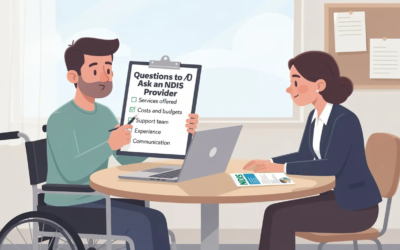
An NDIS planning meeting is a structured conversation about a participant’s support needs, and for most families, it is the single most important step in securing the right funding. Whether you are preparing for a first NDIS planning meeting or heading into a plan review, knowing what to expect and how to prepare will make the process far less stressful. This guide from Re.Connect Support Services walks you through each stage so your family can walk in confident and walk out with a plan that fits.
Key Takeaways
- Your NDIS planning meeting usually happens shortly after access is approved and shapes the NDIS plan for around 12 months or longer.
- Families can meet with an NDIA planner, Local Area Coordinator, or Early Childhood Early Intervention partner in person, online, or by phone meeting, and they can bring a support person.
- Coming prepared with clear goals, evidence such as reports and quotes, and a decision about how the plan will be managed (self managed, plan managed, or agency managed) is essential.
- The NDIS runs on goals, not just support lists, so writing down goals before the meeting helps prevent forgetting them.
- Re.Connect Support Services can help families prepare step-by-step for their child’s NDIS planning meeting so they feel confident and heard.
Understanding Your NDIS Planning Meeting

The planning meeting is where the NDIA builds a picture of how disability affects a person’s daily life, what current supports are in place, and what additional supports are reasonable and necessary. Discussions in the meeting typically include daily life, goals, and current supports. The purpose of the meeting is to determine supports and funding in the NDIS plan.
This meeting occurs after the child or adult has been found eligible for the NDIS and before they receive their first NDIS plan. According to Productivity Commission data, the median time from access approval to a first plan being approved was just 19 days in 2024–25.
Who runs it depends on the participant’s age and location. An NDIA planner typically handles more complex cases, a local area coordinator manages community-level planning, and an ECEI partner works with young children. Meetings can take place in person, over the phone, or via video call – families can request the format they prefer.
The planning meeting usually lasts between 1 and 2 hours. The outcome is a written NDIS plan with budgets across Core, Capacity Building, and where relevant, Capital supports including assistive technology. Re.Connect Support Services is not the NDIA but works alongside families to help them understand the language and expectations of NDIS planning.

Preparing for Your First NDIS Planning Meeting
A first NDIS planning meeting can feel overwhelming, especially for parents advocating on behalf of their child. Preparation is what separates a plan that fits from one that falls short. It is essential to gather evidence and supporting documentation prior to the meeting, ideally starting 4 to 6 weeks before your known meeting date.
Here is what to organise:
- Map a typical week. Write out Monday to Sunday showing school, therapies, transport, self-care, social time, and rest. This shows the planner exactly what everyday activities look like.
- List current supports. Note every formal service and informal family member help already in place, and flag which are working and which are not meeting needs.
- Describe functional impact. Prepare written notes on how the child’s disability affects personal care, communication, mobility, learning, behaviour, relationships, and safety. The NDIS prioritises focusing on functional impacts rather than just diagnoses.
- Collect specialist reports. Bring reports from specialists such as paediatricians, psychologists, occupational therapists, and speech pathologists. Reports from specialists can support funding requests effectively.
- Gather AT quotes. You can request funding for low risk assistive technology like visual schedules, shower chairs, or weighted cutlery. Bring price examples where possible.
- Choose your support person. Participants can bring family members or advocates for support during the meeting. You can bring a family member or friend to the meeting. Support persons can provide emotional support during planning meetings and can help answer questions. Decide on the support person’s role before the meeting so everyone knows how they will contribute.
For a child’s NDIS planning meeting, parents can choose whether their child attends. It is perfectly acceptable to meet without the child if discussing challenges may be distressing. Re.Connect Support Services can provide pre-planning sessions, checklists, and example questions families can take into the planning meeting.
Setting Goals for Your Child’s NDIS Plan
NDIS plans are goal-driven, meaning funding is linked to clearly stated objectives and the supports needed to achieve them. Goal setting involves identifying short-term and long-term aspirations during the meeting. Goals can be short-term (around 12 months) or long-term (2–5 years), and every goal needs the right kind of support linked to it.
| Goal type | Example for a child | Example for a teenager |
|---|---|---|
| Short term | Improve speech clarity so peers understand them at school | Travel independently to a community group |
| Long term goals | Participate in school excursions without one-on-one assistance | Maintain part-time employment after finishing school |
| Common child-focused big goals include improving communication, increasing independence with dressing and toileting, building friendships, or joining a local sports group. Capacity building supports like OT, speech therapy, psychology, and social skills groups link directly to these goals and justify how many hours of funding are needed, so it helps to understand how NDIS capacity building supports work when you are planning. |
Write draft goals before the meeting using simple language. Focus on what the person wants to achieve, not just the services you want. Goals should link to areas like health, independence, social and community participation, relationships, and education. Bring your written list into the planning meeting and refer to it when you talk with the NDIS planner or LAC.
Re.Connect Support Services can support families to refine and prioritise goals so they are realistic, meaningful, and well-aligned with NDIS outcome domains, including tailored NDIS support for children on the autism spectrum where relevant.

Linking Supports, Evidence and Unmet Needs to Your NDIS Plan
This section is about turning goals into specific, fundable support requests backed by evidence. For each goal, list what is required: therapy type, recommended hours, frequency (for example, speech therapy weekly for 12 months), and delivery method (clinic, home, telehealth).
Key steps:
- Allied health reports should clearly connect recommendations to the child’s plan goals and explain how capacity building funding will be used. Ask therapists to detail functional impact, progress, and specific hours.
- Document unmet needs. Prepare to discuss unmet needs during the meeting. Common gaps include weekend support, no respite for carers, difficulty attending medical appointments, or lack of inclusive social opportunities.
- Assistive technology. Higher-cost equipment like power wheelchairs or complex communication devices usually requires formal assessment and quotes. Organise these before the meeting so they can be linked clearly to your NDIS Core Supports and daily living needs.
- Carer impact statement. Prepare a Carers Impact Statement for the NDIA planner explaining how caring responsibilities affect your health, employment, relationships, and finances.
- Speak up. Planners cannot guess needs. If a support, piece of equipment, or respite arrangement is needed, it must be clearly stated. Families help articulate the participant’s challenges and needs during meetings.
Re.Connect Support Services staff can help families review their evidence bundle and identify missing information that could strengthen requests. Reports should meet the NDIS reasonable and necessary criteria to be most effective.
Choosing How Your NDIS Plan Is Managed
During the planning meeting, the planner discusses how the NDIS budget will be managed. You can choose between self, plan, or agency management. Here is how each works:
| Management type | What it means | Best for |
|---|---|---|
| Self managed | You pay providers, keep records, and claim through the myplace portal. Self-management offers maximum control and responsibility. | Families confident with paperwork who prefer using non-registered providers |
| Plan managed | A registered plan manager handles invoices, payments, and financial records. Plan management allows someone else to handle administrative tasks. You still choose from registered and non-registered providers. | Families who want broad choice without the admin burden |
| Agency managed | The NDIA pays registered providers directly. Agency-managed plans restrict you to registered providers only. | Families who prefer minimal administration, noting it may limit options in some regions |
| You can also mix management types across different parts of your plan. When considering a child’s NDIS planning meeting, think about your own time, confidence with paperwork, and the availability of local providers. |
Plan management can include support coordination in your plan. Support coordination can help manage complex services effectively, so mention it to the planner if you need assistance organising providers and services. Reading about optimising NDIS plan management and budgeting can also help you decide what will work in practice. Re.Connect Support Services can talk families through these management choices before the meeting and help them decide which mix suits their situation.
What to Expect During and After the Planning Meeting
The planning conversation itself is collaborative and information-gathering. Expect questions like “Tell me about a typical weekday,” “What’s hardest at the moment?” and “What would you like life to look like in a year?” The aim is to build a full picture of the participant’s life and future.
Practical tips for the meeting:
- Write down questions to ask during the planning meeting and bring them along.
- Bring a folder with copies of all the information: reports, goals list, bank account details if self-managing, and a pen and notepad so you can later apply practical tips for managing NDIS funding effectively.
- Ask the planner to pause, repeat, or explain anything unclear. Meetings can be overwhelming; support persons can help manage stress.
- Arrive early or set up in a quiet, private space for phone or online meetings.
After the meeting, a draft plan is prepared. Minor changes can sometimes be made if you provide additional evidence quickly. Many plans are approved within several weeks. You will receive a copy via mail, the NDIS app, or the myplace portal.
A plan implementation meeting may follow, run by your LAC, support coordinator, or NDIS contact, to help you start using your plan and connect with providers. This step makes life easier by ensuring funding does not sit unused, especially if you have support coordination focused on maximising NDIS funding in place.
Debrief with your family member or friend after the meeting. Look after your own wellbeing, and contact Re.Connect Support Services if you need help interpreting or putting your new plan into action.

Frequently Asked Questions
Below are answers to extra questions other families often ask about NDIS planning meetings.
Does my child have to attend their NDIS planning meeting?
No. Children do not have to attend their NDIS planning meeting and it is entirely a parental choice. Some families bring their child for part of the conversation so the planner can meet them, then have the child step out for more detailed discussion. The planner should accept either option. Re.Connect Support Services can help parents decide what will work best.
What if I forget to mention something important in the planning meeting?
Contact your LAC, ECEI partner, or NDIA planner as soon as possible to provide the extra details. Some issues can be clarified before the plan is finalised. Significant omissions may need to be raised through a plan reassessment request, and engaging with an NDIS support coordinator to navigate changes can be helpful. Keep a running list of needs throughout the year so less is missed next time.
How much detail do therapy and medical reports need to include?
Reports should go beyond a diagnosis. They need to describe functional impact, current supports, progress made, and clear recommendations including estimated hours and frequency. Recommendations should link directly to the person’s NDIS goals and practical outcomes like communication, independence, or school participation. Re.Connect Support Services can help families understand what a strong report looks like and what to request from therapists.
Can I change how my plan is managed after it has been approved?
Yes. Some participants can change their plan management type during the life of the plan by contacting the NDIA, while other changes may need to wait for a reassessment. Speak with your LAC, support coordinator, or Re.Connect Support Services before requesting changes so you understand the implications. Switching from self managed to plan managed can be helpful if administration becomes overwhelming.
How can Re.Connect Support Services support us with NDIS planning?
Re.Connect Support Services offers individual pre-planning appointments, helps families map daily routines and goals, reviews reports, and assists with preparation for a first NDIS planning meeting or a plan review. As a registered NDIS provider offering personalised disability support, the organisation can also explain different management options and, where appropriate, provide specialist NDIS support coordination services to help families implement and adjust their NDIS plan. Families who need a broader understanding of NDIS topics can explore the Re.Connect blog for articles on NDIS and mental health, as well as programs that focus on mental health recovery and community participation, community connection and engagement supports, in-home and daily living assistance, and specialist healing and recovery services. Re.Connect can also guide you through NDIS categories like Improved Life Choices and decision-making supports, provide tailored mental health support under the NDIS, and connect you with their broader mission to foster independence and inclusion. Depending on your needs, they can help you access personalised aged care and disability support options, support coordination best practices and provider selection tips, and supported independent living arrangements. Contact Re.Connect Support Services directly to discuss your situation and book a planning preparation session tailored to your family’s needs.